
For years, travellers boarded planes with a little more understanding because Lito Sousa opened the hangar door to the public. A maintenance professional, pilot, teacher and creator of Aviões e Músicas, he explained aviation without pretending it was simple. Joselito Geraldo de Sousa died on 1 October 2026, aged 59. This tribute is about what he shared while alive and what engineering and safety professionals can still learn from him.
Before the camera, there was the hangar
Born in Rio Grande do Norte and raised in Santos, Lito joined Varig at 19. In his own account, he recalled long shifts, tools in hand and his mind in the manuals. He said he became an inspector within two years. Work at Transbrasil followed, and then roughly 25 years at United Airlines. His public credibility began in a daily practice where maintenance details carry consequences for many people.
His work was more than knowing components: inspection, procedures, teams, supervision and a refusal to trade away safety. Later he carried that experience beyond the airport.

A blog began in 2004
In 2004, troubled by the gap between aviation knowledge and public coverage of it, Lito created the Aviões e Músicas blog. Its archive shows a willingness to answer questions and reveal the work behind flight. He took the project to YouTube in 2010, as he himself recalled, before its later growth.
Music was part of its original identity. Aviation became the enduring conversation: turbulence, maintenance, pilots, procedures and what accidents teach. Questions a passenger might hesitate to ask became opportunities to learn.
Technical knowledge became a public conversation
The channel reached more than four million subscribers. The lasting achievement was bringing manuals, maintenance, operations and safety to people who would never enter a hangar. Lito took curiosity seriously without claiming complex systems had easy answers.
Explaining a phenomenon is not promising zero risk. It means separating discomfort from danger, acknowledging limits and showing useful action. Brazil's aviation regulator ANAC recognised his contribution to helping people understand flying and to safety culture.
Turbulence: explain the barrier too
The phrase ‘turbulence does not bring down an airplane’ became closely associated with Lito. The more useful point was that an unbelted person can be injured by turbulence even when the aircraft withstands the loads for which it was designed. Keeping a seat belt fastened while seated connects the phenomenon, consequence and protective action.
Workplace risk communication calls for the same care: listen to fear, offer evidence, explain the relevant barrier and avoid a false promise of absolute safety.
Turbulência não derruba avião, mas…
Official Aviões e Músicas video in Portuguese: technical explanation and practical protection.
Human factors without a hunt for blame
In his own published reflection, Lito argued that safety requires understanding why people make errors, considering processes, communication, culture and working conditions. The last action alone does not explain the path to an outcome.
In a plant or construction site, the practical questions are what the team knew, which indications it saw, how the work was planned and which barriers could detect and recover a deviation. This does not erase individual accountability; it asks an investigation to reach the system before choosing a remedy. A finding that ends at ‘worker error’ has probably stopped too soon.
Explain accidents without exploiting them
Lito's discussions of incidents and accidents invited the public to look at design, maintenance, operations, communication and defences. A serious accident rarely fits a single sentence about human error. Evidence takes time, and people affected deserve respect.
Our study of CENIPA's GOL Flight 1907 report explores this preventive method. The connection is about how to investigate, not an attempt to use a tragedy as decoration.
O que está acontecendo na aviação?
Official Aviões e Músicas video in Portuguese on recent aviation events and public perception of risk.
From a channel to professional education
During the pandemic, Lito and Mila Seidl began planning an aviation school in anticipation of demand for maintenance professionals. According to the Lito Aviation Academy's own account, it took about two years to open in 2023. A 2026 ANAC document lists the training centre.
A viewer could leave a video with a question answered; a student could leave a programme with skills for aviation work. Digital reach met the responsibility of professional education, built with Mila and a wider team.
Recognition and farewell
On 1 October, Brazil's Ministry of Ports and Airports said Lito brought the public closer to aviation. ANAC recognised his role in spreading knowledge and strengthening operational safety culture. Those acknowledgements speak to the work, beyond popularity alone.
Lito disclosed a diagnosis of Creutzfeldt–Jakob disease in August 2026. He died on 1 October, aged 59. His family and team announced his death. Our condolences go to Mila, his family, colleagues, students and the Aviões e Músicas community. The illness was part of his final months; it does not define his life.
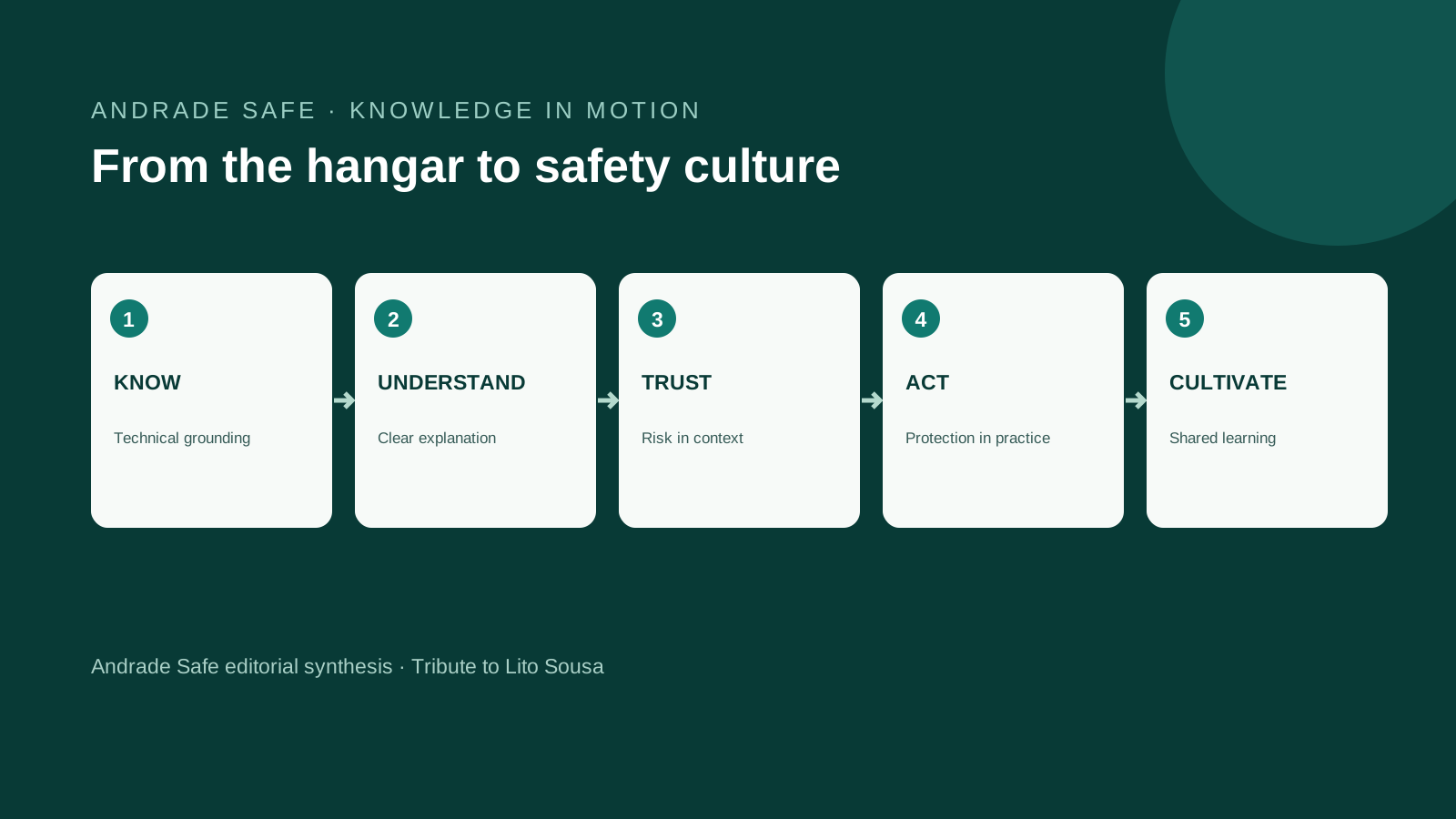
Seven lessons for engineering and occupational safety
Technical knowledge must circulate: a procedure protects more effectively when people understand why it exists. Simplifying well demands mastery and honesty about limits. Fear is not a risk assessment; good communication converts evidence into a practical protective action.
Blame is no substitute for investigation: reconstruct the timeline and examine the barriers. Training matters when it creates observable competence rather than a filed certificate. A basic question can reveal a shared assumption that no one had tested. And part of a professional legacy is what others can do better after learning from us.
These are our editorial applications of Lito's work in other sectors, not aviation rules transplanted automatically.
- Share knowledge accurately.
- Explain simply while preserving limits.
- Turn fear into understanding and safe action.
- Investigate context and barriers.
- Verify competence after training.
- Welcome basic questions.
- Teach so others can act better.
A legacy that keeps flying
Lito showed that technical knowledge need not remain behind a hangar door. It can travel through a camera, help an anxious passenger, inspire a future mechanic and improve a conversation about safety at work.
For those of us in engineering and prevention, the task remains: share what we know clearly and responsibly. Knowledge becomes culture when others can understand, question and apply it. Thank you for the lessons, Lito. May your legacy keep flying.
Frequently asked questions
Who was Lito Sousa?
Joselito Geraldo de Sousa was an aircraft maintenance professional, pilot, educator and creator of Aviões e Músicas. He worked for Varig, Transbrasil and United Airlines.
When did Aviões e Músicas begin?
Lito said he started the blog in 2004 and brought it to YouTube in 2010.
What did he contribute to safety?
He made aviation systems, human factors and risk understandable to the public and urged organisations to study processes before looking for blame.
What is Lito Aviation Academy?
An aviation training school developed by Lito and Mila Seidl, which opened in 2023.
References
- Lito recorda sua trajetória na Varig, Transbrasil, United, blog e YouTubeLito Sousa / LinkedIn
- Lito sobre fatores humanos e segurança sem caça aos culpadosLito Sousa / LinkedIn
- MPor lamenta o falecimento de Joselito Geraldo ‘Lito’ de SousaMinistério de Portos e Aeroportos
- Morre o piloto e youtuber Lito Sousa, aos 59 anosAgência Brasil
- ANAC reconhece contribuição de Lito à cultura de segurança (nota reproduzida)CNN Brasil / ANAC
- Sobre a Lito Aviation AcademyLito Aviation Academy
- Portaria 19917/SPL de 2026ANAC
- 2010, decolandoAviões e Músicas
- Turbulência: o terror dos passageirosAviões e Músicas
- Turbulência não derruba avião, mas…Aviões e Músicas / YouTube
- O que está acontecendo na aviação?Aviões e Músicas / YouTube