
The NTSB released preliminary CVR and FDR data from the Boeing 767 runway overrun in Miami. Learn what the recordings show and why they do not establish probable cause.
September 26 update: the investigation remains ongoing
DCA26MA352 remains Ongoing. The latest public factual update located is dated September 9. There is no probable cause, final report or complete public CVR transcript.
The figures below are selected preliminary information released by the NTSB and remain subject to change. They do not establish crew error, mechanical failure, SOP noncompliance or a contributing factor.
What happened in Miami
On September 6, 2026, 21 Air LLC Flight 7598, a Part 121 Boeing 767-33A cargo flight from San Juan to Miami, overran the end of Runway 30 while landing at Miami International Airport.
The CVR and FDR were recovered and read at the NTSB Vehicle Recorder Laboratory. The agency released selected events—not a final reconstruction. Sequence describes what was recorded; cause requires context, testing and converging evidence.

CVR and FDR are different windows
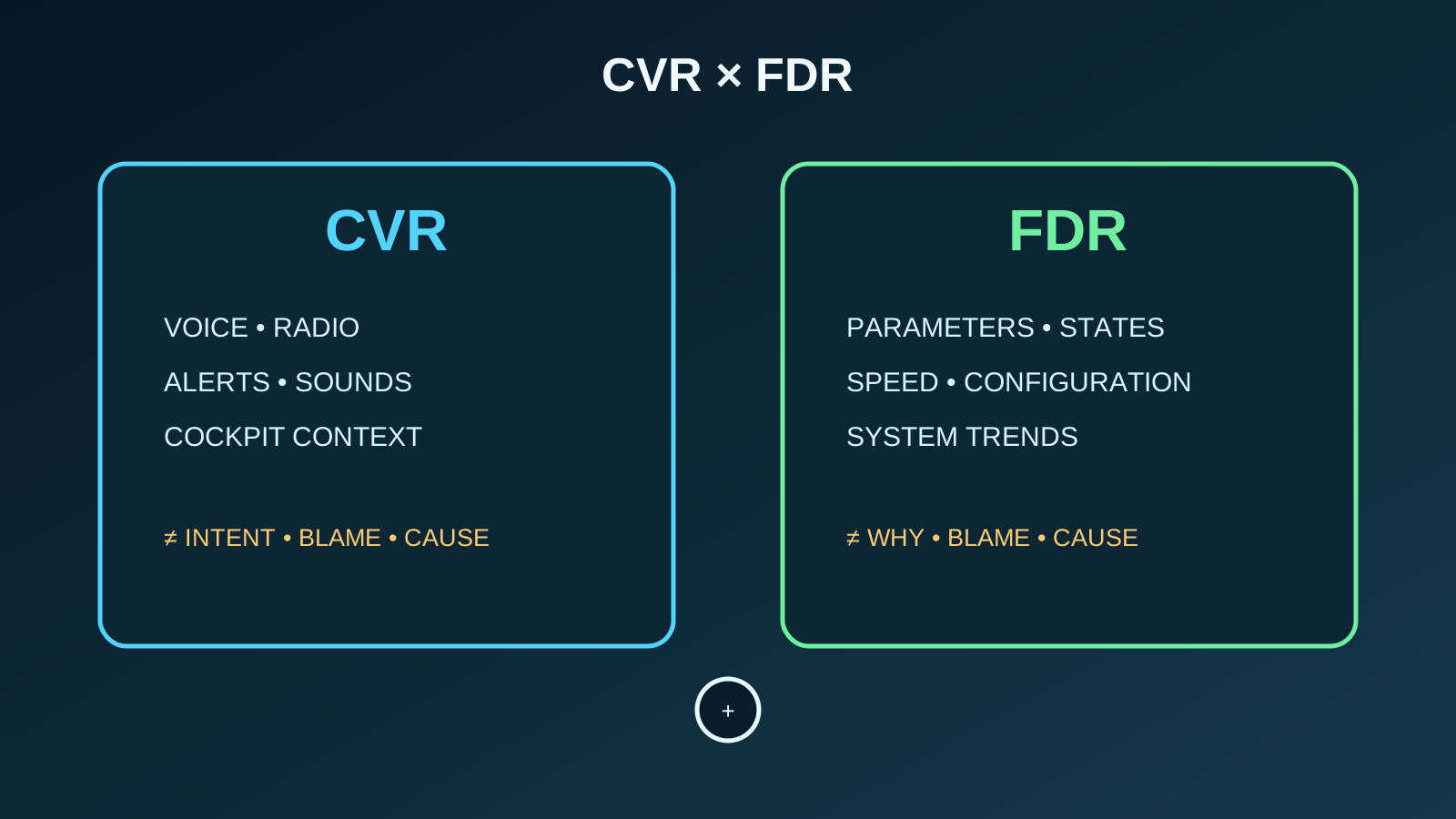
The cockpit voice recorder captures radio communications, voices, alerts and cockpit sounds. A statement alone cannot establish intent, comprehension, workload, full SOP compliance or causality.
The flight data recorder stores available flight and system parameters. It shows values and transitions, but does not independently explain why a decision was made or why a system did not show a particular state.
| Source | Can show | Cannot prove alone | Preliminary use here |
|---|---|---|---|
| CVR | Voices, radio, alerts and sounds | Intent, blame, complete SOP compliance or cause | Speed comments, callouts and go-around call |
| FDR | Parameters, states and trends | Reason for a decision or final cause | Groundspeed, brakes, throttles and deployment indication |
| Other evidence | ATC, video, weather, performance, SOPs and maintenance | A complete explanation without reconciliation | Test hypotheses and reconstruct context |
What the CVR summary records
The CVR contained more than two hours of good-quality audio across four channels. The public table is a selective summary; the NTSB said a CVR group would produce a transcript.
At 01:42 before the recording ended, one pilot called for flaps 20 and the other cautioned that they were too fast. Further speed comments and automated callouts followed. At 00:15, a pilot called for a go-around. Those records do not by themselves determine CRM performance, competence, SOP violation or cause.
What the FDR summary records
The FDR held about 54 hours and more than 400 parameters. The nose and right main gear touched down at 158 knots groundspeed; brakes were applied at 146 knots; the left main gear touched down at 134 knots.
At 120 knots, brakes were released and throttles increased to a value consistent with go-around thrust. Throttles then returned to idle and brakes were reapplied at 117 knots. Final recorded groundspeed was 65 knots. The published data showed no indication that speed brakes or thrust reversers were deployed. ‘No indication’ does not explain why.
The crucial limitation: the clocks are not precisely synchronized
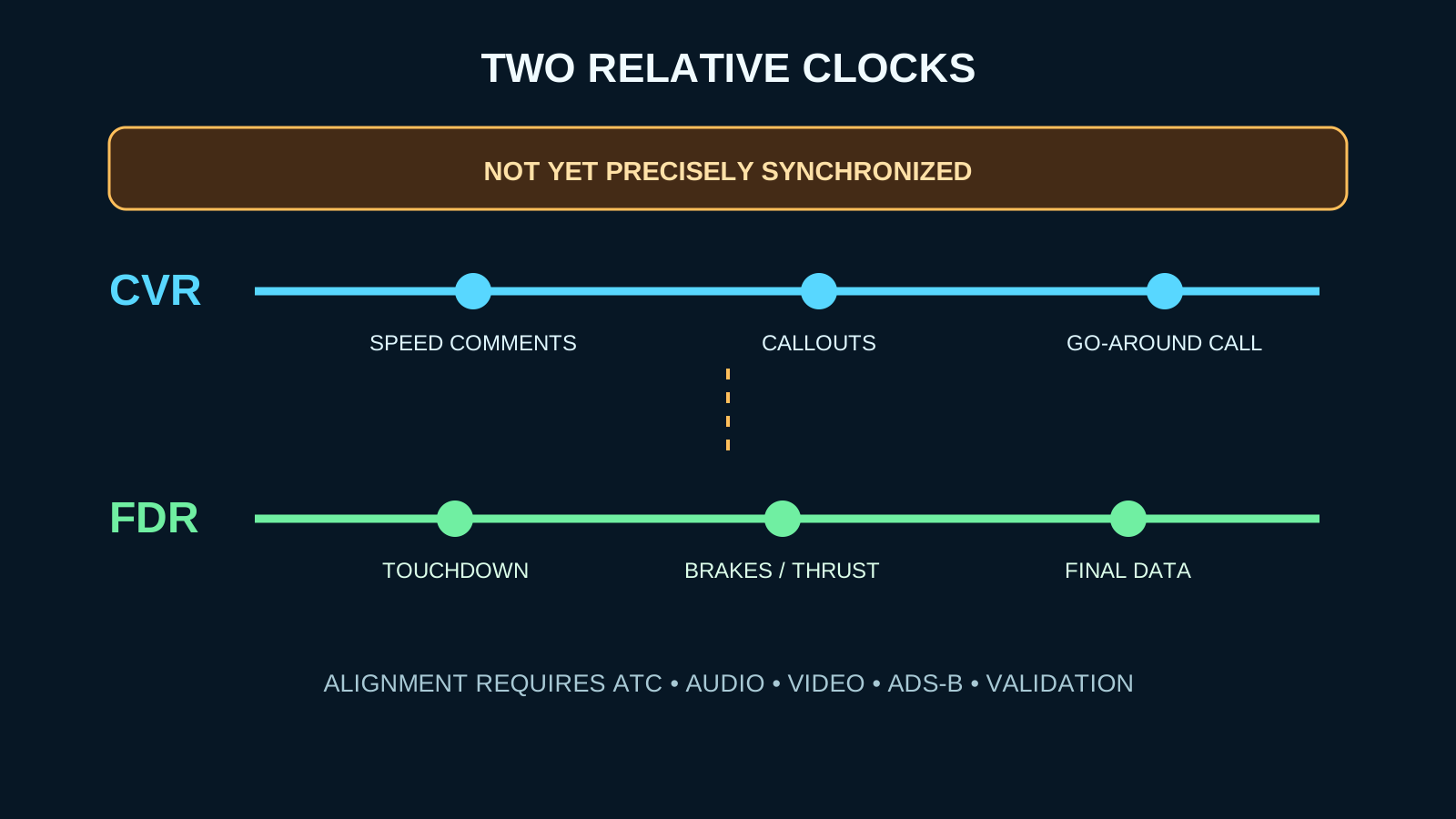
CVR times are relative to the end of the CVR; FDR times are relative to the end of the FDR. The NTSB explicitly warns that the two have not been precisely synchronized. Therefore, 00:15 on one timeline cannot automatically be aligned with 00:15 on the other.
Investigators can reconcile ATC timecodes, audio spectrum, video, ADS-B and other signals. Until then, responsible graphics keep the tracks separate and make uncertainty visible.
Why the data are not probable cause
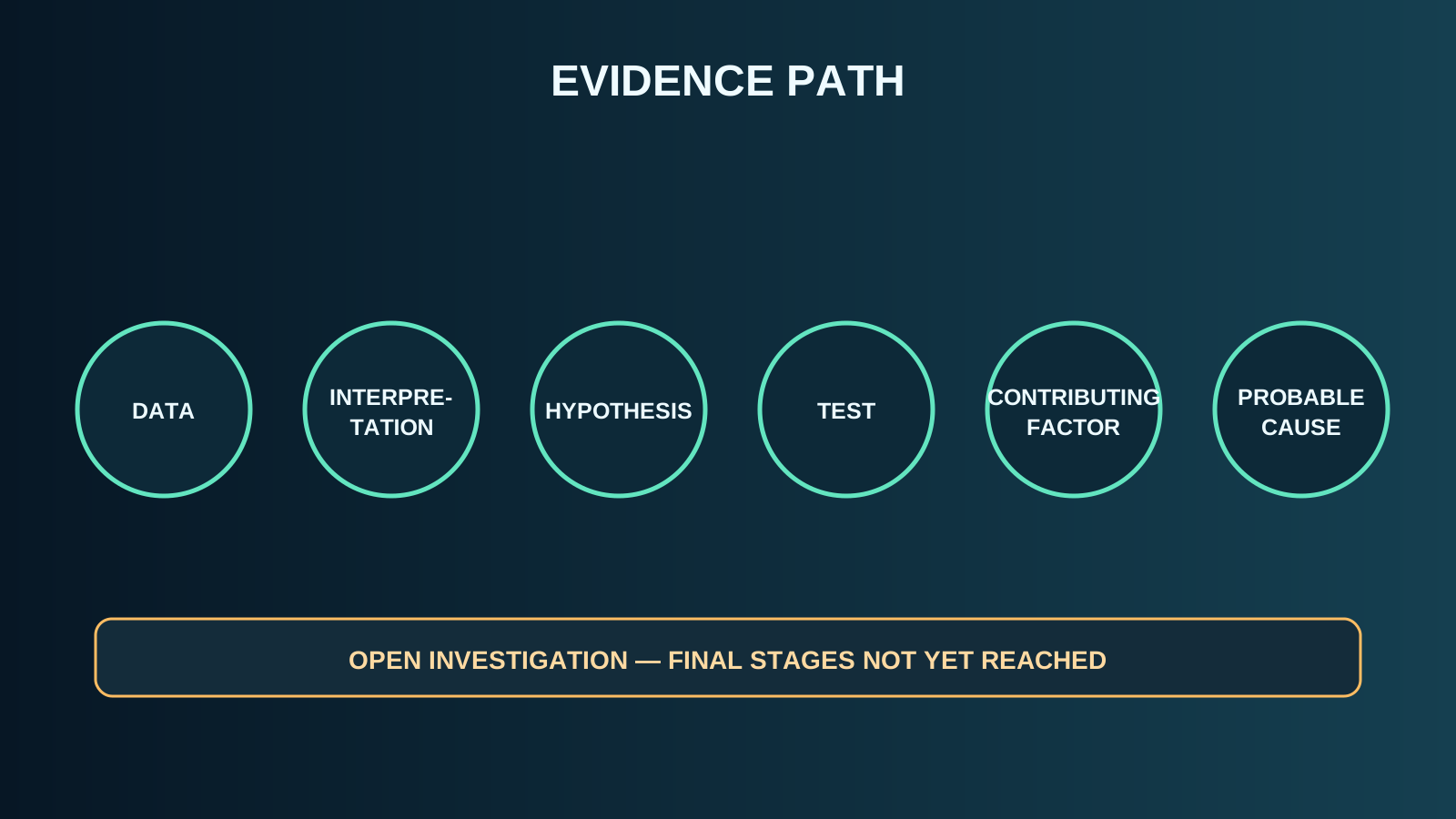
Data are recorded values or observations. Interpretation gives technical meaning. A hypothesis proposes a testable explanation. A contributing factor requires support across the evidence. Probable cause is the NTSB's formal conclusion.
Skipping levels turns speed into ‘error,’ no indication into ‘failure,’ and a call into proof of intent. Investigators must test competing explanations and contradictory evidence.
Go-around and stabilized approach: general principles
A go-around is a normal safety maneuver used when continuing an approach or landing does not provide adequate margin. FAA material emphasizes continuous assessment and timely decisions, but exact criteria depend on the aircraft, operation and applicable SOP.
The public record does not support applying a generic 500- or 1,000-foot threshold to Flight 7598, classifying the event as a rejected landing, or declaring the go-around late.
Runway excursions and layers of defense
Runway excursion includes overruns, veer-offs and undershoots depending on the event. FAA AC 91-79B discusses landing performance, braking action and runway excursion risk as general guidance—not a finding in this accident.
Runway Safety Areas and EMAS can mitigate severity after an aircraft leaves the surface. They do not automatically explain why the sequence began. Landing distance or kinetic energy should not be calculated without verified weight, wind, runway condition, touchdown point and configuration.
Evidence still to be reconciled
CVR and FDR gain meaning when investigators reconcile them with ATC, video, weather, ADS-B, runway data, weight and balance, performance, operator SOPs, training, maintenance, systems and human factors. Each source has its own quality, timing and limits.
The lesson for industrial safety and engineering
A PLC or SCADA alarm records a state, not a cause. CCTV shows one perspective, and interviews contain perception and memory rather than an absolute clock. Preserve originals, understand each source and synchronize within stated tolerances.
Absence of evidence is not automatically evidence of absence. Sensors may not record a variable, may have limited resolution or may still require validation. Competing hypotheses protect investigations from intuitive but unsupported narratives.
| Level | Useful question |
|---|---|
| Data | What was recorded, and at what quality? |
| Interpretation | What does it technically mean? |
| Hypothesis | What testable explanation does it suggest? |
| Test | What supports or contradicts it? |
| Contributing factor | How did it influence the event? |
| Conclusion | Does the evidence converge? |
Conclusion: recorders document; investigations explain
CVR preserves voices, alerts and sounds. FDR reconstructs hundreds of parameters. Together they reduce uncertainty about parts of a sequence, but never replace context, validation, synchronization and testing.
The rule transfers from aviation to factories and construction sites: data describe; analysis connects; investigation tests; conclusion requires converging evidence.
Frequently asked questions
What does a CVR record?
Radio transmissions, crew voices, alerts and cockpit sounds. It does not independently prove intent, blame or cause.
What does an FDR record?
Available flight and system parameters, states and trends.
What has the NTSB confirmed?
The Runway 30 overrun, recorder recovery and selected preliminary CVR and FDR events.
Do the recorders reveal probable cause?
Not alone. They must be reconciled with performance, procedures, weather, maintenance and other evidence.
Why cannot CVR and FDR markers be aligned directly?
They are relative to different recording endpoints and have not been precisely synchronized.
What does ‘no indication of deployment’ mean?
The published recorded data did not show that state; this alone does not explain why.
What is a runway excursion?
An event in which an aircraft overruns, veers off or undershoots the intended runway surface.
What is a go-around?
A normal safety maneuver to discontinue an approach or landing and climb away.
When is a CVR transcript released?
Release of pertinent written portions is governed by federal law and the formal investigation stage; the audio itself is not released.
Is the investigation complete?
No. DCA26MA352 remained Ongoing as of September 26, 2026.
References
- Runway Overrun of 21 Air Flight 7598 — DCA26MA352NTSB
- NTSB Issues Investigative Update on B-767 Runway Excursion Accident in MiamiNTSB
- Cockpit Voice Recorders and Flight Data RecordersNTSB
- AC 91-79B — Aircraft Landing Performance and Runway Excursion MitigationFAA
- Runway Safety AreasFAA
- FDR/CVR from 21 Air LLC Flight 7598NTSBgov / Flickr