
How do Palisades, Crane and Duane Arnold plan to restart? Explore NRC licensing, aging, inspections, safety systems and electricity demand from AI.
Electricity demand changes economics; safety needs evidence
Data-center demand helps finance nuclear restart projects, but returning to generation depends on demonstrated integrity, testing and applicable regulatory conditions. A facility that entered decommissioning needs an operational basis restored and preserved, modified or replaced systems assessed. An energy contract, construction milestone and licensing decision are different from commercial generation.
An Associated Press report on October 16, 2026 brought the three projects together. This analysis was checked on October 18 using regulatory documents and statements from the responsible organizations. The central question is how to demonstrate readiness after years offline without presenting future capacity as electricity already delivered.
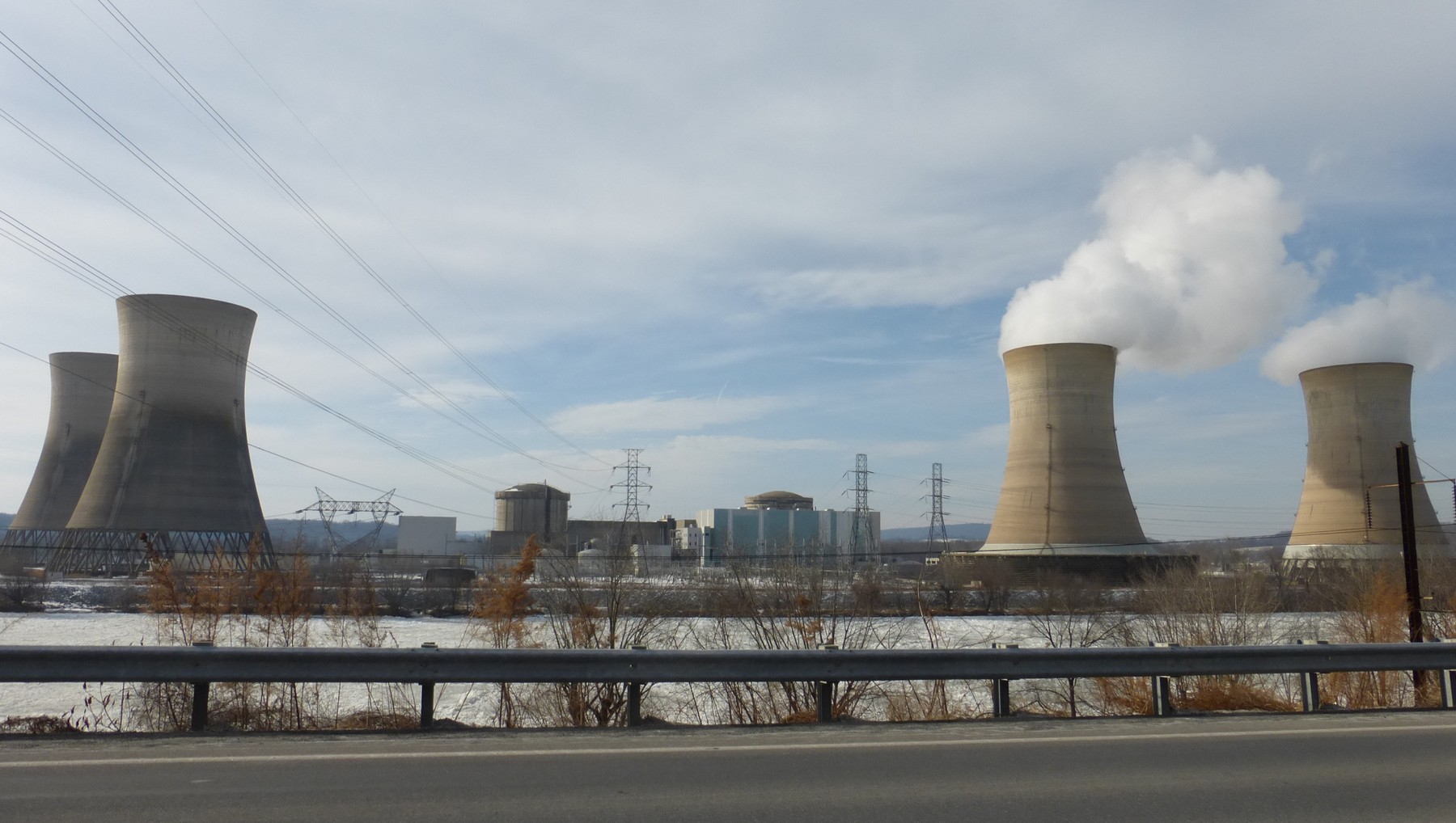
Three projects at different restart stages
Palisades in Michigan stopped in 2022 and is a Holtec project. On September 21, 2026, the company reported fuel-loading work paused after an assembly tilted, with a cause evaluation underway. This is the operator’s account, not an independent forensic finding by this publication.
Constellation’s Crane Clean Energy Center is former Three Mile Island Unit 1, retired in 2019, with a 20-year Microsoft PPA. The company identifies 2027 as a possible return, subject to project conditions. Unit 2, involved in the 1979 accident, is a different reactor and is not the subject of this restart.
Duane Arnold in Iowa stopped in 2020. On September 8, 2026, NextEra reiterated a target no later than Q1 2029, pending regulatory approvals. Google has a 25-year agreement; CIPCO says it will purchase the remaining output. Do not automatically attribute the full plant capacity to Google.
| Project | Retired | Company / agreement | Status |
|---|---|---|---|
| Palisades / Michigan | 2022 | Holtec | Preparations; commercial generation not established |
| Crane / TMI-1 / Pennsylvania | 2019 | Constellation / Microsoft | 2027 target; technical and regulatory conditions |
| Duane Arnold / Iowa | 2020 | NextEra / Google / CIPCO | Target by Q1 2029; pending approvals |
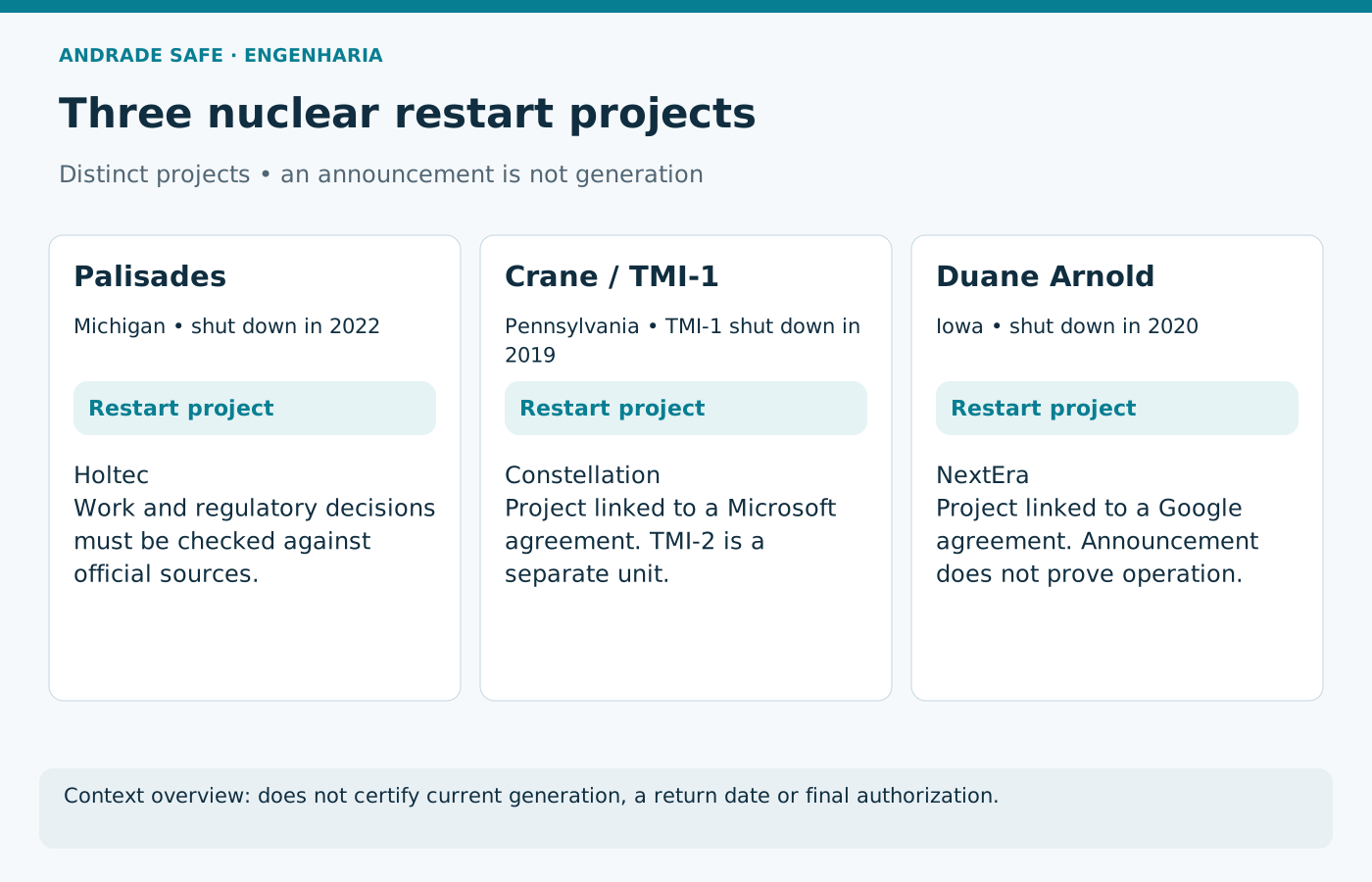
What has advanced — and what it does not prove
Palisades received major licensing actions in July 2025 and transitioned to an operational licensing basis that August. Restoration work did not end with that transition. The legal licensing basis, physical system condition and functional demonstrations required before subsequent stages are separate matters.
For Crane, the NRC notice of September 25, 2026 records an environmental assessment and finding of no significant impact for proposed actions. The same notice still discusses an exemption and license amendments. This environmental milestone alone does not establish completion of the entire return-to-operation process.
Sources checked through October 18, 2026 describe restart preparations without establishing restored commercial generation. Calendar expectations are conditional targets. Energizing a grid connection, procuring fuel or completing an isolated inspection does not demonstrate that a plant has resumed supplying electricity.
Aging and preservation: investigate without assuming defects
An idle facility may contain preserved equipment, replacements and components needing further assessment. Calendar time, loading history and preservation conditions play different roles. Retirement does not erase operating history; neither does it prove that every old component has degraded.
Corrosion, aging of elastomers and electrical insulation, accumulated thermal fatigue and effects of previous exposure are possible assessment mechanisms. These are general engineering examples, not confirmed findings at the three plants. Mechanism identification depends on the material, function, environment and actual records.
IAEA SSG-48 addresses aging effects and technological obsolescence. It is a general technical reference, not restart authorization or a replacement for project-specific NRC requirements. A useful review connects a possible mechanism, susceptible component, available evidence and verifiable action.
Inspection begins with a technical question
Define what needs demonstrating before selecting a method: wall condition, weld integrity, leak tightness, valve movement or pump performance. Visual examination, ultrasound, electromagnetic methods and functional tests answer different questions. Their selection and acceptance depend on the application and approved programs.
There is an important design distinction. Palisades and Crane are pressurized-water reactors, PWRs; Duane Arnold is a boiling-water reactor, BWR. Separate steam generators transferring heat from the primary circuit belong to the PWR example. Do not impose or draw that same steam-generator arrangement for all three projects.
A test indication needs location, characterization, assessment and traceability. No visible leak does not prove freedom from degradation, just as an indication does not automatically demonstrate lost function. Qualified teams, applicable procedures and evaluation criteria give meaning to the results.
Shutdown, residual heat and supporting power
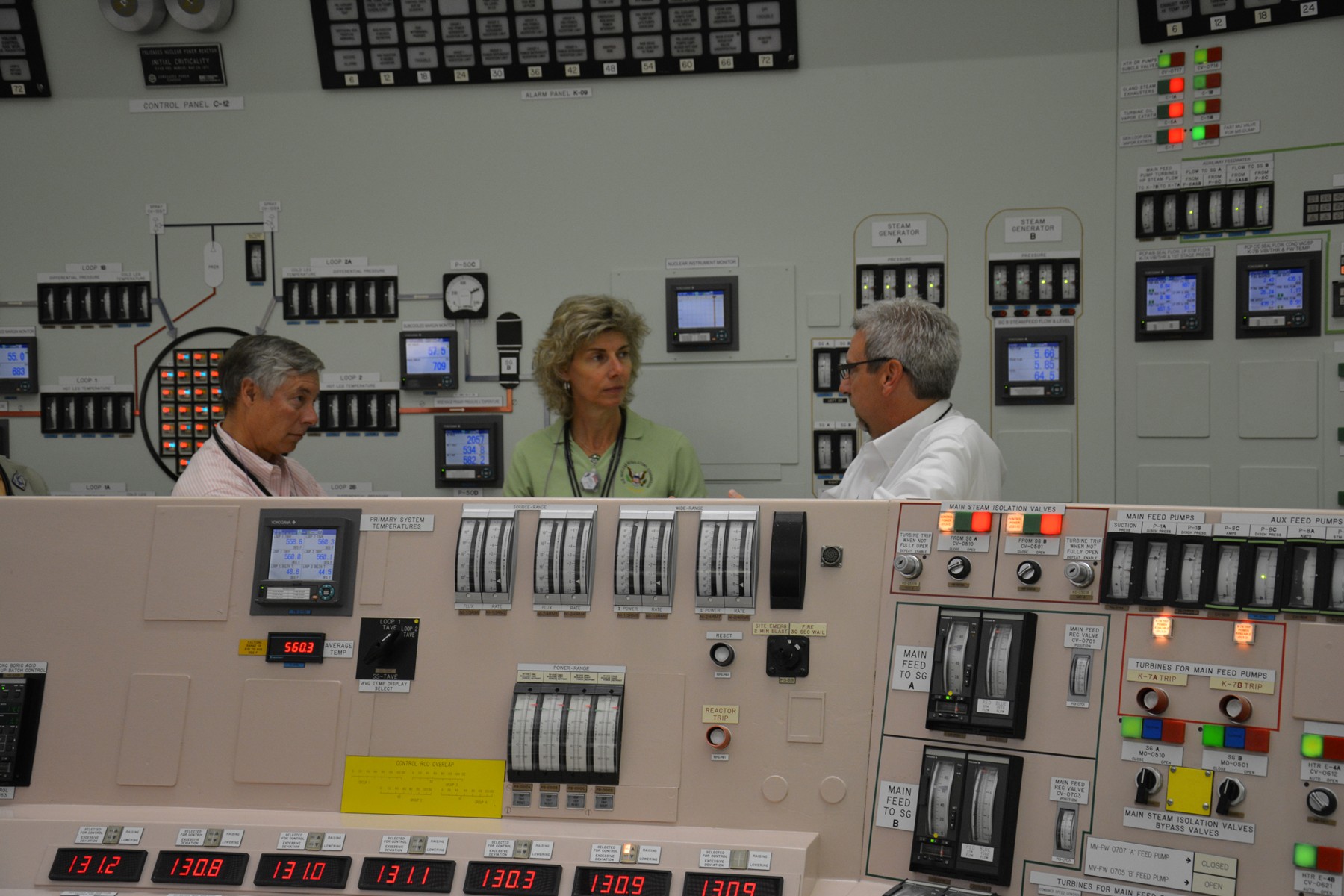
Stopping the chain reaction does not immediately remove every cooling need. Safety demonstration considers shutdown, cooling, instrumentation, supporting electricity and abnormal-condition response for the plant design and state. One function may depend on multiple items and interfaces.
Testing an isolated motor therefore does not demonstrate the entire functional chain. Offsite supply, emergency generation, distribution, protection logic and driven equipment require integrated consideration. These are evidence categories, not an operating procedure or an allegation of failure at a particular plant.
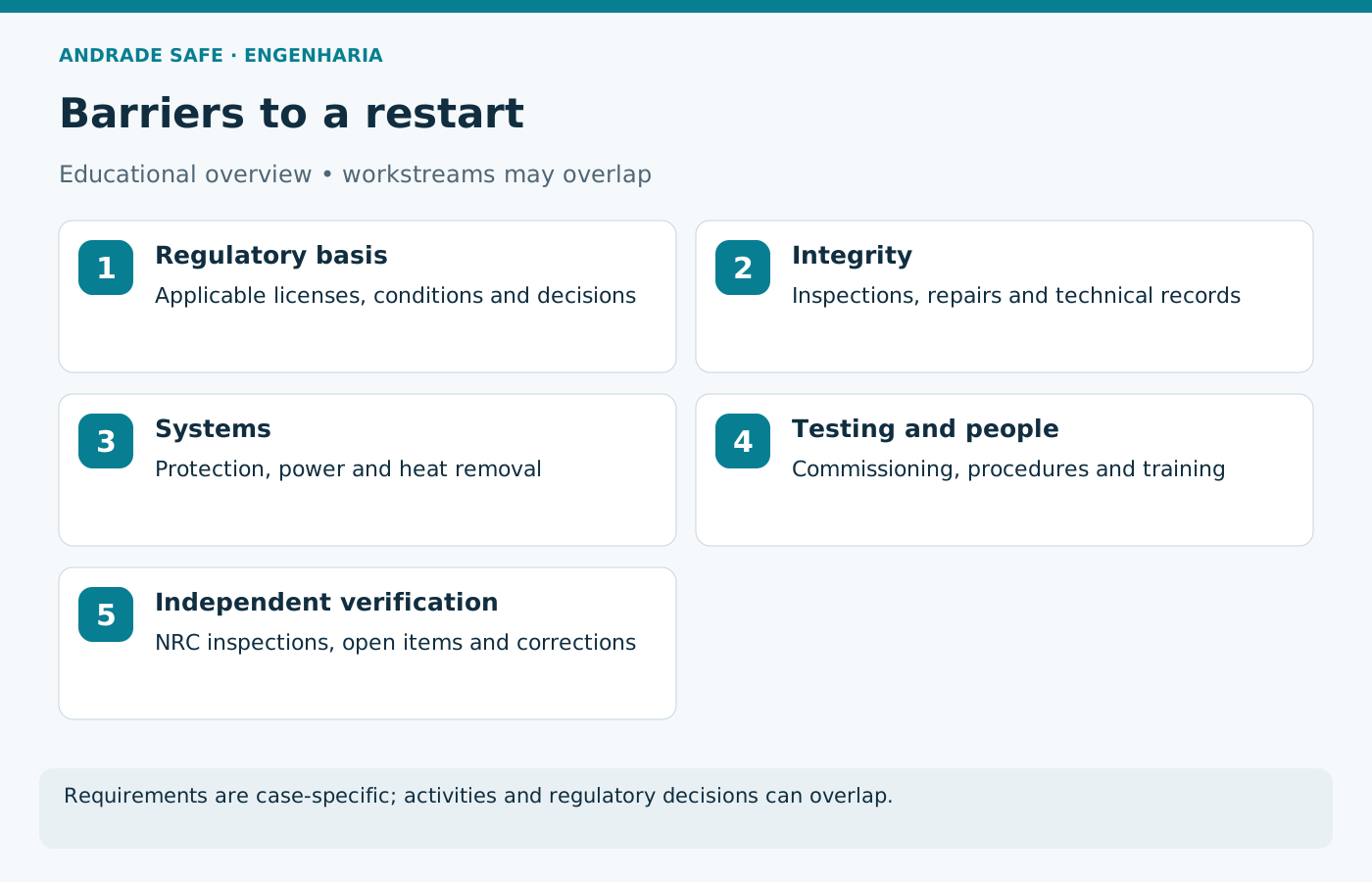
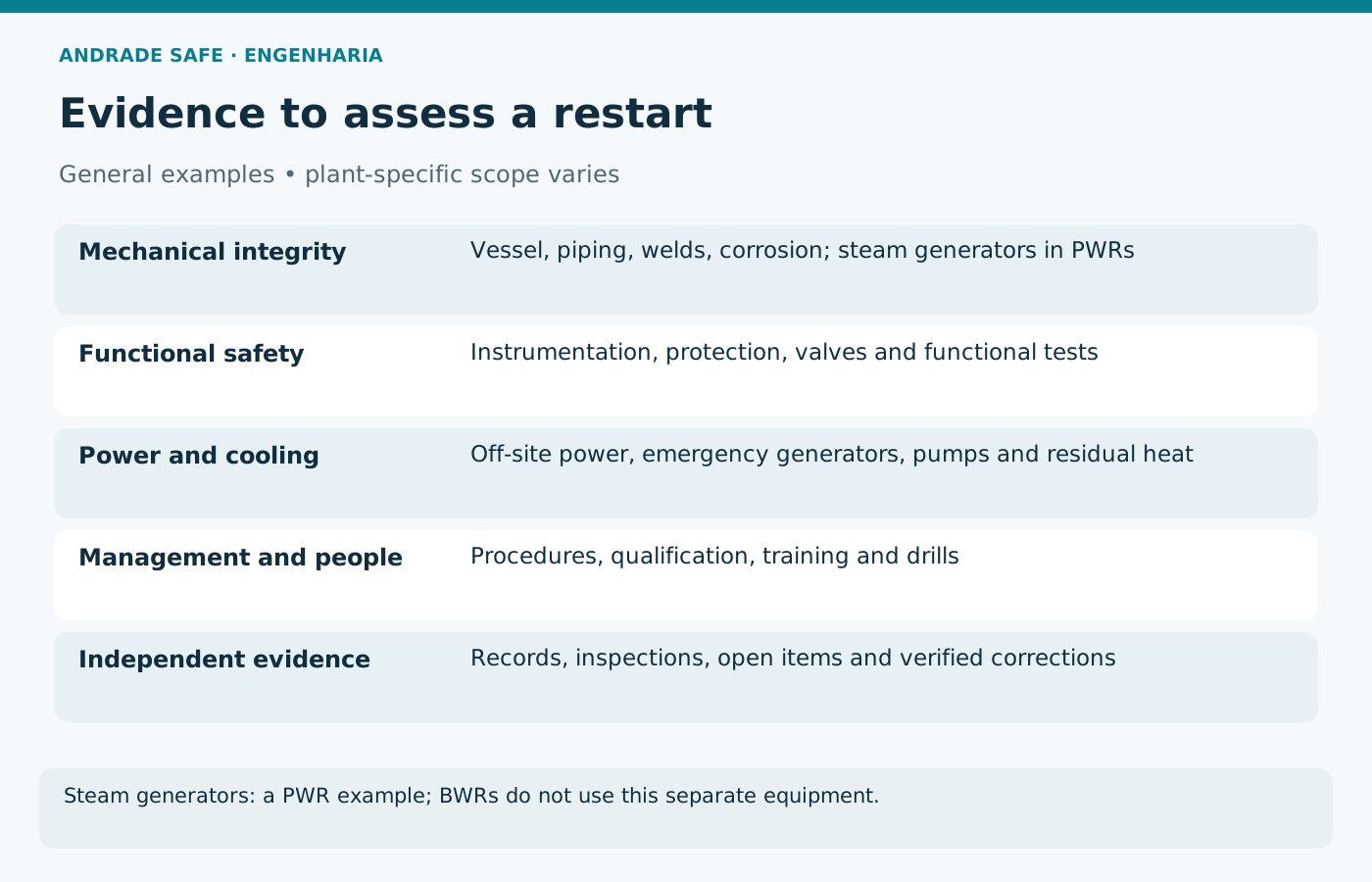
Educational evidence matrix: from requirement to record
An evidence matrix organizes discussion; it does not approve a facility. The responsible organization must connect requirements, actual configuration, records, evaluation and deviation resolution. Independent inspection and regulatory oversight cannot be replaced with a checklist score.
Licensing, equipment, personnel, emergency arrangements and testing can progress in parallel. The diagram summarizes review topics rather than imposing one universal legal sequence. Decisions depend on project-specific documents and results.
| Topic | Evidence to connect | Interpretation limit |
|---|---|---|
| Integrity | History, inspections and indication assessment | Appearance or age alone is insufficient |
| Safety functions | Tests and power, control and cooling interfaces | One component does not prove the system |
| People and organization | Qualifications, procedures and emergency readiness | Training does not replace physical readiness |
| Licensing | Applicable basis, conditions and independent oversight | Contract or partial milestone is not a restart |
Exercise: power in GW is different from energy in TWh
Official project figures give 800 MW for Palisades, 835 MW for Crane and 615 MW for Duane Arnold: a total of 2,250 MW, or 2.25 GW electrical. This aggregate reference is not reactor thermal power, measured current output or electricity already generated.
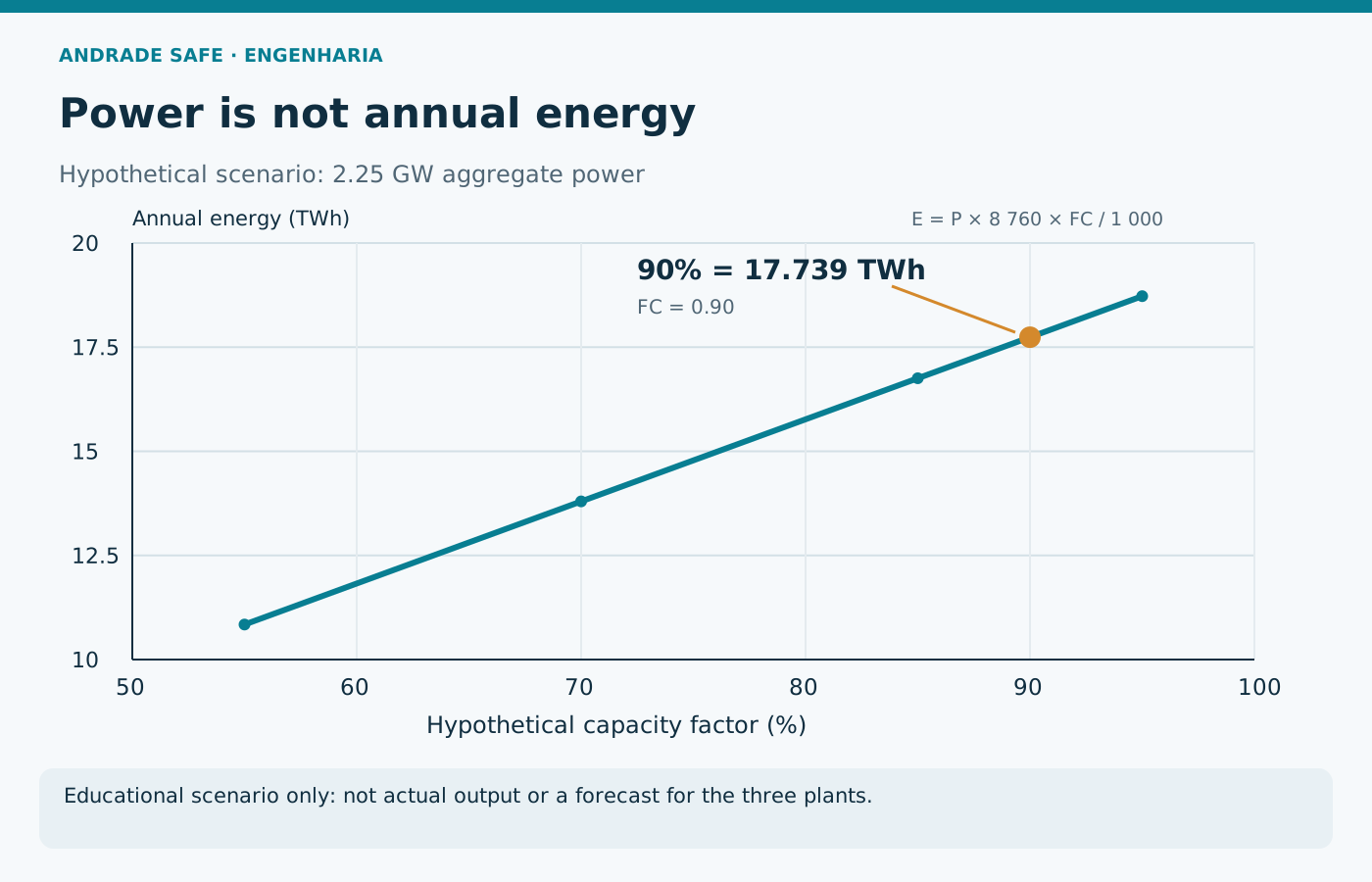
For a hypothetical scenario, E = P × CF × t. With P = 2.25 GW, CF = 0.90 and t = 8,760 h, the result is 17,739 GWh, equivalent to 17.739 TWh, approximately 17.74 TWh. At 100% over the same interval, the reference is 19.71 TWh. Average equivalent power at 90% is 2.025 GW.
Capacity factor compares energy produced over an interval with reference capacity multiplied by the same interval. It is not availability, thermodynamic efficiency or a guarantee of uninterrupted delivery. Since CF already expresses relative output, multiplying it by another unavailability term requires defining a different model.
This example uses a 365-day year with 8,760 hours. It does not forecast commissioning dates, actual outages, dispatch, grid losses or contracted generation. It also cannot prove uninterrupted service to a data-center load.
| Capacity factor | Average power (GW) | Energy (TWh) |
|---|---|---|
| 50% | 1.125 | 9.855 |
| 75% | 1.6875 | 14.7825 |
| 90% | 2.025 | 17.739 |
| 100% | 2.25 | 19.71 |
Power and energy laboratory
Change capacity, capacity factor and duration to compare scenarios. The graph and table show mathematical relationships, with CSV export and example reset. No control assesses nuclear safety, authorizes operation or reproduces contracts for the three plants.
Lab: power and energy
Explore the relationship between power, capacity factor and duration. Inputs are educational assumptions, not generation forecasts.
E (TWh) = P (GW) × (CF/100) × t (h) ÷ 1,000
━ Assumed generation┄ Theoretical energy at 100% (TWh)
| Time (h) | Energy over the period (TWh) | Theoretical energy at 100% (TWh) |
|---|---|---|
| 0 | 0 | 0 |
| 2,190 | 4.43475 | 4.9275 |
| 4,380 | 8.8695 | 9.855 |
| 6,570 | 13.30425 | 14.7825 |
| 8,760 | 17.739 | 19.71 |
The example uses 2.25 GW as a rounded, reported combined reference and 8,760 h for a 365-day year. A 90% capacity factor is an assumption. Average power does not guarantee continuous supply, reliability, contracted power or energy delivered under a PPA. The model does not represent actual plants or assess licensing, nuclear safety or operational restart.
Investment, emissions and public responsibility
DOE pages record financing of $1.52 billion for Palisades, $1 billion for Crane and up to $1.9 billion for Duane Arnold: around $4.4 billion. These are loans or financing, not an aggregate grant, total construction cost or a fully disbursed sum.
The supporting argument combines existing infrastructure, low operating carbon emissions and potentially shorter delivery than a new project. Critical evaluation considers final costs, future obligations, waste, water, environmental effects and responsibility for public resources and risks. Low operating emissions do not mean absence of lifecycle impacts.
Commercial expectations must remain separate from engineering conclusions. A PPA can support investment; it does not replace tests, environmental conditions or oversight. Shorter administrative schedules or parallel work cannot establish that physical aging or the need for evidence has disappeared.
Connect mechanical integrity and energy
Metal fatigue explains loading and service history; marine corrosion shows why exposure must be distinguished from measured material loss. These articles provide fundamentals without transferring rates or results to nuclear components. BESS and industrial batteries help explain power, energy and supply duration.
Conclusion: demand supports investment; evidence supports decisions
A restart requires rebuilding and demonstrating the ability to operate within authorized conditions. AI may change demand and project economics. The technical conclusion still depends on a known configuration, assessed integrity, verified functions, prepared personnel and fulfilled requirements.
For every new announcement, ask which milestone was reached, who confirmed it, what remains conditional and whether the figure describes future capacity or energy actually produced. That distinction supports rigorous reporting without alarmism or premature approval.
Laboratory, files and credits
Reporting and publication date: October 18, 2026. Archival photographs do not establish present plant status. Diagrams explain concepts; the matrix is neither a forensic report nor a release tool. The kit preserves the supplied originals and revised versions.
Open standalone laboratory — PT/EN/ES →
Download educational scenarios CSV →
Download revised kit with articles and figures →

.jpg)
Sources and reporting
Company sources describe their own statements and targets. Regulatory documents address specific decisions and scopes. Reporting provides context; technical examples and energy scenarios are not facility assessments.
Associated Press — reactor restarts (16 October 2026) →
Palisades licensing basis — Federal Register (18 March 2026) →
Crane environmental assessment — Federal Register (25 September 2026) →
Holtec — Palisades progress (21 September 2026) →
DOE — Palisades project financing →
DOE — Crane restart financing →
DOE — Duane Arnold financing (8 September 2026) →
NextEra — Duane Arnold restart (8 September 2026) →
CIPCO — NextEra and Google agreement →
Frequently asked questions
What does a nuclear restart mean?
Restoring the basis and capability to operate after retirement, with project-specific assessments, equipment, tests, personnel and regulatory conditions.
Is Unit 1 the Three Mile Island accident reactor?
No. The 1979 accident occurred at Unit 2. Crane concerns former Unit 1, retired in 2019.
Are all three plants generating again?
Sources checked for this October 18, 2026 report describe restart projects; they do not establish restored commercial generation.
Which tests are required?
They depend on function, configuration and applicable requirements. Records, inspections and functional tests need qualified evaluation and relevant oversight.
Do all plants have separate steam generators?
No. That arrangement belongs to the Palisades and Crane PWR example. Duane Arnold is a BWR with a different design.
How do GW and TWh differ?
GW is power; TWh is energy accumulated over time. An energy scenario also requires duration and capacity factor.
Is 17.74 TWh a forecast for the three plants?
No. It is an exercise using 2.25 GW, 90% capacity factor and 8,760 hours, without simulating schedules or actual production.
Does an energy contract authorize a restart?
No. Contracts and financing serve commercial roles; restart also needs technical demonstration and regulatory conditions.
References
- Associated Press — reactor restarts (16 October 2026)Associated Press
- NRC — Palisades restartNRC
- NRC — Crane restartNRC
- NRC — Duane Arnold restartNRC
- Palisades licensing basis — Federal Register (18 March 2026)NRC / U.S. Government Publishing Office
- Crane environmental assessment — Federal Register (25 September 2026)NRC / U.S. Government Publishing Office
- Holtec — Palisades progress (21 September 2026)Holtec
- DOE — Palisades project financingU.S. Department of Energy
- DOE — Crane restart financingU.S. Department of Energy
- DOE — Duane Arnold financing (8 September 2026)U.S. Department of Energy
- NextEra — Duane Arnold restart (8 September 2026)NextEra Energy
- CIPCO — NextEra and Google agreementCIPCO
- Constellation — Crane project milestonesConstellation Energy
- IAEA SSG-48 — Ageing Management (2018)IAEA