
A high-pressure Cold Separator ruptured in MRPL's Coker Hydrotreater Unit on September 30, 2026. A fire followed; one person died and another was hospitalized with burns. This article explains containment, equipment integrity and safety barriers without assigning an unproven cause.
What is confirmed, and what is not
On September 30, 2026, around 12:20 p.m., a Cold Separator operating at high pressure ruptured in the Coker Hydrotreater Unit (CHTU) at Mangalore Refinery and Petrochemicals Limited (MRPL) in Mangaluru, Karnataka. A fire followed. MRPL said it isolated the affected unit's battery limits and deployed emergency and firefighting teams. The fire was completely extinguished at 2:47 p.m.
In its later update, MRPL reported one death and one person hospitalized for burns. The first statement, issued before crews searched the area, had described a minor injury; the later statement supersedes that early picture. We extend our sympathy to those affected and their families. Rupture describes the known initiating event; it does not, by itself, explain why the vessel failed.
| Confirmed by MRPL | Not established by the filings reviewed |
|---|---|
| High-pressure cold separator rupture in the CHTU and a fire. | Physical failure mechanism or root cause. |
| Unit boundary isolation; fire extinguished at 2:47 p.m. | Earlier corrosion, inspection, relief, alarm or interlock condition. |
| One death and one person hospitalized with burns. | Detailed sequence and performance of each safeguard. |

What a coker hydrotreater does
Coking processes heavy refinery fractions and produces streams that may need further treatment. In hydrotreating, hydrocarbon feed contacts hydrogen over a catalyst under controlled pressure and temperature, reducing compounds such as sulfur and nitrogen to meet product or downstream specifications. Coker Hydrotreater describes a general function, not the precise layout of MRPL's unit.
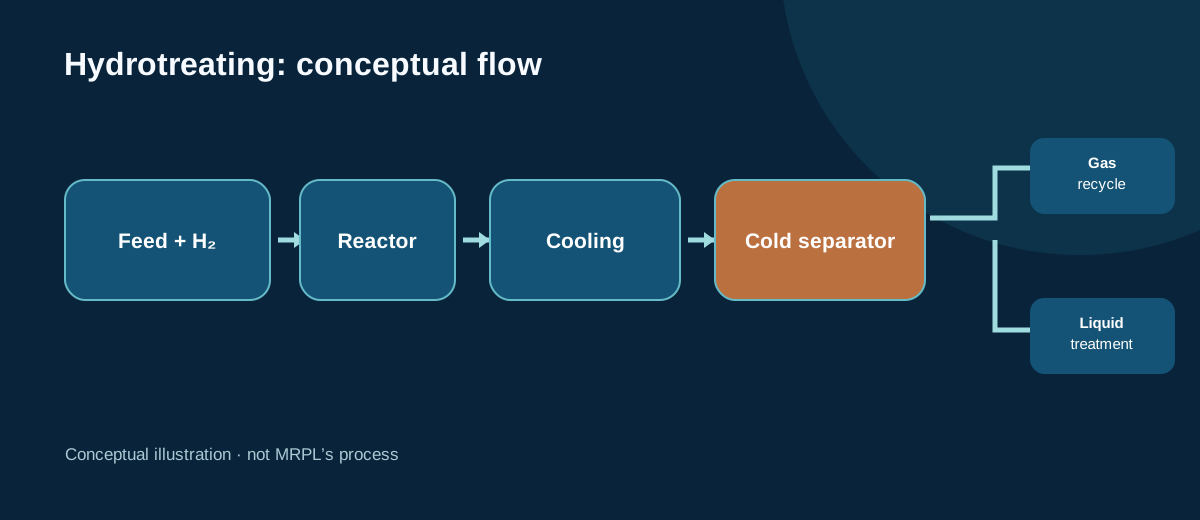
After the reactor, the stream cools and may contain hydrogen-rich gas, liquid hydrocarbons and, depending on the design, an aqueous phase. Separating these streams permits recycle, treatment or further processing. Our diagram is educational and does not claim to reproduce MRPL's flow sheet.
Why the cold separator matters
A high-pressure cold separator receives a cooled stream and provides space and residence time for phase separation while containing process pressure and inventory. Shell, nozzles, welds, supports, connections and instruments all contribute to the containment boundary. 'Cold' is relative to the hot upstream process; it does not mean low energy or low hazard.
Pressure, flammable inventory and hydrogen can coexist. An unintended opening releases material and energy and, under specific conditions, can generate a jet, dispersion and fire. The MRPL event's actual dynamics require physical and operating evidence that the public statements do not provide.
From process flow to loss of containment
The graphic below shows only a functional sequence: feed and hydrogen, reaction, cooling and separation. The separator is a containment boundary. Every arrow abstracts away piping, recycle, relief and controls that differ from one installation to another.
Loss of containment means material escaping from equipment meant to confine it. Under high pressure, release rate and stored energy can enlarge consequences even if the opening is localized. Prevention seeks to keep material contained; detection, isolation and emergency response limit harm if containment is lost.
Process safety and occupational safety
Occupational safety addresses recurring exposures such as falls, electrical contact, cuts and ergonomic harm. Process safety examines potentially severe, often less frequent events such as containment loss, fire, explosion and toxic release. Both protect people and must be integrated. A low personal injury rate alone cannot demonstrate that pressure vessels are sound.
Useful process indicators include releases by severity, demands on protective systems, overdue inspections, thickness anomalies, critical alarm performance, temporary changes and unresolved hazard analysis actions. Sound definitions, trends and action on weak signals matter more than one isolated count.
Mechanical integrity is a lifecycle
Start with design and material records, operating limits, credible damage mechanisms, inspection and maintenance history, and fitness-for-service decisions. Add risk-informed inspection plans, appropriate examination, traceable repairs, qualified welding, testing and review after changes. An inspection must seek the relevant mechanism in the right place and turn findings into operational decisions.
Corrosion, embrittlement, fatigue, fabrication defects, overpressure and maintenance are general investigation topics for vessels. They are hypotheses to examine, not reported causes at MRPL. Drawings, inspection records and preserved fragments carry more weight than speculation from afar.
Relief, instrumentation, isolation and response
Design and integrity are preventive layers. Pressure, level and temperature control, actionable alarms, independent trips where hazard analysis calls for them, and relief devices sized for relevant scenarios can prevent or slow escalation. Isolation, depressurization and firefighting can reduce consequences. A device's mere presence does not prove it covered this scenario or worked on demand.
MRPL reported isolation of the unit boundaries and complete fire extinguishment at 2:47 p.m. That documents a response, but reveals little about the state of safeguards before the rupture. A technical investigation needs timing, valve positions, trends, alarms, power, system status and field actions.
A safeguard map for better questions
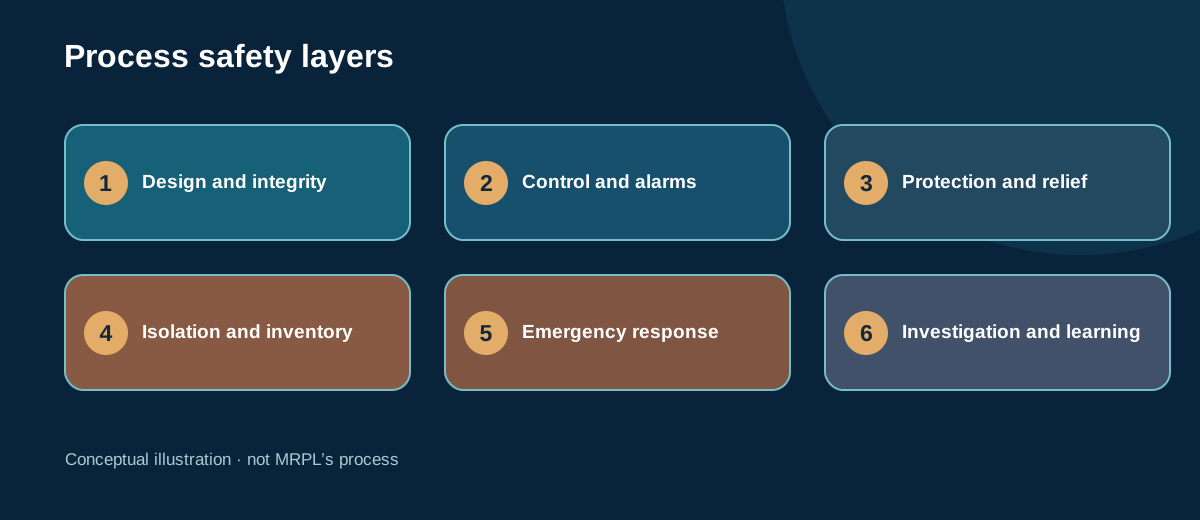
The figure groups design and integrity, control and alarms, protection and relief, isolation and inventory reduction, emergency response, and learning. Each layer needs a defined function, demand scenario, owner, test and effectiveness criterion. Layers sharing a sensor, power supply or human action may fail together.
HAZOP explores deviations; LOPA evaluates scenarios and layer independence; RBI focuses inspection according to risk; a SIS executes a specified instrumented function when designed for it. Acronyms do not replace sound data and field verification. This map does not depict confirmed MRPL safeguards.
What investigators must examine
Before naming a cause, investigators need to preserve evidence and reconstruct the timeline from operations and maintenance records, pressure, temperature and level trends, alarms, instrument event logs, samples, witness accounts and metallurgical examination. Design, materials, welds, repairs, inspections, damage mechanisms and operating limits all matter, including startup, shutdown and transient conditions.
Test relief and overpressure scenarios, valve and isolation behavior, configuration changes, work permits, the presence of employees and contractors, and earlier opportunities to detect warning signs. Every proposed mechanism should face confirming and disconfirming evidence. A root cause becomes a conclusion only when a competent investigation establishes it.
A CSB case offers a method, not MRPL's cause
In the 2022 BP-Husky Toledo refinery fire, the US Chemical Safety Board documented its own sequence involving vessel overflow, many alarms, an abnormal situation and naphtha release. Two workers died. Its report demonstrates how to reconstruct interactions, decisions and protective layers, including shared dependencies.
That vessel and sequence were different from MRPL's. The comparison is methodological: a single component or phrase rarely explains a complex event, and earlier signs and abnormal operations deserve scrutiny.
A practical connection for Brazilian operations
Brazil's NR-13 sets requirements for covered pressure vessels, boilers, piping and storage tanks; NR-20 addresses occupational safety in activities involving flammable and combustible materials. These are references for Brazilian readers, not rules governing an Indian refinery. Applicability depends on scope, current text and the specific facility.
Connect vessel records and design limits to inspection, hazard analysis, management of change, operator and contractor competence, emergency planning and safe restart. After a major event, absence of flame alone is not evidence that the unit is ready to operate.
Ten questions to ask now
Use these to review your own system, not to diagnose MRPL from a distance.
- What pressure, temperature and inventory limits govern critical vessels?
- Which credible damage mechanisms apply, and where are they inspected?
- Are inspections overdue, actions open or temporary repairs still in service?
- Which deviations did the HAZOP assess, and when was it revalidated?
- Do critical alarms have priority, a clear response and measured performance?
- Are relief and instrumented protection suitable and tested for relevant scenarios?
- How much inventory can be isolated, and how fast?
- Who may be nearby, including contractors, during abnormal operation?
- Is emergency response practiced for containment loss and fire?
- How is corrective action and safe restart effectiveness verified?
The lesson that should endure
One person died and another required treatment for burns. Respect for them calls for restraint in assigning causes and seriousness in prevention. Public documents describe the broad event but do not yet explain why the separator ruptured.
In high-energy systems, preventing frequent personal injuries remains vital. It must be joined by containment, verified equipment condition, detection of deviations and layers that stop escalation. Rigorous investigation and proof that improvements work are the lasting tribute to those affected.
Frequently asked questions
What caused the MRPL separator rupture?
The official filings reviewed through October 3, 2026 do not establish a failure mechanism or root cause. Rupture describes the event, not its cause.
How many people died in the MRPL fire?
MRPL's September 30 update confirmed one death and one person hospitalized with burns. Other media injury counts differ and are not treated here as an official total.
What is a high-pressure cold separator?
A vessel separating phases of a cooled process stream while containing pressure and inventory; details vary by facility.
Does Brazil's NR-13 apply in India?
No. NR-13 and NR-20 are cited only to help Brazilian readers apply the general lessons to facilities governed by Brazilian rules.
Why monitor process safety separately?
Rare, severe containment events need indicators of equipment and barrier health; personal injury rates alone do not measure these.
References
- MRPL CHT Unit Fire Incident — comunicado à NSEMRPL / NSE
- MRPL Fire Incident: Further Updates — comunicado à NSEMRPL / NSE
- An Overview of HydrotreatingAIChE Chemical Engineering Progress
- Process safety management of highly hazardous chemicalsOSHA
- BP-Husky Oregon Chemical Release and Fire — relatório finalUS Chemical Safety Board
- NR-13 — Caldeiras, vasos de pressão, tubulações e tanques metálicos de armazenamentoMinistério do Trabalho e Emprego, Brasil
- NR-20 — Segurança e saúde no trabalho com inflamáveis e combustíveisMinistério do Trabalho e Emprego, Brasil