
How the October 2026 Ulsan chemical fire unfolded, why toluene handling requires multiple barriers, and what investigators still need to establish.
The event and the limits of the evidence
Published October 15, 2026. Factual cutoff: Yonhap, October 15 at 14:16 KST; environmental information available in the October 14 report at 16:44 KST. Incident times are KST (UTC+9).
A fire broke out at a chemical manufacturing facility in the Onsan industrial area of Ulsan, South Korea, on October 14, 2026. According to reports citing Ulsan fire authorities, it began at 9:41 a.m. local time during the transfer of toluene from a storage tank into receiving containers. The flames affected drums kept outdoors and spread to seven storage tanks. Firefighters reported full extinguishment at 1:50 p.m. No casualties had been reported at the time of the latest coverage reviewed. Approximately 7,000 workers from a neighboring petrochemical construction site were evacuated.
The event illustrates a crucial process-safety principle: a routine operation can contain several high-consequence hazards at once. Moving a flammable solvent from a tank to smaller containers involves transfer equipment, potential vapor release, ignition control, storage layout and emergency preparedness. Each step must be considered as part of the overall system.
A distinction matters from the outset: the exact ignition cause was still under investigation. Static electricity, electrical faults and other potential ignition sources are legitimate lines of technical inquiry, but none should be presented as the established cause of this incident.
What is known about the Ulsan fire?
In its October 14 account, according to detailed Yonhap reporting, toluene was being transferred through a connected pipe to approximately 200-liter drums. Fire spread from the transfer area to drums stored nearby and then to seven outdoor tanks containing flammable products. Reported substances included toluene, thinner, acetone, ethanol and xylene. A later account said seven of the facility's 33 outdoor tanks were affected.
The facility and nearby industrial activities were disrupted. Workers at the chemical facility evacuated, while approximately 7,000 workers at the neighboring Shaheen petrochemical project moved to safety. Different reports gave different totals for emergency response personnel because they reflected distinct stages of the operation. An English Yonhap update cited 201 responders and 49 pieces of equipment; a later Korean-language report referred to 255 personnel and 106 pieces of equipment over the expanded response.
Authorities continued monitoring air quality and took precautions to prevent firefighting water and hazardous residues from reaching the sea. The later Yonhap report stated that no chemical discharge into the marine environment had been identified at that point, while environmental assessments were ongoing. A preliminary finding should not be confused with a comprehensive environmental clearance.
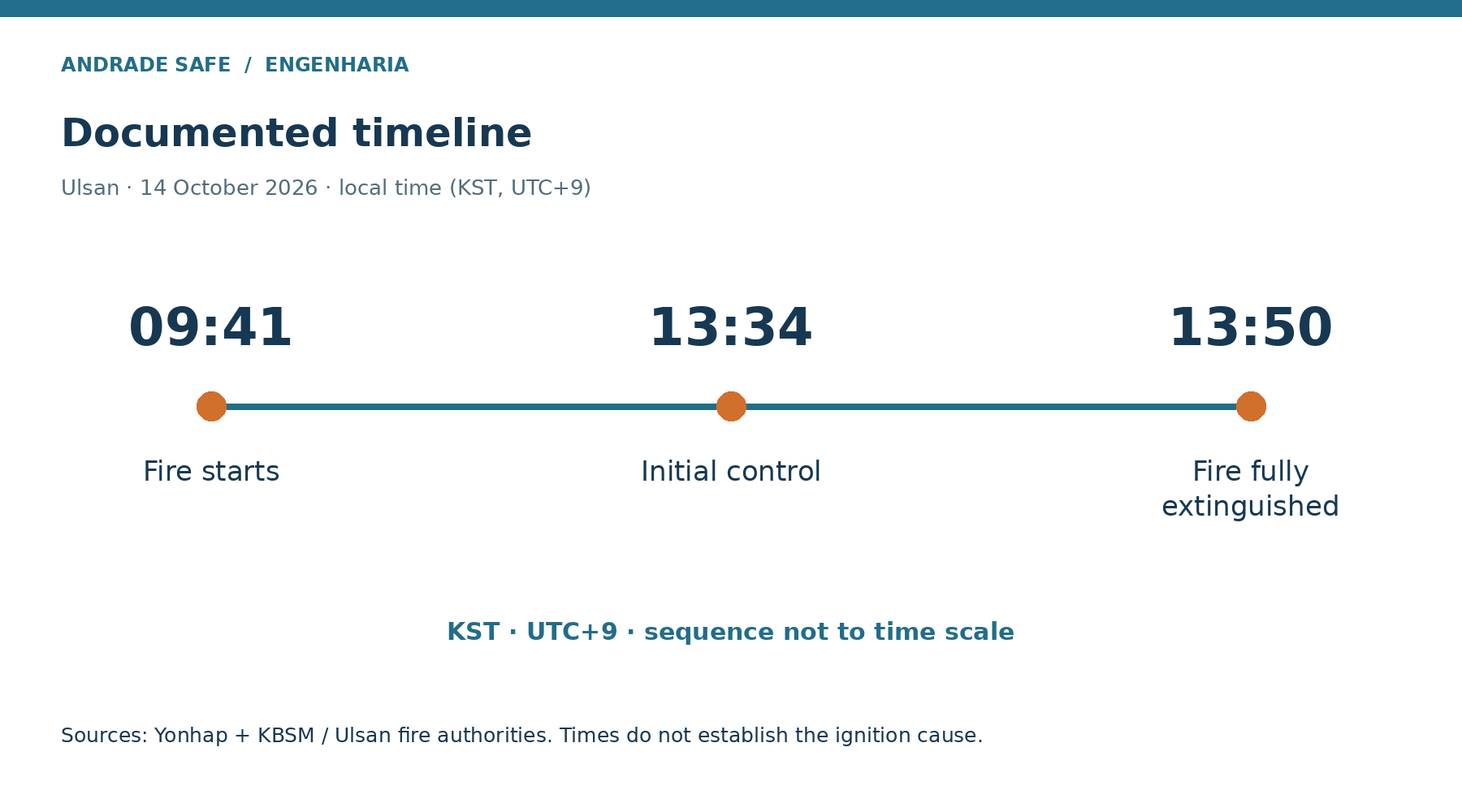
| Milestone | Date and time KST (UTC+9) | Evidence status |
|---|---|---|
| Reported start | October 14, 2026 — 09:41 | Fire during toluene transfer; source: Yonhap. |
| Initial control | October 14, 2026 — 13:34 | KBSM citing fire authorities; not full extinguishment. |
| Full extinguishment | October 14, 2026 — 13:50 | Source: Yonhap. |
| Joint forensic examination | October 15, 2026 — 11:00 | About 1h40; piping collected for analysis; source: Yonhap. |
October 15 update: forensic examination and the receiving container
On October 15, Yonhap reported that a joint forensic examination began at 11 a.m. and lasted about one hour and forty minutes. The National Forensic Service collected piping used to transfer toluene from an outdoor storage tank into an intermediate bulk container (IBC) of approximately 1,000 liters. The update again reported no casualties.
An important documentary distinction remains: October 14 accounts described transfer into approximately 200-liter drums; the October 15 report identifies an approximately 1,000-liter IBC in the transfer line under examination. The capacities are not interchangeable, and the accounts do not justify drawing a definitive installation layout. We preserve the reporting sequence and give priority to the newer detail for the equipment being investigated.
According to the October 15 update, police were considering the possibility of static electricity based on the company’s explanation and examining a valve’s condition and whether leakage could occur even with it closed. CCTV and vehicle recordings would also inform the inquiry. This is an investigative hypothesis, without confirmation of the ignition mechanism or root cause. Extinguishing the fire did not complete the investigation.
Why is toluene a hazardous substance in handling operations?
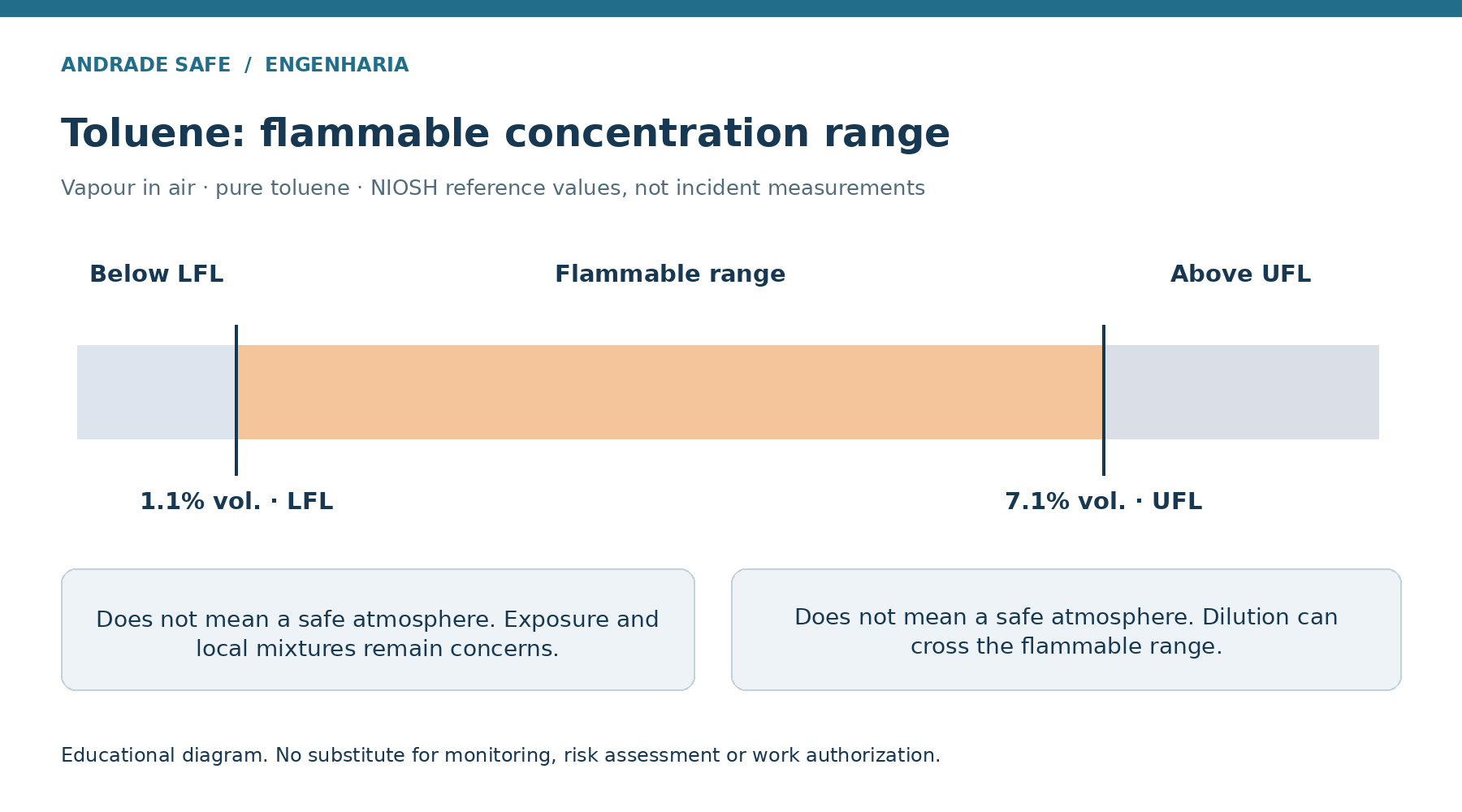
Toluene is a widely used organic solvent. Its vapors can form flammable mixtures with air, making containment and ignition control central concerns. The NIOSH Pocket Guide lists a flash point of 40 °F (approximately 4.4 °C) and a lower and upper flammable limit of 1.1% and 7.1% by volume, respectively, under reference conditions.
These are chemical reference properties—not measurements of the Ulsan site. They do not establish the vapor concentration, liquid temperature, ignition source or mechanism at the time of the fire.
A release of solvent does not always lead to ignition. A hazardous fire scenario requires a combustible mixture and a suitable ignition source. Once ignition occurs, the fire's growth depends on how much material is exposed, whether it can flow or leak, how tanks and drums are arranged, wind conditions, thermal radiation and the available response systems.
Flash point is a test temperature associated with enough vapor to ignite in the presence of an external source; it is not the autoignition temperature. The 1.1%–7.1% range is not an occupational safety clearance criterion. Initially rich mixtures can enter the flammable range when diluted with air, while toxic exposure requires its own assessment. The reference boiling point is 232 °F, approximately 111 °C, and ignition hazards can exist well below boiling.
| Pure toluene property | NIOSH reference | Interpretive limit |
|---|---|---|
| Flash point | 40 °F ≈ 4.4 °C | Test temperature, not autoignition. |
| Lower flammable limit | 1.1% by volume in air | Not an occupational exposure limit. |
| Upper flammable limit | 7.1% by volume in air | Dilution of rich mixtures can create a flammable region. |
| Boiling point | 232 °F ≈ 111 °C | Boiling is not required to generate flammable vapor. |
Solvent transfer: barriers before the first spark
Industrial transfer lines, pumps, hoses, containers and dispensing equipment can fail in different ways. Leaks, overflow, damaged fittings, poor ventilation and unsuitable electrical equipment all deserve attention in a preventive assessment. Movement of low-conductivity liquids can also generate electrostatic charges.
The Canadian Centre for Occupational Health and Safety (CCOHS) explains that solvents such as toluene may accumulate charge as they flow through piping or hoses. Bonding, which equalizes electric potential between conductive components, and grounding, which provides a suitable discharge path, are preventive measures whose design depends on equipment and container characteristics. Their importance is well established; their absence or failure in Ulsan is not established.
The United States OSHA regulation 29 CFR 1910.106 addresses flammable liquid transfer, ventilation, spill containment and ignition sources. In Brazil, the NR-20 provides an occupational safety framework for activities involving flammable and combustible products. These are useful comparative references, not evidence that U.S. or Brazilian regulations applied to the Korean facility.
Bonding connects conductive components to reduce differences in electric potential; grounding establishes a suitable electrical path to earth. They are not interchangeable. Nonconductive materials, metal parts of IBCs, connection continuity and the filling method require specific assessment: attaching a clamp to a plastic container surface does not demonstrate that charge in the liquid has dissipated. These are general technical considerations, not a diagnosis of the Ulsan installation.
What should the investigation examine?
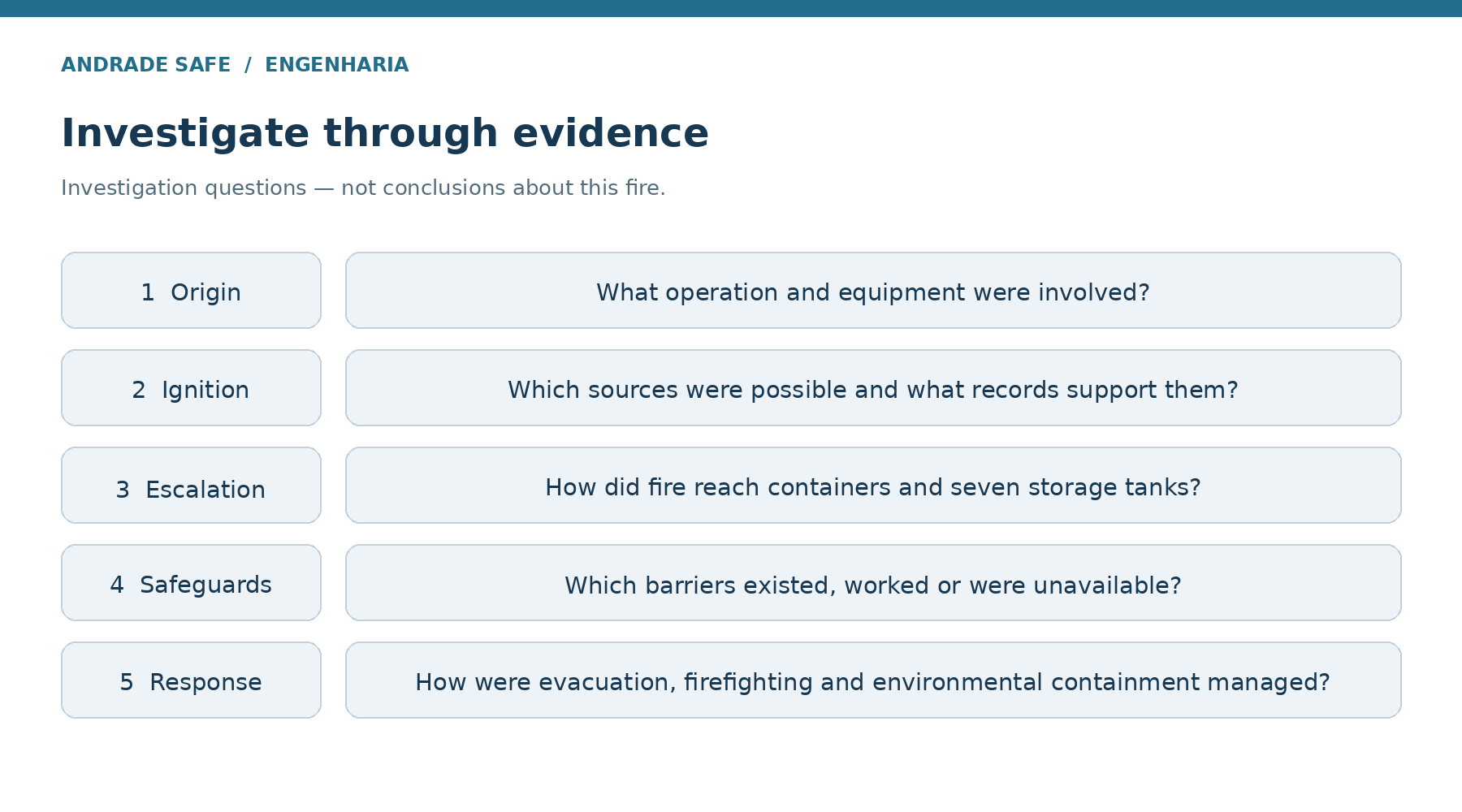
An adequate process-safety investigation cannot stop at “operator error” or an unspecified “safety failure.” It must connect physical evidence to the actual sequence of events and test hypotheses against documented conditions.
Key evidence groups include the following:
These are questions that should guide inquiry, not claims that particular safeguards were missing or had failed at the site.
| Reported information | Question to establish | Relevant evidence |
|---|---|---|
| Toluene transfer | Sequence, container and valve condition | Collected piping, forensics, operating records. |
| Static hypothesis investigated | Actual ignition mechanism | Continuity, materials, real conditions, recordings. |
| Seven tanks affected | Escalation path and safeguard performance | Layout, containment, drainage, protection and records. |
| Evacuation and monitoring | Response performance and remaining impacts | Alarm chronology, samples and documented results. |
- Process and equipment: piping arrangement, transfer pump, valves, container materials, solvent inventory, operating sequence and maintenance records.
- Ignition and vapors: electrical area classification, ventilation, grounding and bonding records, possible hot surfaces, CCTV, witness accounts and any available monitoring data.
- Fire escalation: separation distances, outdoor drum storage, containment, drainage, exposure of adjacent tanks, fire protection and wind conditions.
- Emergency response: detection, alarm, shutdown and isolation, mutual aid, evacuation triggers, communication with neighboring sites, air monitoring and protection of waterways.
How does a localized incident become a major industrial emergency?
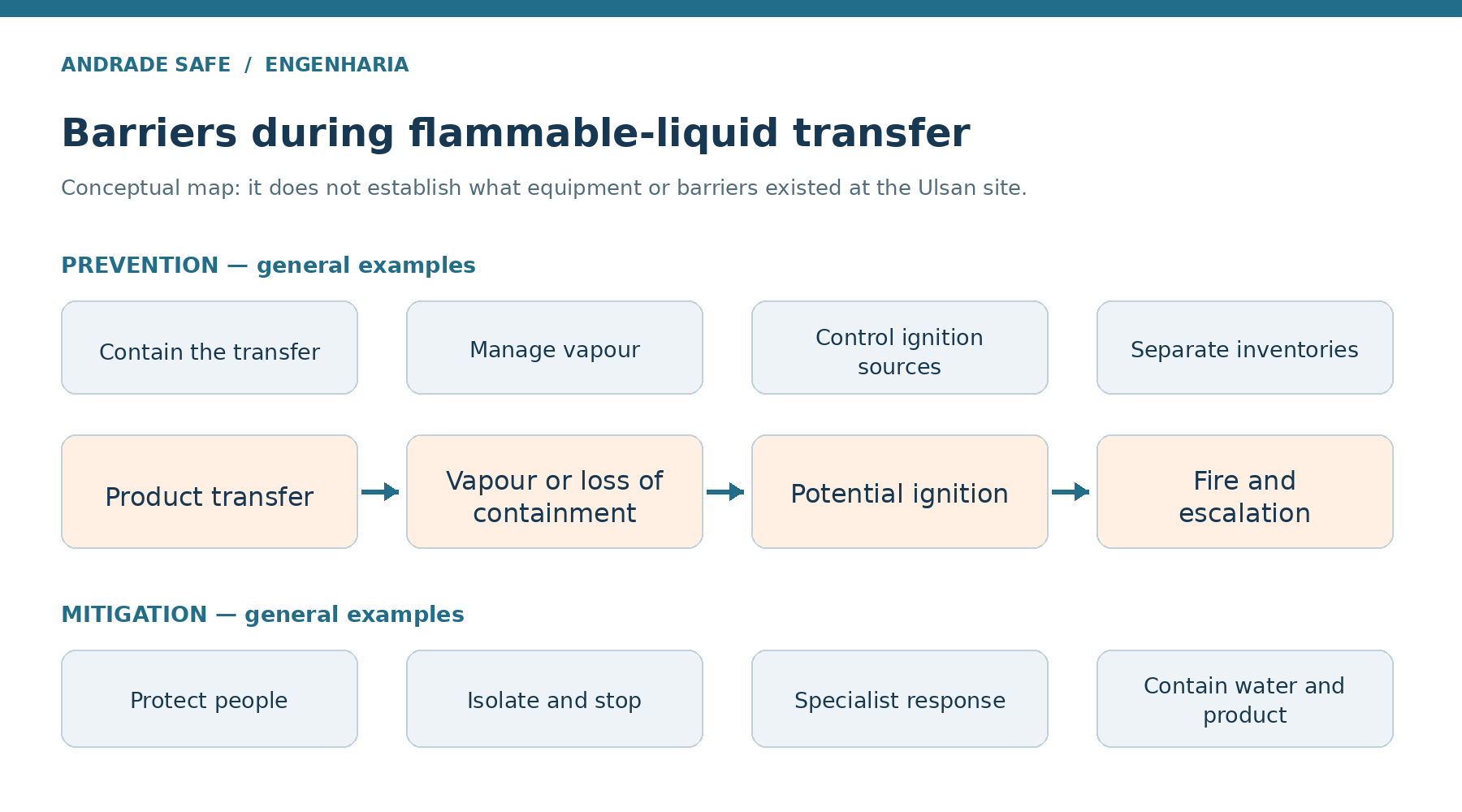
The progression from a solvent-transfer operation to seven storage tanks is the most useful feature of this case for learning about escalation. Process safety must prevent initiating events, but it must also control what happens if an initial barrier is defeated.
Preventive barriers seek to avoid an uncontrolled release or ignition. Mitigating barriers limit the amount released, isolate the process, reduce heat exposure, slow propagation, protect neighboring assets and allow workers to leave danger zones.
Spacing, drainage, spill containment, tank protection, appropriate electrical equipment, emergency isolation, firefighting water supply and trained teams have to be assessed together. No single measure makes a complex chemical facility safe by itself.
Why did the evacuation of 7,000 workers matter?
Emergency impacts can cross property boundaries. In Ulsan, workers outside the chemical manufacturer were affected by smoke and the proximity of a potentially escalating fire. This demonstrates why industrial parks and adjacent construction projects need coordinated alarms, communication channels, refuge or evacuation plans and clear criteria to suspend work.
Evacuation can reduce the number of people exposed to smoke, heat and other hazards. The reported absence of casualties is encouraging, but a comprehensive review would still assess how the response worked and what the affected companies can improve.
Environmental consequences must be measured—not assumed
Chemical fires may affect air quality, generate contaminated extinguishing water and leave residues requiring controlled removal. Atmospheric monitoring, drainage isolation, sampling and transparent reporting are essential to distinguish actual impact from speculation.
Reports on the Ulsan response mentioned continued monitoring and actions to keep firefighting water and chemicals out of the sea. At that stage, authorities had not identified a marine chemical release, while effects on air quality and residents' health were still being assessed. Those statements are specific to the date and should be updated if new evidence is published.
Lessons for Brazilian operations
For sites handling flammable liquids in Brazil, the case is an opportunity to review risk assessment, transfer procedures, mechanical integrity, electrical installation in classified areas, grounding/bonding, combustible inventory, chemical storage, emergency planning and interaction with neighboring businesses in line with applicable obligations, including the NR-20.
A practical question is: if fire starts during a transfer, what physically prevents it from spreading to the next group of drums or tanks? The answer must come from engineered and maintained barriers, not paperwork alone.
Ulsan's exact ignition cause has not been established in the reports reviewed. The broader lesson is nonetheless clear: a credible industrial safety system protects people by preventing fires where possible and limiting their consequences when prevention is not enough.
Download timeline and evidence (CSV) →
Frequently asked questions
Were there casualties?
The October 15, 2026 Yonhap update at 14:16 KST again reported no casualties. Approximately 7,000 workers from a neighboring construction site had evacuated.
Was static electricity the cause?
This has not been demonstrated. Static electricity is a known hazard during certain solvent transfers, but it remains a general technical hypothesis here.
What is toluene?
A flammable organic solvent used in industrial formulations and processes.
Does Brazil's NR-20 regulate Korean facilities?
No. It is cited as a reference for translating preventive lessons into the Brazilian regulatory context.
Was the sea contaminated?
In the October 14 report at 16:44 KST, Yonhap said no marine chemical discharge had been identified at that time. This is dated preliminary information, not proof of no environmental impact.
Does a 4.4 °C flash point mean toluene ignites by itself?
No. Flash point is a test property requiring an external ignition source under the test conditions. It is not the autoignition temperature.
Is the area safe below the LFL or above the UFL?
That conclusion cannot be drawn. Concentration varies in time and space, rich mixtures may dilute into the flammable range, and toxic exposure requires an independent assessment.
Are bonding and grounding the same?
No. Bonding reduces potential differences between conductive components; grounding provides a suitable path to earth. Design must consider the liquid, containers and electrical connections.
Was the receiving container a 200-liter drum or an IBC?
October 14 accounts mentioned approximately 200-liter drums. The October 15 forensic update describes an approximately 1,000-liter IBC in the transfer under investigation. These are dated accounts, not interchangeable capacities.
Does extinguishment authorize an immediate return to work?
No. Restart requires competent assessment of integrity, remaining hazards, the atmosphere and the applicable emergency plan and rules. This news article is not an operational clearance.
References
- Yonhap — 15 October forensic updateYonhap
- Yonhap — 14 October English updateYonhap
- Yonhap — 14 October expanded Korean reportYonhap
- NIOSH Pocket Guide — TolueneCDC / NIOSH
- Static ElectricityCCOHS
- 29 CFR 1910.106 — Flammable liquidsOSHA
- NR-20Ministério do Trabalho e Emprego
- KBSM — Ulsan fire, 14 October 2026경북신문 / KBSM
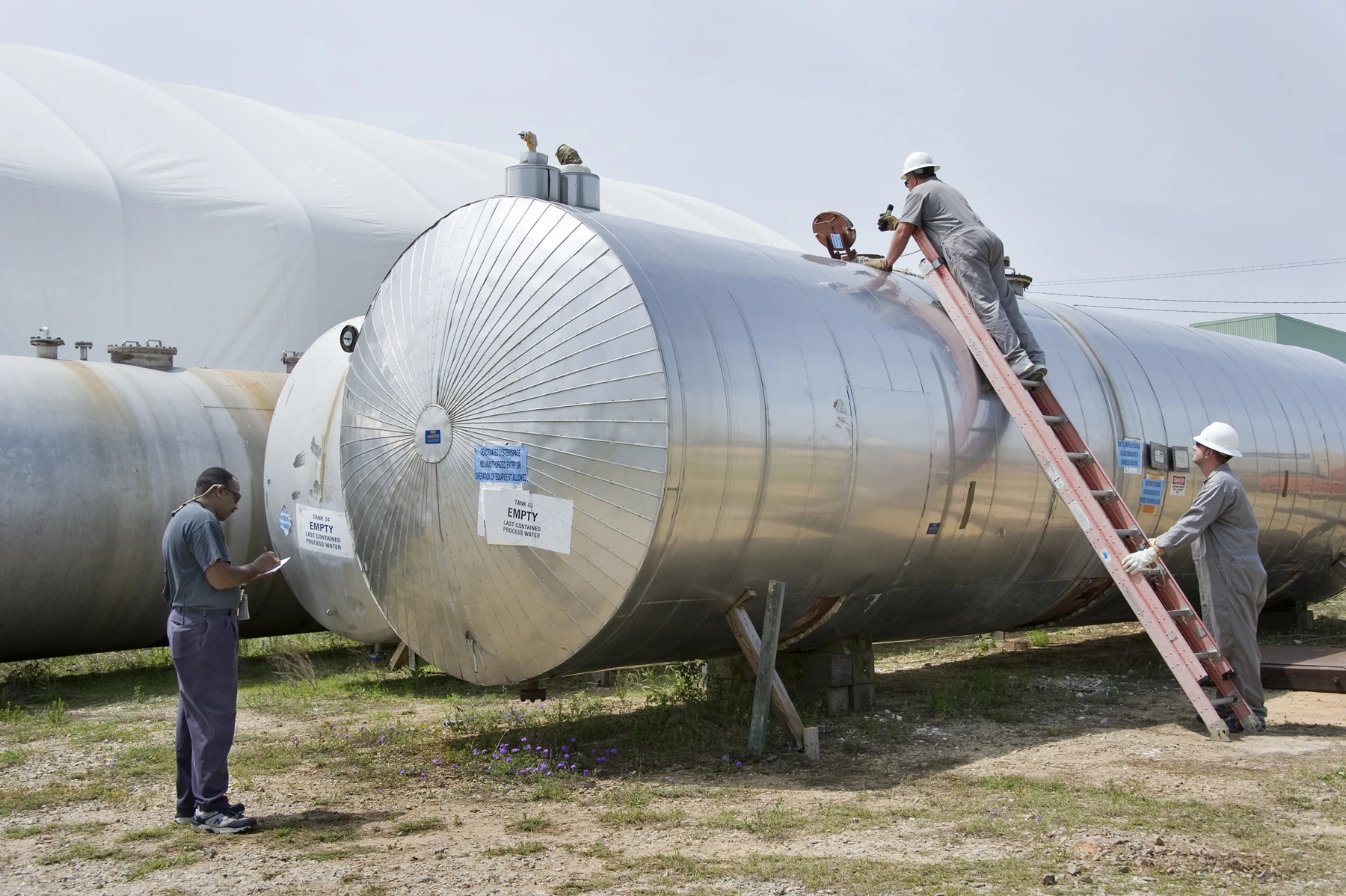
- 2011 archive photograph: workers beside Savannah River Site tanks in the United States; not the Ulsan incident. — Savannah River Site / U.S. Department of EnergyWikimedia Commons / Savannah River Site / U.S. Department of Energy
- Public domain (U.S. DOE official work); Commons also records Flickr CC BY 2.0Savannah River Site / U.S. Department of Energy
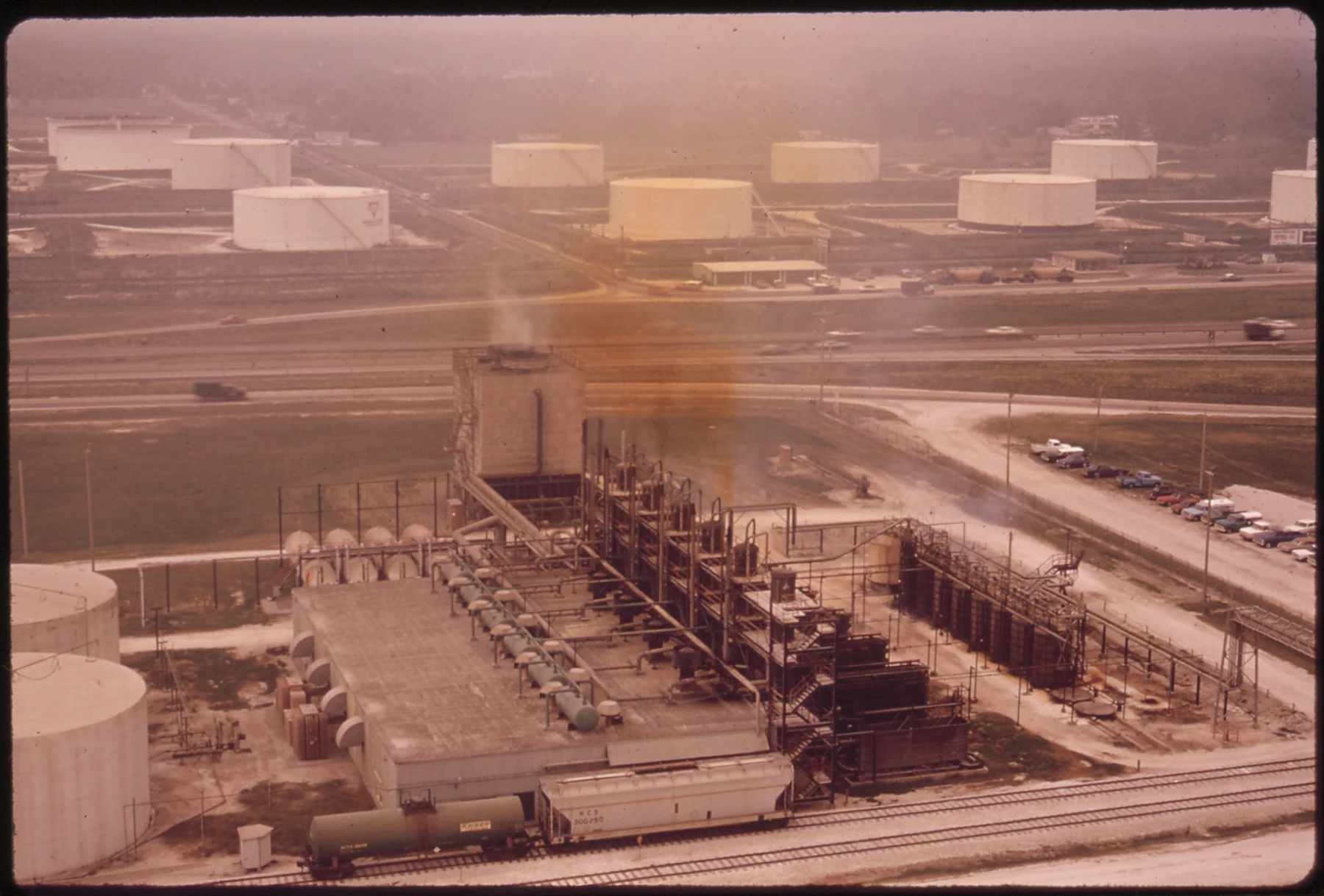
- Archive photograph: storage tanks and a petrochemical plant in Lake Charles, USA, June 1972; unrelated to Ulsan. — Marc St. Gil / U.S. EPA / NARAWikimedia Commons / Marc St. Gil / U.S. EPA / NARA
- Public domain (U.S. EPA official work)Marc St. Gil / U.S. EPA / NARA
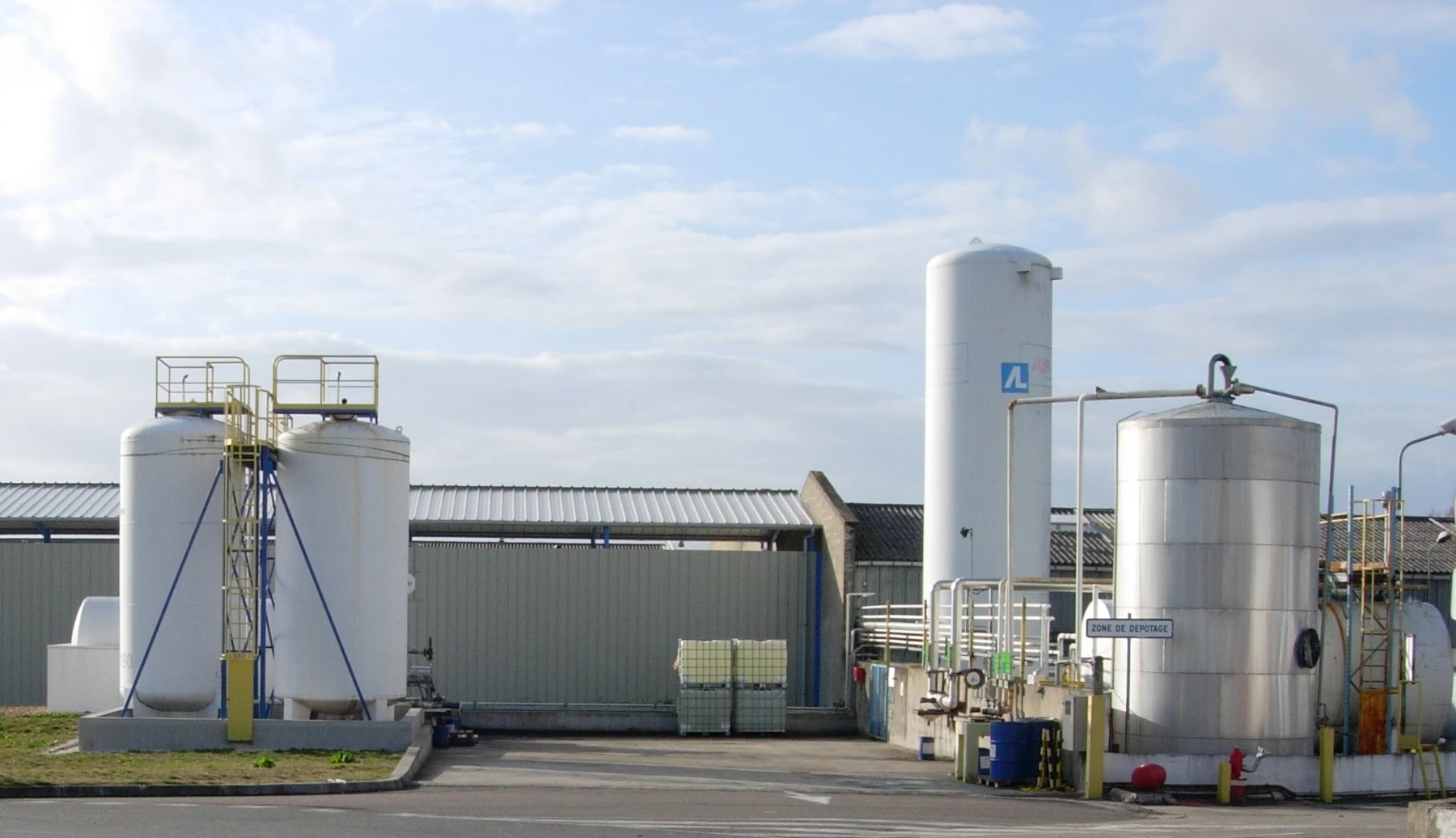
- 2009 archive photograph: tanks, pipework and intermediate containers at a parachemical plant in France; not Ulsan. — Cjp24Wikimedia Commons / Cjp24
- CC BY-SA 3.0 UnportedCreative Commons