
Understand offshore hurricane preparation through Isaias: evacuation, well shut-in, DP rigs, ESD, safety barriers and controlled restart.
When lower output provides greater protection
Before a storm arrives, an offshore installation may need to do what seems opposite to its purpose: remove workers, suspend activities and stop production. That planned loss of availability can be the intended outcome of a prepared safety system. The goal is to protect people and keep hydrocarbons contained throughout the disturbance.
Hurricane Isaias in the Gulf of Mexico in October 2026 provides a case for understanding this engineering. The useful question extends beyond whether a platform can withstand wind. Can the operation recognize the threat, reach a verifiable safe state and organize a return without introducing additional risks?
Event figures in this guide are a dated snapshot. The discussion of evacuation, wells, processing, rigs and inspection explains general principles. Actual actions depend on the installation, its procedures and its conditions. This educational article does not replace an asset's operating plan.

Isaias: official information with time references
October 11, 2026 update: NHC confirmed landfall near Destin, Florida, at 01:30 UTC October 10 (20:30 CDT October 9; 22:30 BRT), at 90 knots, Category 2. At 09:00 UTC October 11, NOAA/NESDIS reported a post-tropical system with 25 mph winds and continuing flash-flood risk. The October 8 bulletins below remain as history, including the forecast available then.
Latest offshore survey located: MMA, October 10, cutoff 11:00 CDT (16:00 UTC; 13:00 BRT), 31 companies. The new column contains daily estimates, not final totals. No October 11 survey was located in this review. Inspections precede restart; the source provides neither a final damage inventory nor confirmation of full production recovery.
Editorial check: October 11, 2026, 09:04 BRT. The official NHC map archive again returned HTTP 403. No replacement map was created; the official link and existing educational visuals were retained.
The October 8, 2026 bulletin at 21:00 UTC, reproduced by NOAA/NESDIS, reported maximum sustained winds of 100 mph and minimum pressure of 975 mb. The center was at 24.4° N, 89.3° W, moving northeast. One hundred miles per hour converts to approximately 161 km/h; this is a unit conversion, not a separate observation.
The forecast reviewed indicated an approach to the northern Gulf Coast late Friday into early Saturday. A projected center track does not define the entire hazard area: wind, waves, rainfall and storm surge can affect locations away from that line. Operators need warnings and probabilities as well as the track.
The table summarizes the MMA's October 8 survey, cut off at 11:00 CDT — 16:00 UTC or 13:00 Brasília time. Production curtailment is estimated from operator reports. The figures establish neither damage nor casualties, and do not place every evacuated installation in the eye's direct path. Editorial review: October 8, 2026, 20:44 BRT; weather bulletin: 18:00 BRT.
NOAA/NESDIS · NHC storm description · 08 Oct 2026, 21:00 UTC →
NHC/NOAA · Hurricane Isaias advisory archive · 2026 →
MMA · Isaias offshore activity survey · 08 Oct 2026, 11:00 CDT →
Reuters · Hurricane Isaias strengthens as US Gulf Coast prepares for landfall · 08 Oct 2026 →
NHC/NOAA · official Isaias map and graphic archive →
NHC · Discussion #14 · 09 Oct 2026, 22:00 CDT →
MMA · 10 Oct 2026, 11:00 CDT →
| Indicator | 08/10 · 11:00 CDT (historical) | 10/10 · 11:00 CDT (provisional) |
|---|---|---|
| Platforms evacuated | 121 / 371 · 32.61% | 113 / 371 · 30.46% |
| Non-DP rigs evacuated | 5 / 11 · 45.45% | 8 / 11 · 72.73% |
| DP rigs moved | 4 / 17 · 23.5% | 1 / 17 · 5.88% |
| Oil shut in | 1,282,879 barrels/day · 62.89% | 1,402,692 bbl/d · 68.76% |
| Gas shut in | 1,127 million cubic feet/day · 57.35% | 1,229.2 MMCF/d · 57.44% |
What Shell and Chevron reported
Shell's Update #2 reported evacuation of all personnel and production shut-in at Mars, Olympus, Ursa, Vito and Appomattox; non-essential personnel had already been removed from Stones. Different assets received different measures under the same regional threat. The release retained the tropical-storm description because it reflected its issue time.
Chevron's October 8 update states that five company-operated installations were shut in. This replaces earlier reports referring to four. Keeping each statement tied to its release avoids merging early preparations with a later response.
These announcements do not establish one identical shutdown sequence for every asset or a fixed restoration time. Decisions depend on the forecast, physical condition, access and availability of connected systems.
Shell history: Update #2, October 7, 11:00 “CST”, as originally labeled; Update #3, October 8, 11:00 “CST”, confirmed completed evacuations and shut-in at Mars, Ursa, Olympus and Vito. On October 10, Update #4, 09:00 “CST”, announced crew returns; #5, 21:00 “CST”, reported no damage at Mars, Olympus, Ursa, Vito and Appomattox. This statement covers those assets only and does not confirm full production recovery.
Reuters reported on October 10 that Chevron was advancing remobilization and seeking full production restoration, with crew returns expected through Sunday, October 11. This describes progress and a forecast, not verified completion. Chevron’s page returned HTTP 403 during this review; its complete updated statement and a company damage assessment could not be validated.
Shell · Isaias Updates #2–#5 · 07–10 Oct 2026 →
Production platforms and drilling rigs perform different jobs
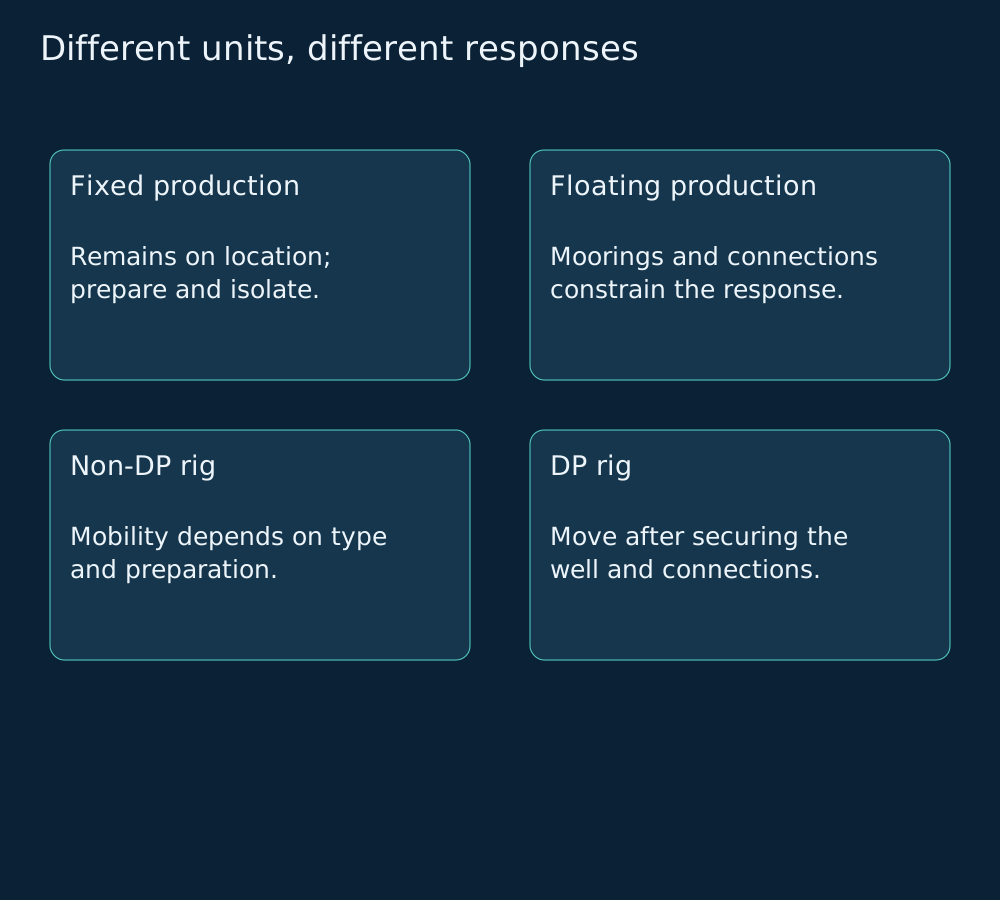
A production platform or hub receives hydrocarbons from wells, separates and treats fluids, and sends production onward. A rig performs drilling, completion or intervention work. Using “platform” for everything obscures this distinction and can suggest that every unit could sail away.
A fixed installation remains supported by the seabed. A floating production unit may be permanently moored and connected through risers and subsea equipment. Floating does not mean ready to disconnect. Some architectures permit disconnection, others do not, and any such maneuver requires asset-specific criteria.
A dynamically positioned rig, or DP rig, uses propulsion and position references to control its movement. Non-DP rigs can include jack-ups, platform rigs and moored units. Mobility, preparation and temporary abandonment arrangements depend on the unit type.
MMA · Isaias offshore activity survey · 08 Oct 2026, 11:00 CDT →
| Unit | Function / connection | Conditional response |
|---|---|---|
| Fixed production | Produces/processes fluids; remains seabed-supported. | Preparation, isolation and evacuation under the plan. |
| Floating production | Produces; may be permanently moored and connected. | Disconnect only where design and procedure permit. |
| Non-DP rig | Drilling/completion/intervention; mobility varies. | Preparation and removal depend on type and conditions. |
| DP rig | Controls position with propulsion and references. | May move after securing the well, interfaces and maneuver. |
The decision begins before the wind arrives
Preparation compares the time needed to shut down and remove personnel with the remaining safe access window. Helicopter or vessel access can end before the hurricane center approaches. Waiting for meteorological certainty can consume the margin needed to execute a decision.
Metocean forecasts bring wind, waves and currents into the assessment. They inform operator-defined triggers for reducing personnel, suspending non-essential work, stabilizing processes and preparing a shutdown. Forecast changes call for reassessment; one track estimate cannot serve as a frozen plan.
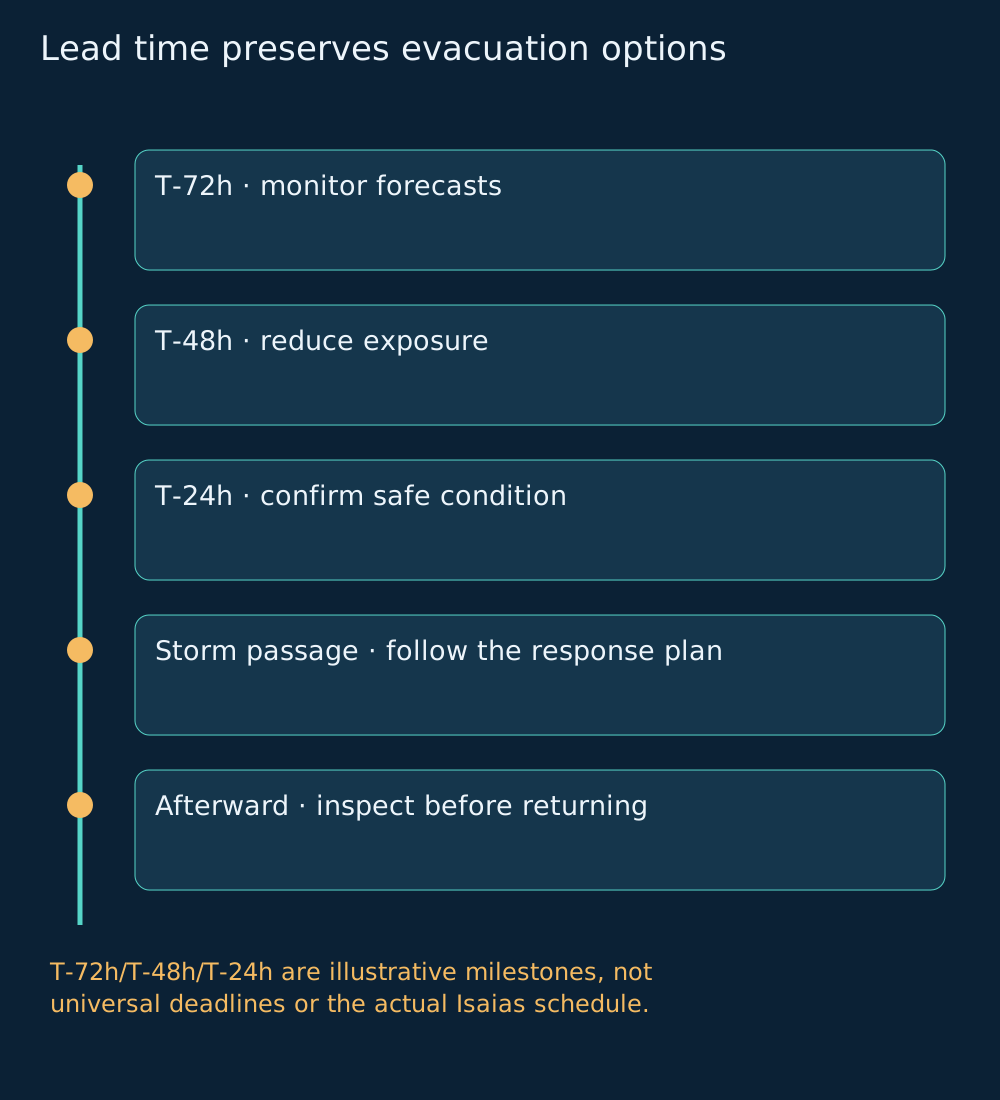
A T-72h, T-48h and T-24h timeline can explain this logic, but is neither a universal deadline nor Isaias's actual operating schedule. The diagram illustrates lead time and connected decisions. Distance, transport, design and intensification rate change the real triggers.
Evacuation is an engineering operation too
POB means persons on board. Accountability must identify who remains, who has boarded transport and who reached the destination. An outdated list undermines both removal and a response to an unaccounted-for person. Contractors belong in the same count and communication system.
Planning combines priorities, manifests, muster locations, helideck access, vessels, rescue resources and shore communications. Wind, visibility and sea state constrain transport. An available helicopter does not ensure a safe approach; a nearby vessel does not ensure safe personnel transfer.
Removing non-essential personnel first reduces exposure and leaves time for workers completing final preparations. Maintenance, lifting and simultaneous activities need reassessment during the transition. Staying until the last moment can turn planned removal into an emergency with far fewer options.
MTE · NR-37 · Segurança e saúde em plataformas de petróleo →
Well shut-in: stopping flow with verifiable barriers
Shut-in places a well or production system in a no-flow condition using the applicable design and procedure. It is more than switching off lights or stopping a pump. Reservoir energy and pressure can remain after the installation stops producing.
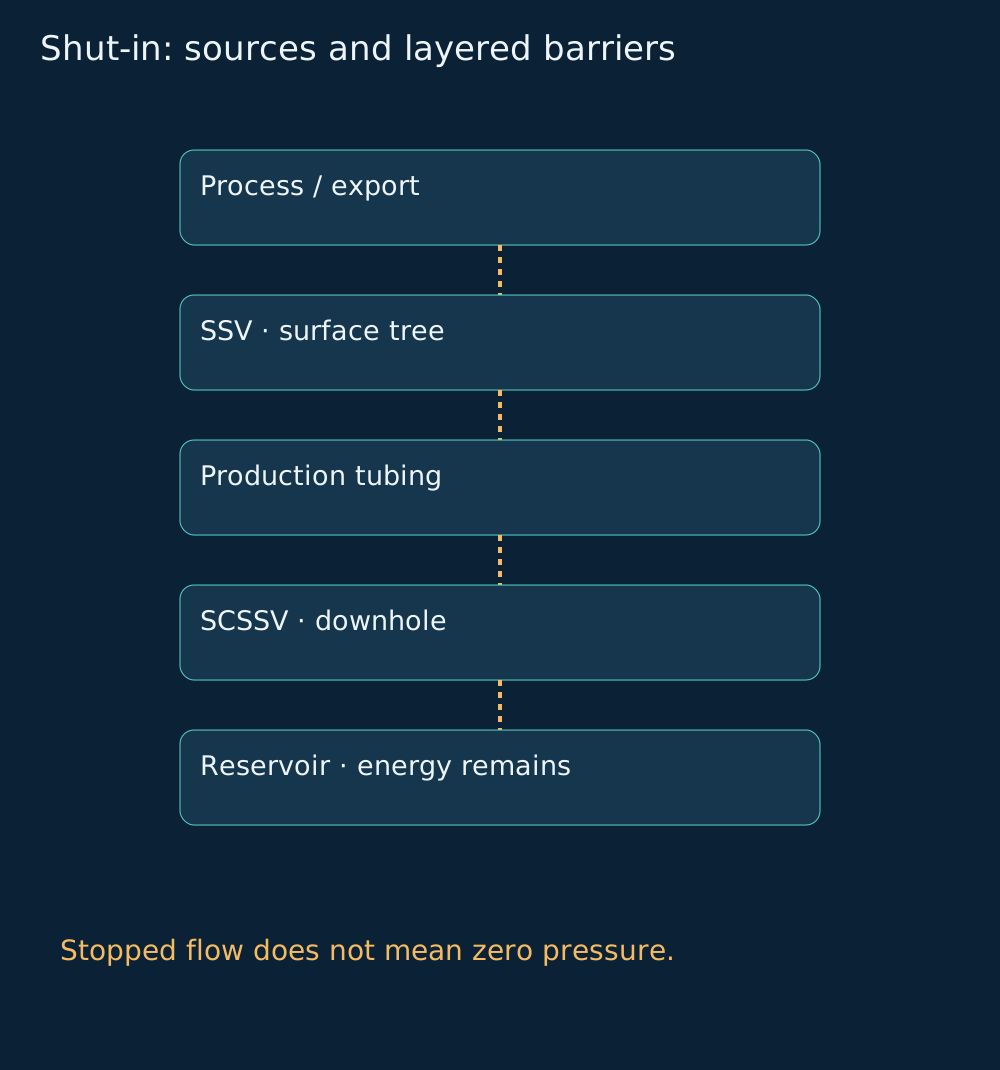
An SSV is a surface safety valve. An SSSV is a subsurface safety valve; a surface-controlled version is also called an SCSSV. The subsurface barrier operates in the well. A subsea tree combines valves and controls at the seabed, whereas a dry tree is accessible on the installation above the water.
Closure requires confirmation through the intended positions, pressures, signals, tests and records. A screen indication alone does not describe the entire isolation condition. Lines, vessels and trapped segments can retain pressurized inventory, so the assessment considers energy sources, containment and possible release paths.
The diagram depicts an educational production arrangement with a surface tree. It represents no Shell or Chevron asset and does not make one valve sufficient protection. Integrity, control, maintenance and verification sustain barrier performance over time.
eCFR · 30 CFR Part 250, Subpart H · Production safety systems →
The scope of the US dry-tree requirement
Section 30 CFR 250.821 in the eCFR reviewed addresses emergency action and shutdown for dry-tree installations. Where an emergency, including a named tropical storm, impacts or could impact the facility, its text provides for closing the SSV and surface-controlled SSSV on oil wells and gas wells requiring compression.
The reference illustrates safety through both surface and downhole barriers. Its wording cannot automatically be applied to subsea trees or every platform worldwide. Other provisions address subsea configurations; procedures must reflect the actual system and jurisdiction.
This article is not an instruction for manipulating valves. Sequences, limits, tests and exceptions must be defined and executed by qualified personnel under operator procedures. The eCFR is a US regulatory reference, not a requirement of Brazil's NR-37.
eCFR · 30 CFR 250.821 · Emergency action and safety system shutdown—dry trees →
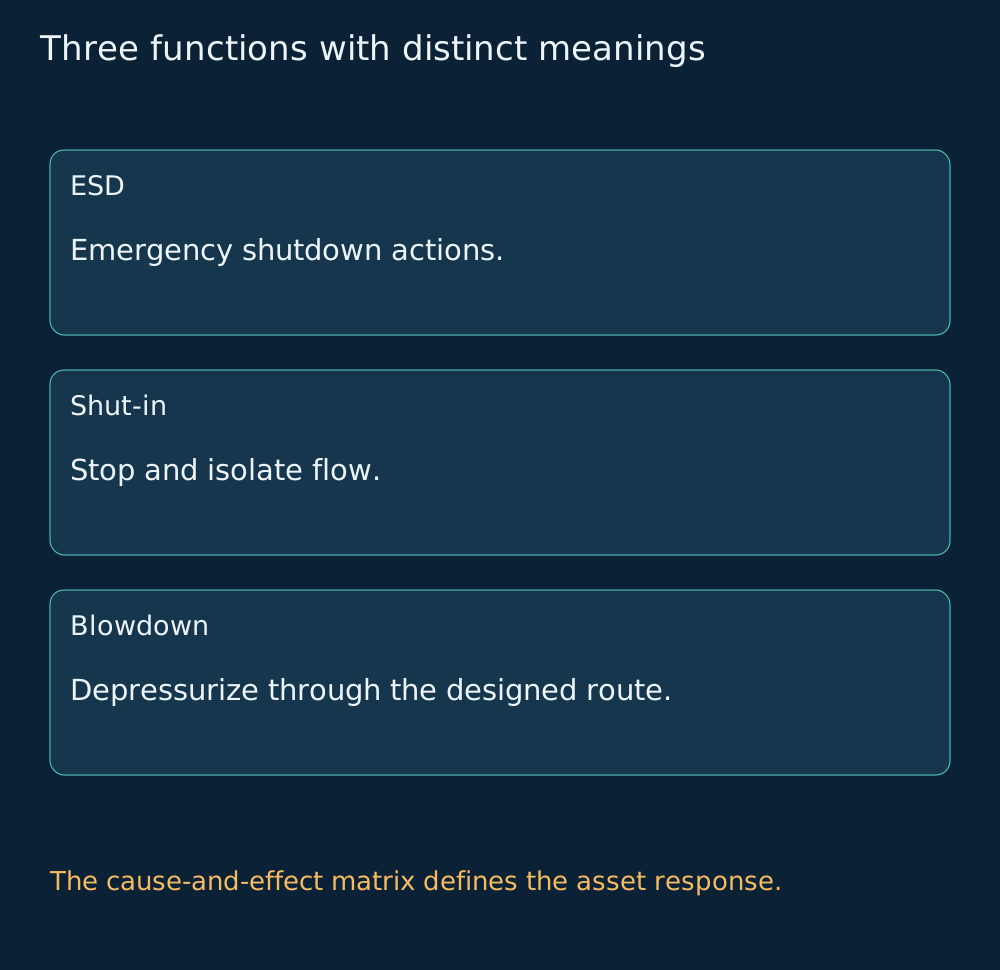
ESD, shut-in and blowdown serve distinct functions
ESD means emergency shutdown: the logic and actions that take equipment and processes to defined states for an abnormal condition. Depending on design, it may involve manual commands, automatic detection and actions on valves or equipment.
Shut-in describes stopping and isolating well or production flow. Blowdown is the planned depressurization of an inventory through a route designed for safe handling. Closing a valve does not remove every pressure source; activating ESD does not prove that every inventory has been depressurized.
The cause-and-effect matrix defines actions for each scenario. Confusing the terms can leave someone believing a system is free of energy or hydrocarbons without evidence. Operational communication needs to identify the function performed and the condition confirmed.
eCFR · 30 CFR Part 250, Subpart H · Production safety systems →
DP rigs: moving away requires securing the well
Dynamic positioning combines sensors, control and propulsion to hold a unit in position without a moored rig's typical anchoring arrangement. This can permit moving off location when appropriate. DP provides control and mobility, not immunity to every storm.
Before moving, well operations must be suspended and brought to the specified condition. Risers, connections and equipment must be addressed according to the unit's system. Engines do not permit departure while retaining arbitrary well connections: the well and its interfaces must be secured before the maneuver.
A BOP, or blowout preventer, is central in drilling and intervention contexts. It is not a production tree. Disconnect equipment and components of a drilling assembly must not be presented as though they were production-system valves. These distinctions change the barrier assessment.
MMA · Isaias offshore activity survey · 08 Oct 2026, 11:00 CDT →
Structure: a hurricane category is not a design class
The Saffir-Simpson scale communicates cyclone wind intensity. Offshore design uses metocean conditions, load combinations, dynamic response and specific criteria. There is no general basis for labeling every platform “Category 5.”
Wind loads exposed areas; waves and currents load structures, moorings and risers. Corrosion, fatigue and modifications can affect the available margin. A floating unit's offsets and dynamic forces must remain compatible with its mooring system and connections.
Loose materials, movable equipment and cranes also need preparation. Tie-downs require strength and condition consistent with their loads. An improvised restraint does not become an engineered solution because a storm is approaching. Pre-season inspection and maintenance support preparation during the event.
After the storm, restart brings another phase of risk
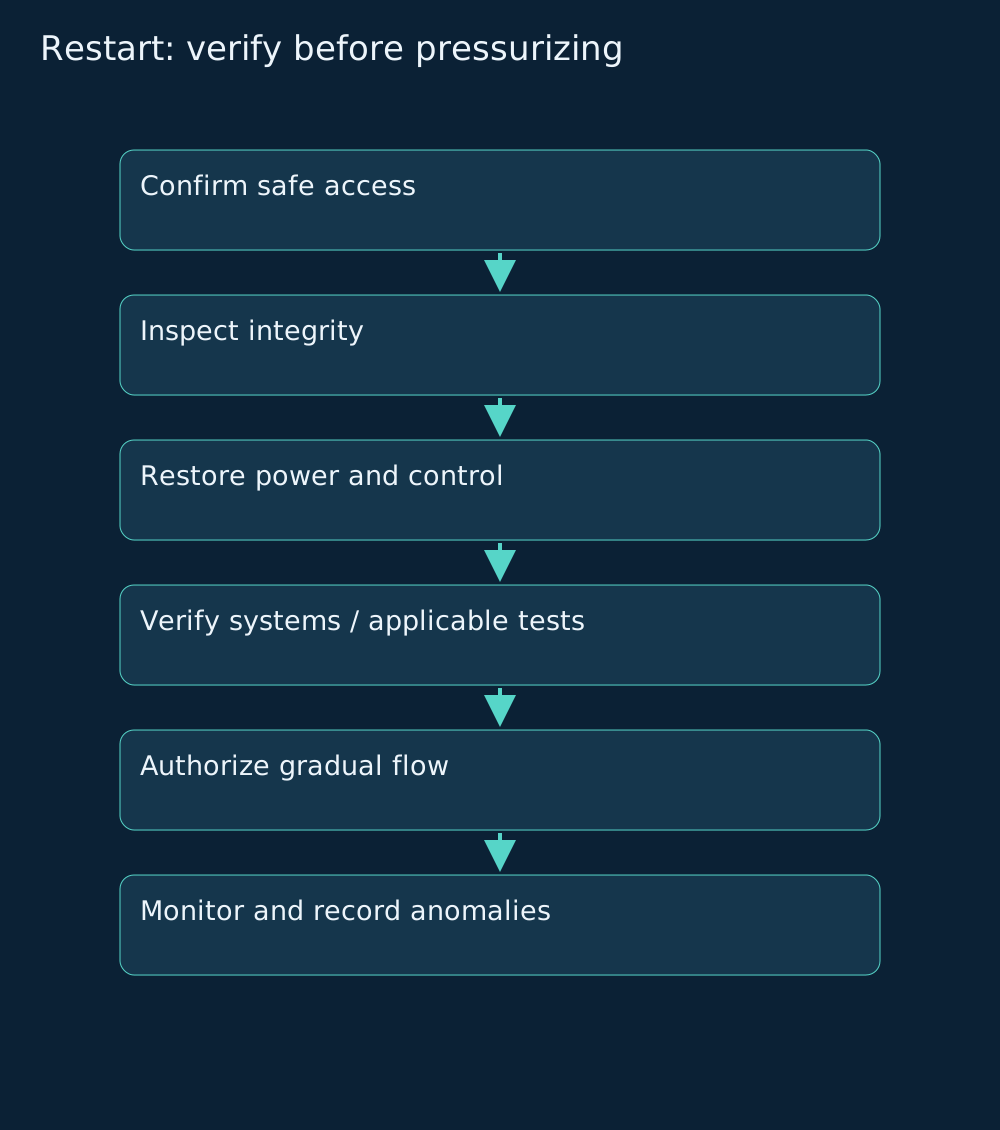
Improving weather permits assessment of a return; it does not prove that everything remains sound. Initial access already requires checking the helideck, landings and circulation routes. Damage can make an arrival unsafe even where it used to be routine.
Assessment covers structure, topsides, risers, lines, moorings and subsea systems where applicable. It seeks loss of containment, electrical damage, instrumentation failures and abnormal conditions. BSEE's post-hurricane inspection guidance illustrates the value of physical verification and records.
Power, telecommunications, control and safety systems return in a planned sequence. The asset also depends on pipelines, terminals and receiving facilities: an intact unit can remain shut in because of external constraints. Integrity and system tests follow the intended procedures and limits.
Reintroducing pressure and flow requires control and monitoring for abnormalities. Restart authorization rests on evidence and defined operational responsibility. The useful sequence is safe access, integrity confirmation, essential-system restoration, applicable testing and then a gradual production increase.
BSEE · Post-Hurricane Inspection and Reporting · NTL 2026-G01 →
Why stopping also protects the environment
Isolating sources and managing inventories can limit the likelihood and scale of a release if damage occurs. Protection depends on effective containment, not solely an administrative statement that output stopped. Hydrocarbons and residual pressure may remain in the system.
Environmental protection combines well barriers, process containment, lines, structural integrity and detection and response capability. A rushed restart can undermine earlier preparation. Major-accident prevention covers the transition into shutdown and the transition back to operation.
Isaias shut-in figures describe a precautionary response. They are not evidence of a spill, damage or failed barrier. Consequence assessment needs specific, identified and dated evidence.
eCFR · 30 CFR Part 250, Subpart H · Production safety systems →
SEMS: who can stop, evacuate and authorize restart?
Management systems connect hardware with human decisions. US SEMS integrates safety and environmental performance. API RP 75's public scope addresses offshore operations and assets, including contractors. Organizations must turn risk assessment into clear responsibilities and executable actions.
Stop Work Authority and Ultimate Work Authority make the ability to halt work and the final authority over a unit explicit. The practical questions are whether people know who decides, which conditions require escalation and how a changing situation is recorded. Diffuse responsibility can consume available lead time.
Preparation also depends on exercises, training, communication and learning. A season should produce records of anomalies, delays, transport difficulties and barrier performance. The lesson is to improve the system that supports early action and verification, rather than demanding greater courage from people offshore.
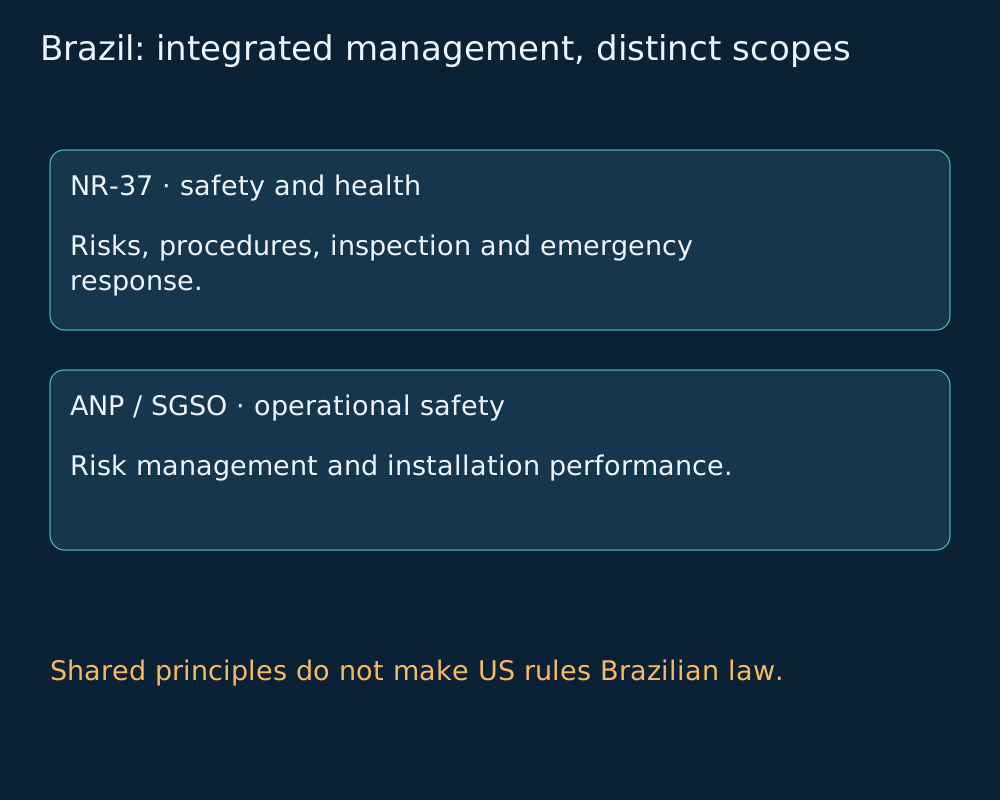
Brazil: NR-37 and SGSO in their own context
NR-37 establishes safety and health requirements for oil platforms in Brazilian jurisdictional waters. It covers risk management, procedures, inspection and maintenance, fire and gas detection, leak prevention and emergency response planning. These topics support the ability to transition to a safe state.
ANP describes SGSO as a regime focused on performance and risk management for offshore drilling and production installations. Similar principles do not make US rules Brazilian law. Design, threats, responsibilities and legal requirements must be addressed in the operation's own context.
Barrier engineering provides the useful connection: recognize a disturbance, protect people, control sources and verify conditions before intervention. The blog's Morpho/Amapá, MRPL and BP-Husky articles develop offshore operations, process containment and the quality of alarm response respectively.
MTE · NR-37 · Segurança e saúde em plataformas de petróleo →
Safety includes knowing when to stop and how to return
A resilient installation must know when to continue, reduce activity and stop. It must execute those decisions while transport, communication and maneuvering remain available. Forecasts, authority, people, equipment and integrity work together.
Isaias illustrates a regional operation in transition, not a final damage outcome. The figures here carry timestamps and sources. Confirmed inspections, consequences and production recovery should be added to this same article, preserving the case's history.
Zero output for a period can be a planned outcome. Safety quality appears in the ability to reach a stable state, demonstrate barriers and return under control. Stopping is one operating phase; restarting safely is another.
Frequently asked questions
Does everyone leave the platform?
It depends on the asset and phase. A strategy can begin with non-essential personnel removal and progress to full evacuation.
What does shut-in mean?
Stopping and isolating well or production flow through the intended means. Residual pressure and inventories still need consideration.
Is one subsurface safety valve enough?
No. Barrier performance depends on other layers of integrity, control, containment and verification.
Is ESD the same as blowdown?
No. ESD performs emergency shutdown; blowdown is a designed depressurization function.
Can a DP rig move immediately?
Mobility does not remove the need to secure well operations and address connections before moving.
Are platforms designed by hurricane category?
Engineering uses specific metocean criteria and loads. Saffir-Simpson is not an asset structural class.
Why can output remain shut in after the storm?
Inspection, repairs, access or pipeline and receiving-facility constraints can prevent recovery.
When can production restart?
After confirming access and integrity, verifying systems and meeting the applicable authorization and operating sequence.
Do evacuation figures prove damage?
No. Evacuation and shut-in are precautionary responses. Consequences need separate confirmation.
Does the US requirement apply in Brazil?
Not automatically. NR-37 and ANP regimes have their own scope and responsibilities.
References
- NOAA/NESDIS · NHC storm description · 08 Oct 2026, 21:00 UTCNOAA/NESDIS
- NHC/NOAA · Hurricane Isaias advisory archive · 2026NHC/NOAA
- MMA · Isaias offshore activity survey · 08 Oct 2026, 11:00 CDTMMA
- Shell · Tropical Storm Isaias Update #2 · 2026Shell
- Chevron · Hurricane Isaias · 08 Oct 2026Chevron
- BSEE · Hurricane Season InformationBSEE
- eCFR · 30 CFR 250.821 · Emergency action and safety system shutdown—dry treeseCFR
- eCFR · 30 CFR Part 250, Subpart H · Production safety systemseCFR
- BSEE · Post-Hurricane Inspection and Reporting · NTL 2026-G01BSEE
- BSEE · Guidelines for Tie-downs · NTL 2009-G13BSEE
- BSEE · Safety and Environmental Management SystemsBSEE
- API · Recommended Practice 75 · Public scopeAPI
- MTE · NR-37 · Segurança e saúde em plataformas de petróleoMTE
- ANP · Gerenciamento de Segurança Operacional (SGSO)ANP
- Reuters · Hurricane Isaias strengthens as US Gulf Coast prepares for landfall · 08 Oct 2026Reuters