
An engineering case study of the Bio-Lab Conyers chemical fires and toxic release, based on the CSB final report.
Can a safeguard introduce a hazard?
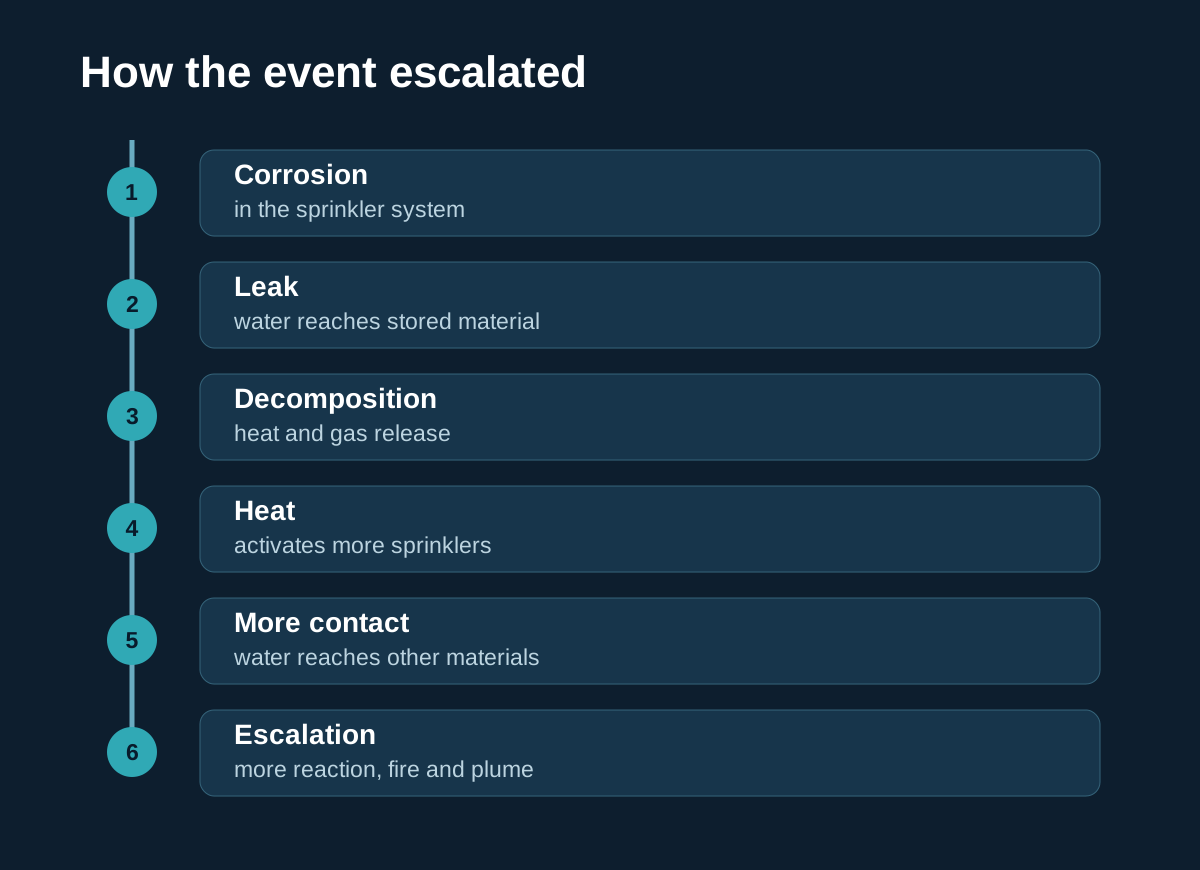
On 29 September 2024, water leaked from a corroded fire sprinkler system component in Bio-Lab's Plant 12 warehouse in Conyers, Georgia. The water reached concentrated chlorinated isocyanurates, triggering chemical decomposition, heat and hazardous vapours. Heat activated additional sprinklers, wetting more material and feeding further reactions, fires and a toxic plume. These are findings of the U.S. Chemical Safety and Hazard Investigation Board (CSB) final report, released on 21 July 2026.
The lesson is neither to remove sprinklers nor to call water a fuel. Fire protection must be designed and maintained for the chemistry, atmosphere, inventory and credible failure modes of the actual warehouse.
The event and community consequences
Off-gassing was under way around 5 a.m. Responders contained an initial fire, but heat from decomposing material activated sprinklers in other zones. Water reached additional chemicals; a second fire began around noon, followed by roof and wall collapse. Plant 12 was destroyed.
The CSB describes chlorine, hydrogen chloride, bromine and other substances in the smoke and vapours. About 17,000 people were reportedly evacuated and about 90,000 initially advised to shelter in place, figures attributed to local media by the CSB. Nightly warnings continued during a 17-day emergency response, and schools closed for nearly two weeks. No injuries were reported during the incident or response, but community disruption was substantial. Estimated property damage was $50.5 million.

Why can a little water matter?
Dosing pool-treatment chemicals into a large volume of water is different from wetting concentrated product in storage. The U.S. EPA warns that even a small water splash can initiate a strong reaction in some pool chemicals. In Conyers, the CSB attributes the initiating event to a sprinkler system leak onto chlorinated isocyanurates.
TCCA is trichloroisocyanuric acid; NaDCC is sodium dichloroisocyanurate, including anhydrous and dihydrate forms; BCDMH is a bromine- and chlorine-containing pool-treatment chemical. The nearly 14 million pounds in the warehouse was a combined inventory of several formulations, not one product. Emergency tactics must follow the specific SDS, site plan and qualified responders, not a blanket rule about water.
Corrosion preceded the leak
Sprinkler components experienced corrosion and leaks soon after chlorinated isocyanurates began to be stored in 2019. Vapours from stored products and ambient moisture could create corrosive condensate on metal. The warehouse was not air-conditioned and ventilation was inadequate to manage humidity for its inventory.
Inspections in 2021 and 2022 documented hundreds of deficiencies in the bunker. There, original brass-finish sprinkler heads were replaced with wax-coated corrosion-resistant heads in 2022; bolts and couplings were upgraded in 2023. Outside the bunker, where the chemicals were increasingly stored, brass-finish heads continued to be replaced in kind. In December 2023, inspectors visually observed corrosion on 1,124 sprinkler heads outside the bunker across four of seven zones.
Run to failure in a safety-critical system
The CSB calls the practice run to failure: corroded components were repaired or replaced after they failed and leaked, rather than eliminating the known corrosion mechanism throughout the exposed area. Ordinary corrective maintenance is not the issue; here, the failure mode itself introduced the initiating water.
The fire protection monitoring system recorded abnormal status on at least 60 of 637 calendar days between January 2023 and the incident, or 9.6% of that period. This does not mean 60 separate leaks. It is a persistent asset-integrity signal that warranted engineering attention.
Inventory growth changed the hazard
A 2019 submission to local authorities anticipated an average of about 6.2 million pounds of raw materials, including oxidizers. By September 2024, nearly 14 million pounds of TCCA formulations, NaDCC, NaDCC dihydrate and BCDMH combined were stored in the warehouse. Roughly 5,000 super sacks each held 2,205 to 2,805 pounds of chlorinated isocyanurates; other BCDMH bags were present.
This comparison describes a changing risk picture, not a claim that the earlier number was a legal cap. More material outside the bunker changed sprinkler exposure, storage configuration, access and potential consequences. Management of change must include physical inventory and layout.
The layout constrained response
Many super sacks stood in multiple rows, double-stacked against a wall outside the bunker. Employees and responders could not reach the bags where initial off-gassing occurred because other bags blocked them. An attempt to move bags in front of the affected area ended as the plume intensified and visibility deteriorated.
Storage is not merely a logistics question. Aisles, stack dimensions, visibility and access affect inspection, early detection and intervention. The CSB also identifies continuous automated monitoring such as thermal cameras as an industry lesson, without treating it as a substitute for compatible design.
Fire protection and process chemistry must be designed together
The engineering question is how to reconcile the chemical classification, water reactivity, corrosive environment, construction materials, ventilation and fire protection requirements applicable to the facility. There is no responsible generic instruction to remove sprinklers or choose a suppression tactic from this case alone.
NFPA 400 and NFPA 13 are central to the US investigation and its recommendations. Their use in another jurisdiction depends on that jurisdiction's adopted codes, authorities and approved design; they are not automatically Brazilian law.
Lake Charles 2020 and Conyers 2024
At Bio-Lab Lake Charles in 2020, Hurricane Laura damaged roofs and rainwater reached stored TCCA. In Conyers in 2024, the first ingress came from a corroded sprinkler component; later heat activation of other heads amplified contact. The chemical family and water interaction overlap, but the initiating routes and barriers are distinct.
The CSB concluded that KIK had not adequately institutionalized lessons from earlier incidents and component failures across comparable facilities. Organizational learning means translating evidence into design standards, maintenance priorities, audits and verified action at company and third-party sites.
| Aspect | Lake Charles 2020 | Conyers 2024 |
|---|---|---|
| Water ingress | Hurricane damage and rain | Corroded sprinkler component |
| Material | Stored TCCA | Chlorinated isocyanurates and other materials |
| Main barrier | Weather resilience and building integrity | Sprinkler integrity, compatibility and layout |
| Shared lesson | Anticipate water-product contact | Apply learning across sites |
US regulatory coverage and open recommendations
The CSB examined how stored reactive precursors could produce toxic substances without falling under the federal OSHA PSM and EPA RMP coverage rules in effect for this site. This is a finding about US regulatory coverage, not a legal conclusion about a Brazilian warehouse.
Seven recommendations were issued: four to KIK Consumer Products and three to the National Fire Protection Association. All seven were listed as open on the CSB recommendations page checked on 28 September 2026. Their status should be revalidated as the record changes.
A Brazilian engineering parallel
Brazil's NR-1 links hazard identification, occupational risk assessment, action planning, verification of controls and emergency preparedness. NR-26 addresses GHS-based classification, preventive labels, safety data sheets (FDS in Portuguese) and training. An SDS should inform storage, segregation, material selection, maintenance and emergency planning; it is not a substitute for a site-specific risk analysis.
NR-23 can be relevant to fire protection under applicable local rules, but it does not by itself prescribe a specific sprinkler arrangement for these chemicals. NR-20 is not assumed to apply. NFPA standards cited by the CSB should not be presented as automatic Brazilian legal duties.
Engineering review questions
Use these questions to structure a professional review, not as firefighting instructions.
- What does each SDS say about water, moisture and decomposition products?
- Can normal storage generate corrosive vapours?
- Are sprinkler and building materials compatible with the actual atmosphere?
- Are humidity and ventilation adequate for the current inventory?
- Are corrosion, leaks and abnormal alarms recurring?
- Was fire protection reassessed when inventory and layout changed?
- Do stack sizes and aisles preserve inspection and access?
- Are different formulations identified and segregated?
- Can decomposition be detected before access is lost?
- Do product, volume and third-party changes trigger hazard review?
- Were lessons from previous incidents applied across sites?
- Has potential community impact been assessed?
- Do responders have current information and a planned route of access?
- Are engineering, maintenance and emergency responsibilities explicit?
Five transferable lessons
Know the reactivity of stored materials; design for the real chemical atmosphere; correct corrosion before a leak introduces the initiating agent; treat inventory and layout as risk variables; and turn prior incidents into verified company-wide action.
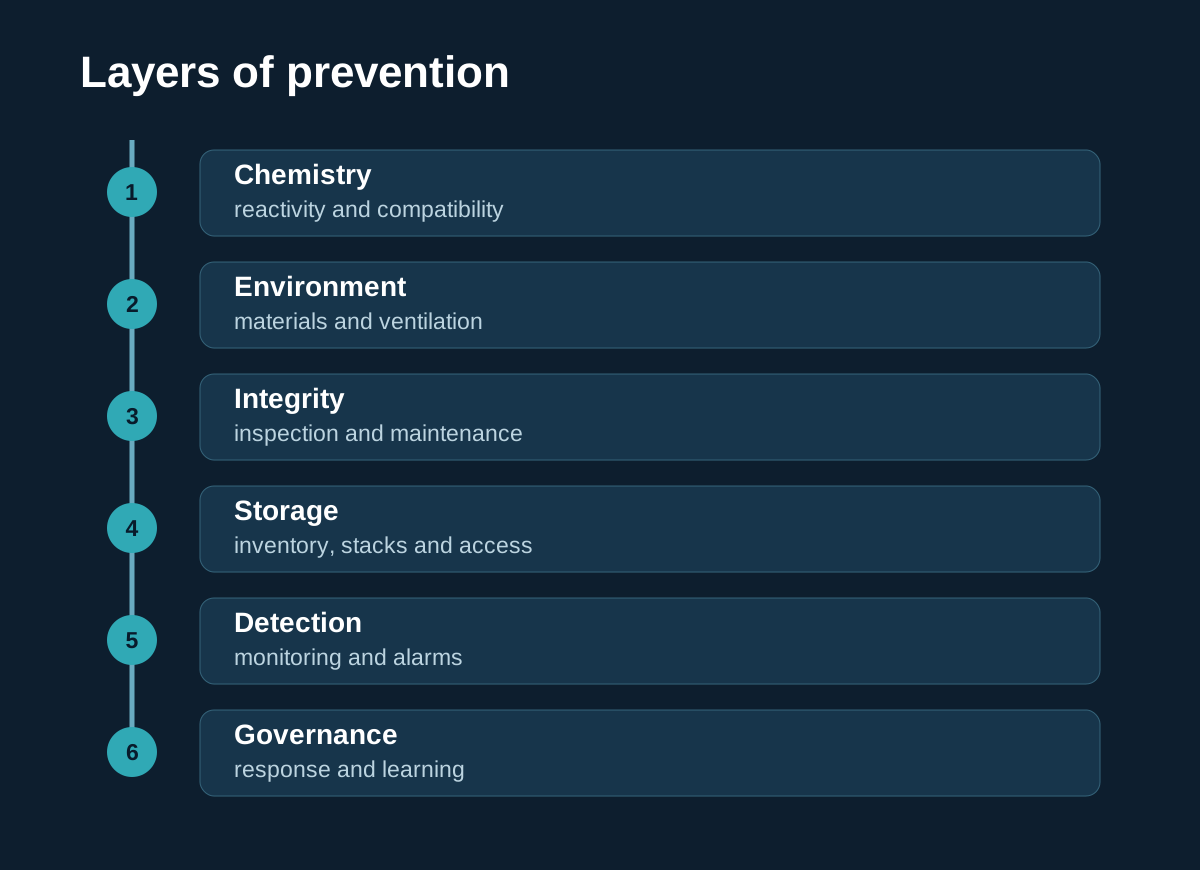
Conyers shows that a barrier must be assessed for how it interacts with a changing process. If your operation stores chemicals, a useful review connects SDS information, inventory, structure, ventilation, fire protection, maintenance and emergency planning.
Frequently asked questions
Why can a little water react with pool chemicals?
Localised contact with concentrated product can initiate exothermic decomposition and hazardous vapours; it differs from controlled dosing into a large volume of water.
Can a sprinkler worsen a chemical fire?
In a specific incompatibility scenario, water from a failed component or heat-activated heads can reach reactive material. This calls for compatible engineering, not blanket removal of sprinklers.
What does run to failure mean here?
Replacing corroded sprinkler components after leaks, without eliminating the known degradation mechanism throughout exposed areas.
What does the case teach about chemical warehousing?
Inventory, stack configuration, aisles, access, ventilation and asset integrity all affect detection, response and consequence.
Are NFPA 400 and NFPA 13 Brazilian legal requirements?
Not automatically. Applicability depends on local law, fire authority, approved design and standards adopted for the facility.
How does NR-26 relate to the case?
Classification, labels, safety data sheets and training should inform actual storage, segregation, engineering and emergency decisions.
References
- CSB Final Report — Chemical Decomposition, Fires, and Toxic Gas Release at Bio-Lab ConyersU.S. Chemical Safety and Hazard Investigation Board
- Bio-Lab Conyers investigationCSB
- Recommendations — Bio-Lab ConyersCSB
- Bio-Lab Lake Charles Chemical Fire and ReleaseCSB
- Chemical Safety Alert: Safe Storage and Handling of Swimming Pool ChemicalsU.S. Environmental Protection Agency
- NR-1 — Disposições Gerais e Gerenciamento de Riscos OcupacionaisMinistério do Trabalho e Emprego
- NR-26 — Sinalização de SegurançaMinistério do Trabalho e Emprego