
The Equinix NY2 spill reveals the physical cloud. Explore generators, diesel, valves, containment, drainage and environmental response.
The cloud is physical — and it stores fuel
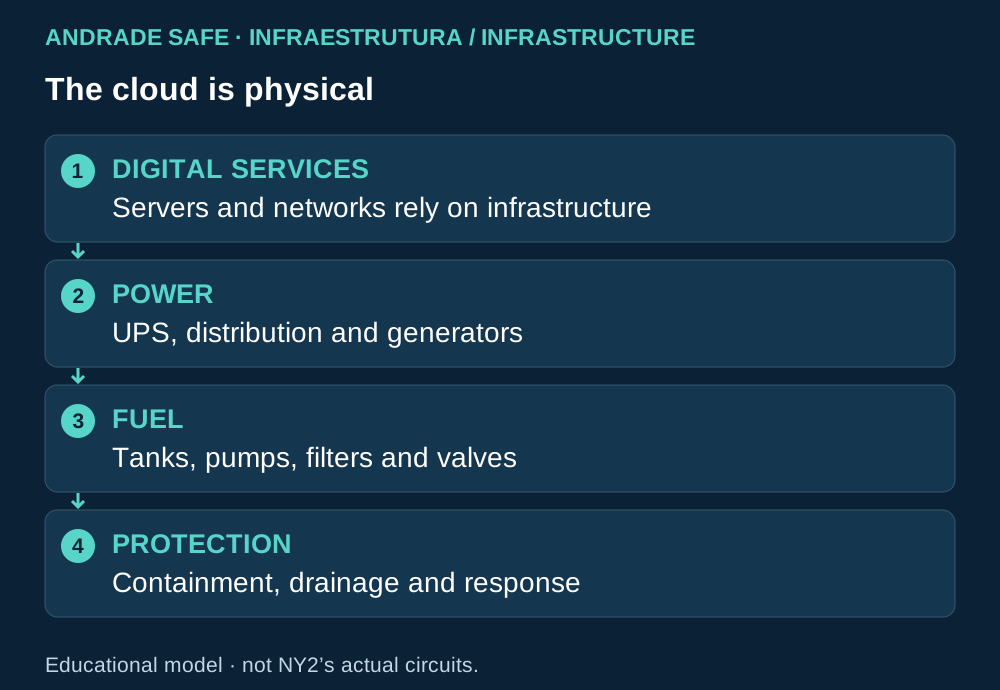
Opening an app feels weightless. Behind the screen are concrete, cables, cooling equipment, batteries, engines and fluids. A data center is critical infrastructure: servers rely on physical systems to keep digital services available.
The September 11, 2026 release at Equinix NY2 in Secaucus, New Jersey, makes that dependence visible. The useful question is how backup-fuel reliability connects with environmental protection, without assuming this was a facility dedicated to AI.
If a pump, valve or transfer route fails, what prevents fuel from escaping the controlled area? Availability engineering must address that question alongside continuity of service.

What happened in Secaucus: an evolving account
Initial reports estimated 5,000–5,500 US gallons of No. 2 diesel released from an outdoor tank: roughly 19,000–21,000 litres. These remain estimates, not a final audited material balance.
Equinix told News 12 its team detected and stopped the release, contacted Secaucus firefighters and brought in Clean Harbors. The account also described notifications to environmental and regional health authorities; exact timings require investigation records.
Early coverage placed fuel in Anderson Creek. On September 16, NJDEP told Gothamist the affected waterway was a smaller unnamed tributary nearby, with no impact on the Hackensack River, Anderson Creek or its wetlands. The date and attribution of that later statement matter.
Nellie Pou publicised questions to NJDEP on October 5. The attached letter is dated October 2 and requests answers by October 9, including river reach and final-report timing. Checked October 7, we did not locate a public response or final report; that does not prove internal documents are absent.
Later Equinix and NJDEP statements to Gothamist →
News 12: initial account and response →
Nellie Pou letter: October 2 document →
| Point | Evidence status on October 7, 2026 |
|---|---|
| Release and volume | September 11 event; estimated 5,000–5,500 US gallons. |
| Component | Equinix reported mechanical failure of two valves; complete root cause pending. |
| Waterway | September 16 NJDEP: smaller unnamed tributary; no reported main-river impact. |
| Cleanup and oversight | No final recovery balance, public letter response or final report located in this review. |
Why do data centers store diesel?
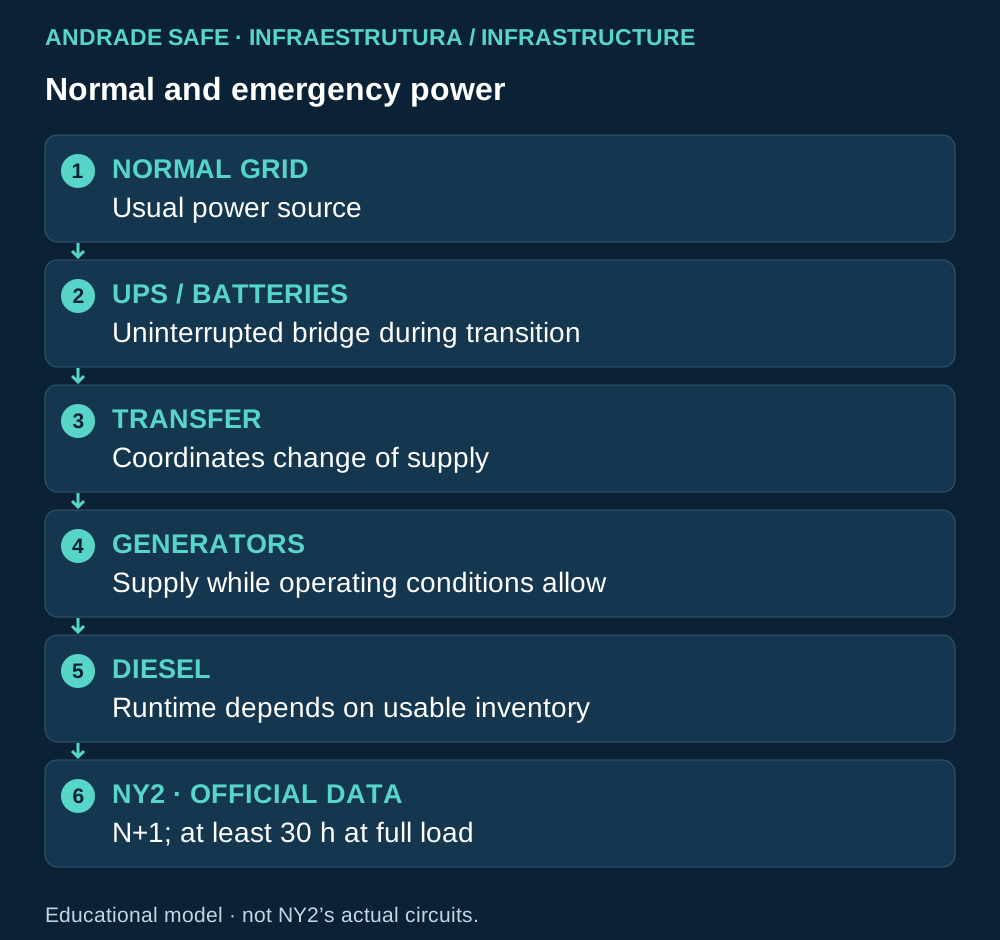
Generators turn stored chemical energy into electricity when the normal supply is unavailable. Fuel inventory supports longer operation while grid restoration or replenishment is arranged.
NY2’s official page lists N+1 UPS and generator redundancy and generator autonomy of at least 30 hours at full load. Those site specifications do not identify the size or autonomy of the tank involved in this release.
N is the required design capacity and +1 an additional unit within the stated architecture. Shared valves, routes or maintenance conditions can still affect independence. Redundant generators do not automatically make every fuel-system component redundant.
Calculating fuel volume or hourly consumption would require load, equipment and usable-inventory data. Thirty hours alone does not provide those inputs.
UPS, transfer equipment and generators perform different jobs
An uninterruptible power supply sustains critical loads during transitions and conditions power according to its technology. Batteries may provide the bridge; other technologies exist. Runtime depends on sizing and load.
Generators support longer-duration supply, subject to fuel and auxiliary-system availability. Starting, stabilisation, transfer, protection and distribution need coordinated design.
ATS, STS and switchgear are distinct equipment categories. Our diagram shows functions rather than a universal topology or NY2’s electrical circuit.
Building management, electrical monitoring and SCADA can supervise equipment. Automation is not automatically AI, and an issued command is not proof of the achieved physical state.
Fuel polishing: maintenance also moves risk
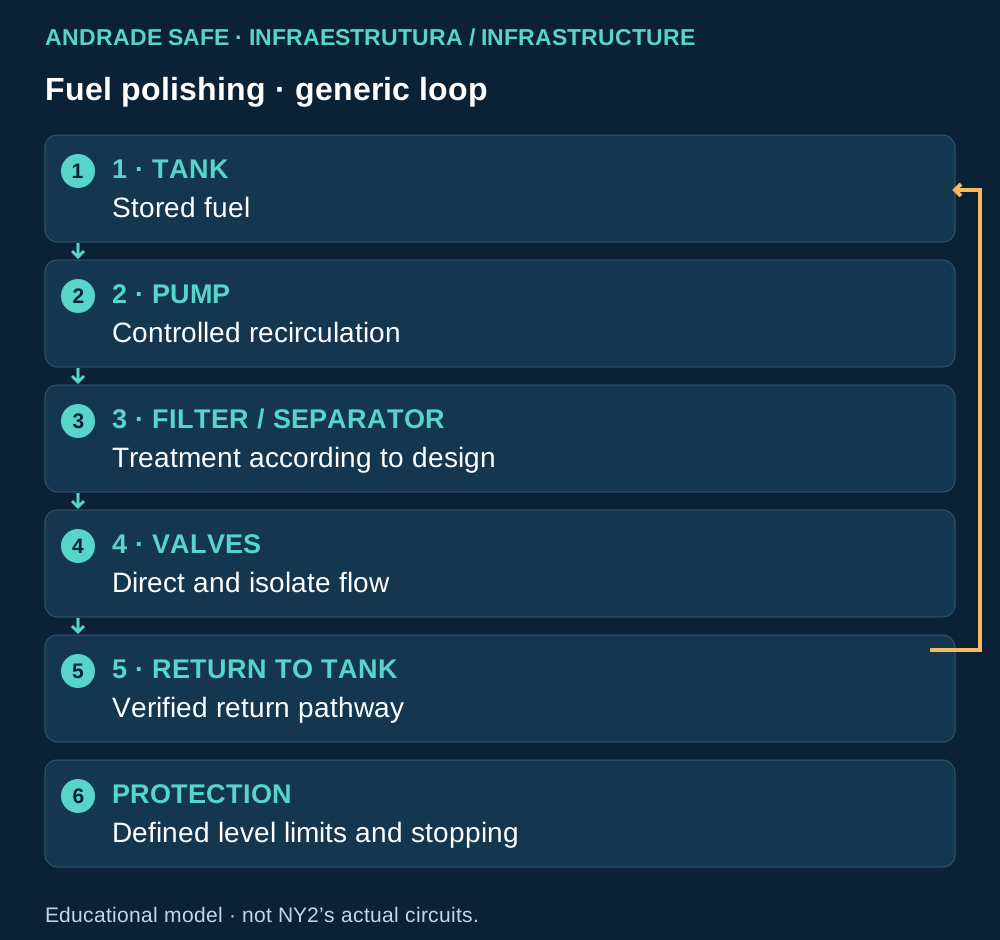
Fuel polishing treats stored fuel, typically through recirculation, filtration and separation. Water, sediments and microbial contamination can affect reliability; sampling and quality criteria help establish condition.
Uptime Institute identifies fuel treatment as an important operational characteristic and highlights accessible isolation valves and controls. Maintenance provisions should preserve the availability objectives of the installation.
A generic loop connects tank, pump, filter or separator, valves and return. Alignment, return paths and transfer limits matter even when the purpose is improving fuel quality.
The illustration is educational. NY2’s piping and valve arrangement are not publicly established here. Auxiliary maintenance processes deserve engineering attention comparable to the main equipment.
From a computer account to information about two valves
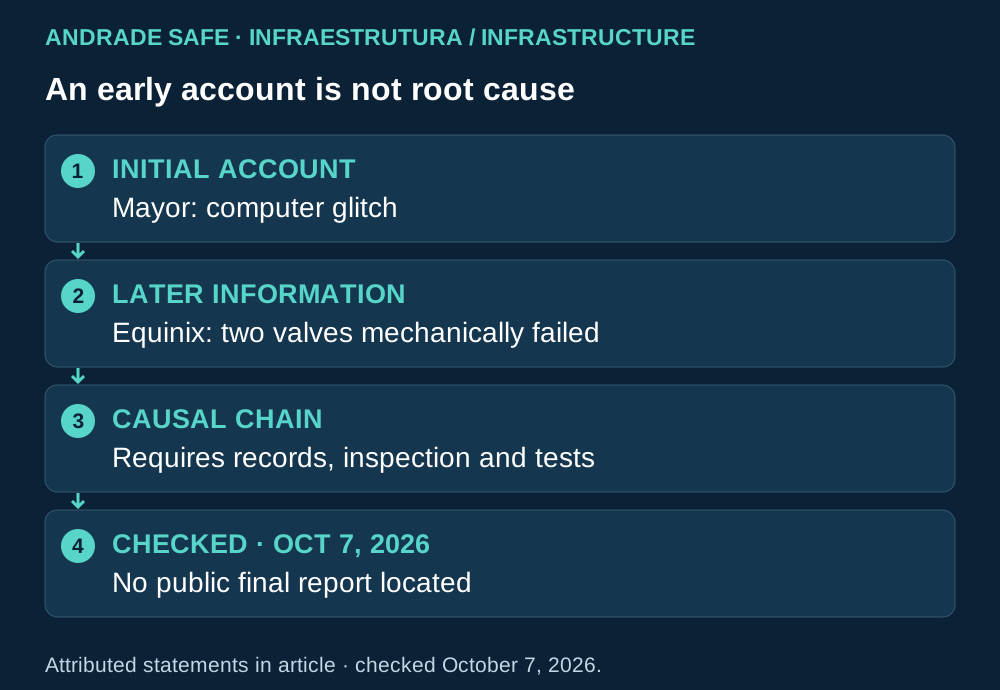
The mayor initially used computer glitch, reported by News 12. Equinix later told Gothamist that two valves associated with filtration had suffered a mechanical failure; its report was still being finalised then.
That does not establish software instructions, operator error or valves failing open. An early account, an identified component and root cause are different levels of evidence.
Investigation should distinguish sensing, control logic, commands, actuators, actual position, sealing and hydraulic paths. A close command does not prove closure, and position indication does not necessarily prove internal tightness. These are general examples, not findings about NY2.
Records, inspection and testing must explain the sequence and the effectiveness of other barriers. Naming a component does not complete organisational learning.
How does a tank recognise its limit?
Continuous measurement informs level; a high alarm requests attention; a high-high condition may initiate designed protection. Independence requires assessing sensors, logic, power and final elements, including common failures.
Permissives authorise an operation when prerequisites are satisfied. Interlocks prevent or stop operation under specified conditions. Position feedback measures a state; a command records a request.
Possible measures include independent pump shutdown and isolation, time or volume limits, leak detection and accessible local stopping. Selection depends on risk analysis and the intended safe state.
Fail-safe concerns a defined response to specified failures. Always close is not a universal prescription: return paths and trapped pressure also matter. Functional tests should demonstrate the complete action, including the final element.
Bow-tie: before and after loss of containment
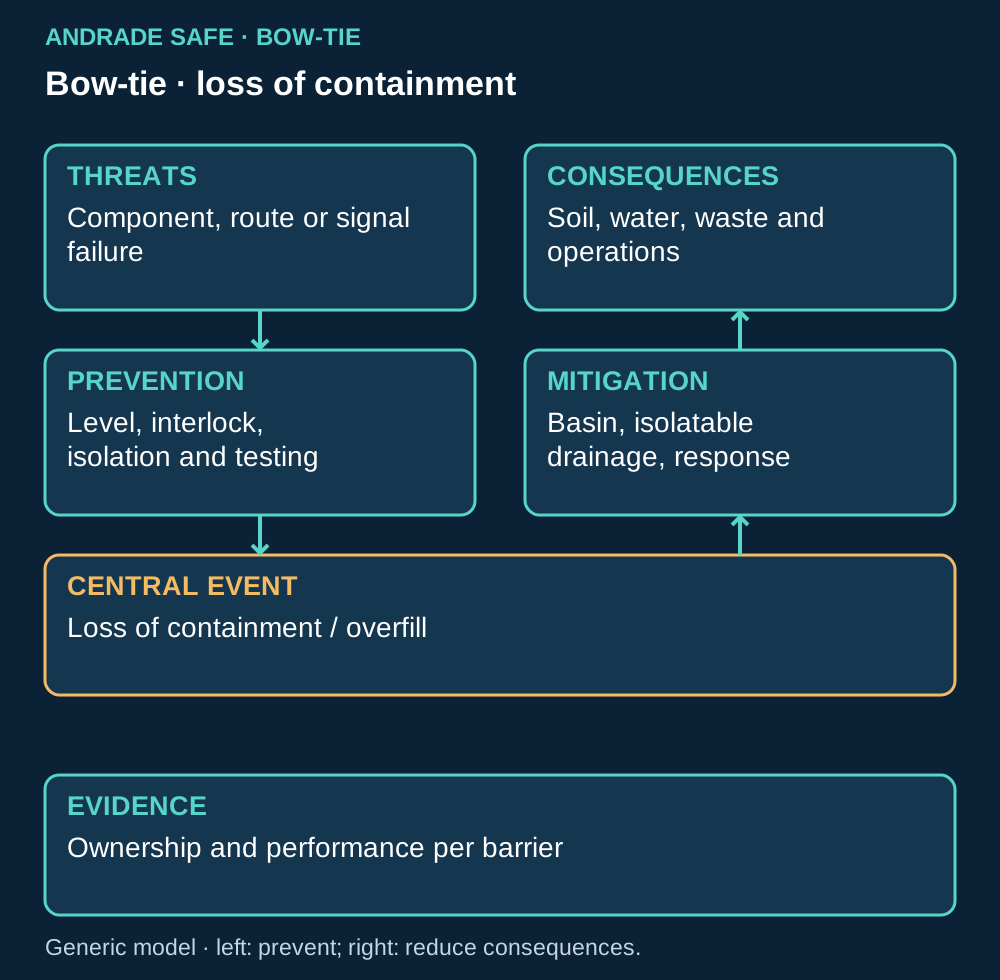
A generic bow-tie links threats, loss of containment or overfill, and consequences. Degraded components, incorrect routes, unsuitable signals and blockage are possible threats, not claims about this incident.
Prevention includes level limits, permissives, isolation and verification. Mitigation includes secondary containment, isolatable drainage, detection and response. A box in a diagram does not prove barrier effectiveness.
Each barrier needs ownership, performance criteria and evidence. Protections sharing a sensor or power source may fail together. Maintenance outages require controls for the temporary exposure.
This model does not reconstruct NY2 or claim measures were missing. It provides questions for any installation storing and moving fuel.
Drainage can transport more than rainwater
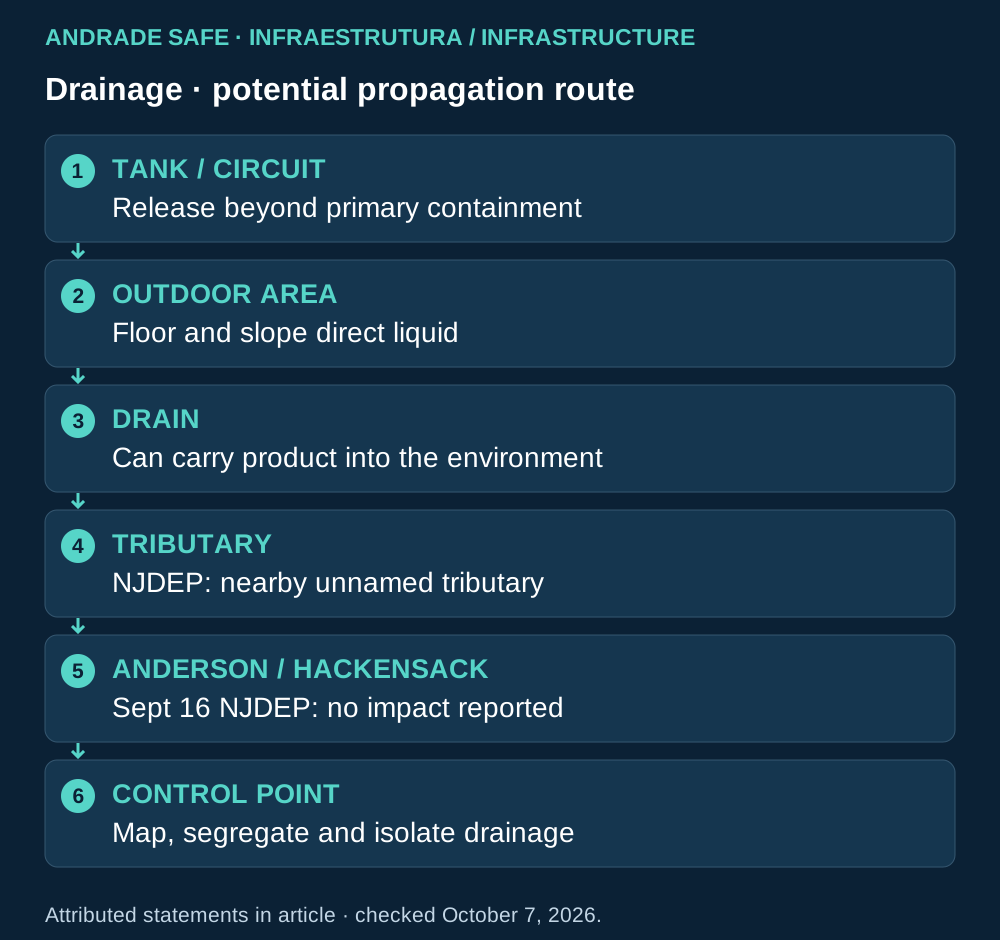
Floors, slopes, channels and collection points determine where released liquid travels. Stormwater drains can propagate a spill beyond the site. Drainage mapping belongs alongside tank mapping.
Stormwater drainage, oily-water drainage and a containment basin serve different purposes. Separators have capacity and maintenance limits; their presence does not make every discharge safe.
Design should evaluate segregation, isolation, rain, usable volume, impermeability and compatible materials. An open drain inside containment can create an escape route and needs controlled operation.
Reports describe a route to a tributary, but NY2’s drainage drawing is not available here. The diagram labels a potential pathway and the later NJDEP account without asserting fuel reached the Hackensack.
Secondary containment: keep failure within a boundary
Primary containment is the tank, piping and equipment holding product normally. Secondary containment receives a release after that boundary fails, through basins, curbs or justified shared collection arrangements.
Sizing must consider scenarios, the largest container where applicable, precipitation, equipment displacement and usable volume. Wall height alone cannot demonstrate protection.
Inspection should consider cracks, penetrations, low points and modifications. Stored materials or uncontrolled drainage can reduce an otherwise adequate design’s effectiveness.
Actual condition and required performance need evidence. A spill alone does not establish that NY2 lacked containment or violated a requirement.
Environmental response: stop, contain, recover and monitor
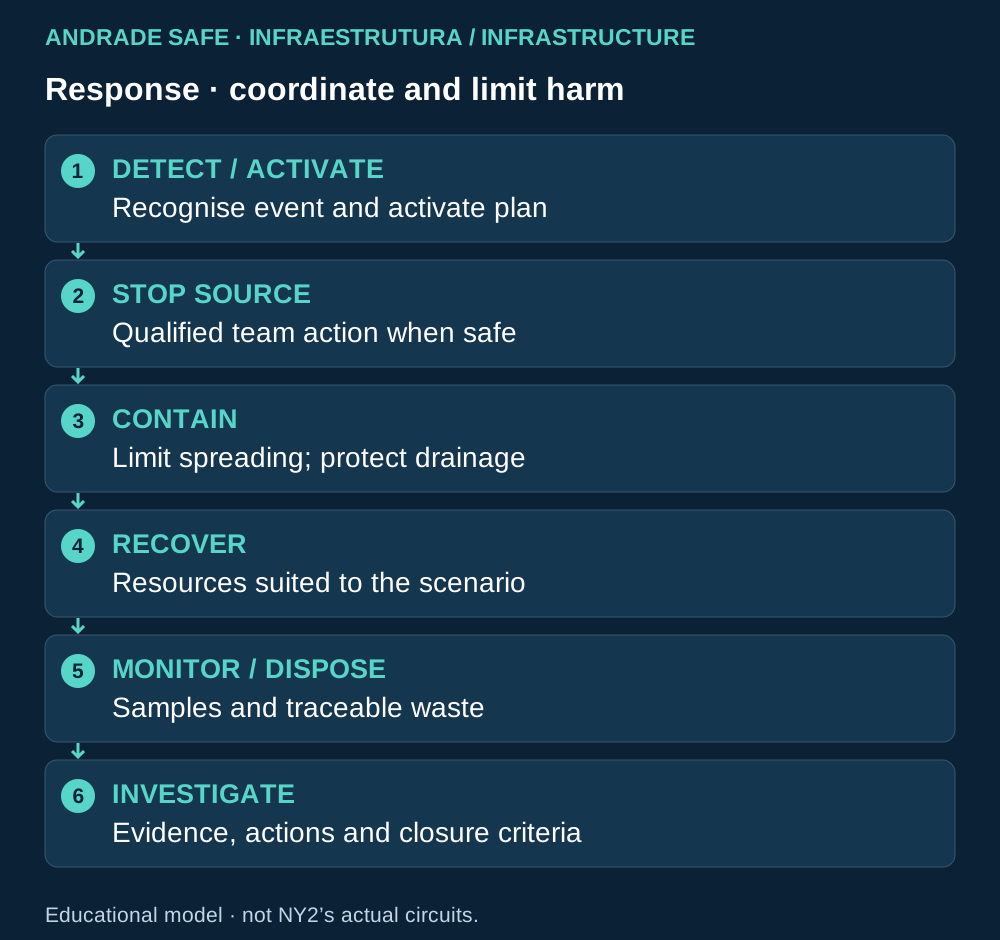
Qualified responders should identify the event, activate the plan, stop the source when safe, control exposure and access, notify authorities and limit spreading. The practical sequence depends on conditions and resources.
Booms, absorbents and vacuum trucks may support recovery. Current, tide, rain, access and product behaviour influence selection. Waterway response requires specialist coordination.
Recovered oil-water mixture is not the same quantity as pure diesel. A final balance must distinguish product, mixtures, soil and other waste. We did not locate a public final recovery balance for this event.
Sampling, waste traceability, appropriate disposal and closure criteria complete the response. An initial statement of no observed impact is not proof of no possible later effect. Response reduces consequences; prevention seeks to avoid release.
SPCC and NFPA 110 have different US scopes
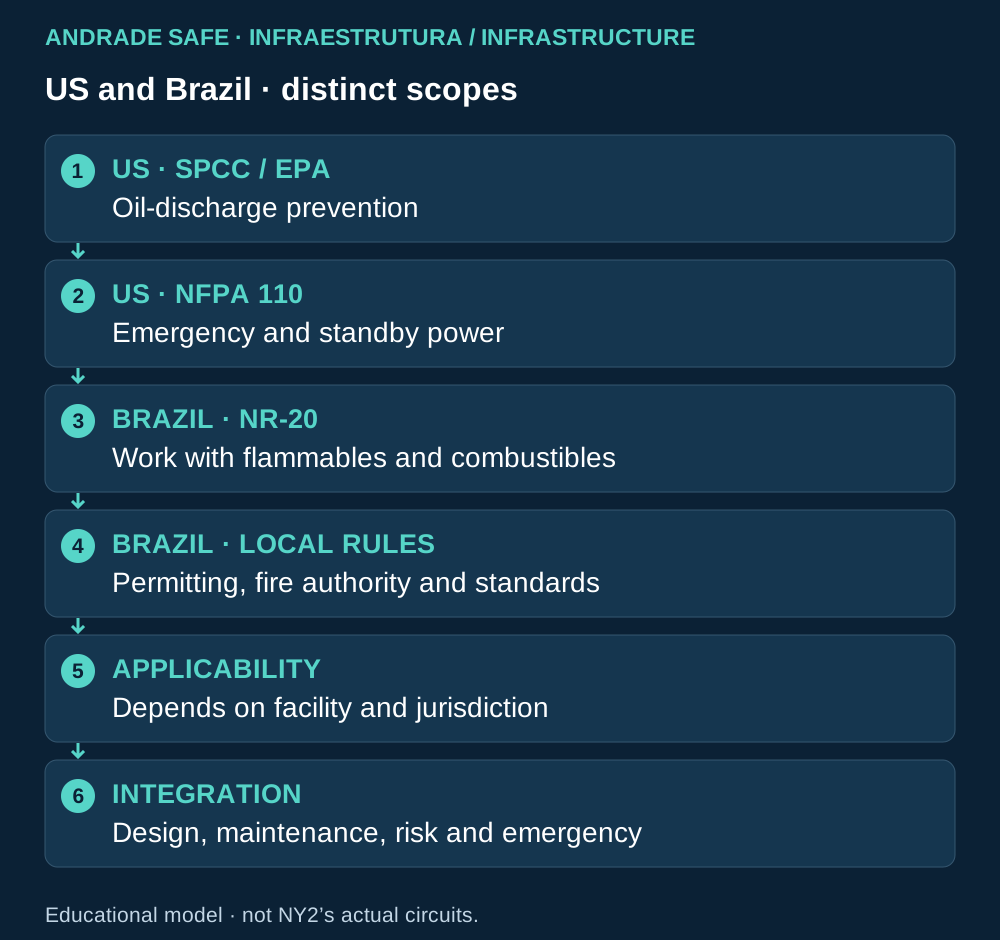
EPA’s SPCC framework addresses oil-discharge prevention for facilities meeting applicability criteria. Facility type, potential discharge to waters or shorelines and storage capacity matter. The general aboveground threshold exceeds 1,320 US gallons, with exclusions and additional conditions.
For certain bulk-storage installations, containment includes the largest container’s capacity plus precipitation allowance. Documents and applicability analysis are needed; this article makes no compliance finding about NY2.
NFPA 110’s consulted 2025 edition concerns emergency and standby power readiness, performance and reliability. It does not replace environmental storage and drainage assessment.
Electrical continuity and spill protection meet at the same equipment but answer different questions. A successful generator test does not demonstrate spill containment.
Lessons for Brazil: NR-20, design and permitting
Brazil’s NR-20 addresses work with flammables and combustible materials across sectors. Classification depends on product, volumes, activities, location and configuration, not the data center label.
Checked October 7, MTE’s official page identifies amendment by Ordinance 60 of January 21, 2025. Annex III needs specific review for tanks within buildings and exception conditions; building provisions should not be transferred to every installation.
Environmental permitting, fire-authority requirements and applicable technical standards depend on jurisdiction and design. SPCC and NFPA do not automatically become Brazilian law.
Risk management, maintenance, training and emergency planning must coordinate. Fuel-treatment contractors need operational limits, communication and stopping provisions. Worker safety and environmental management share practical interfaces.
Checklist: is backup prepared for failure too?
Use these questions in a multidisciplinary review with operations, engineering, maintenance and environmental personnel. Collect evidence and assigned actions rather than only yes/no answers.
Review tank inventory and capacity, fuel quality, transfer and return drawings, level protection, valve feedback, local stopping, failure tests, usable containment, drain destinations, response communication, waste traceability and applicable requirements.
For tests, document the input condition, expected result, actual action and safe restoration. Changes to circuits, instruments or logic need assessment and updated documentation.
- Is tank inventory and usable capacity documented?
- Are transfer and return routes current and verified?
- Are fuel quality, water and sediment assessed?
- Does high-high protection have demonstrated independence?
- Are position feedback and tightness verified for their functions?
- Have local stops, interlocks and final elements been tested?
- Does containment have usable volume, impermeability and controlled drainage?
- Is every drain destination known and isolation accessible?
- Do contractors know permissives, limits and deviation reporting?
- Does the plan integrate notification, resources, waste and closure criteria?
Sustainability includes auxiliary systems
Energy efficiency, renewables and digitalisation have value, but they do not remove fuel, battery, water and waste hazards. Assessment must cover operation, maintenance, emergency and recovery.
Moss Landing explains stranded energy; BP-Husky illustrates information and response capacity; refinery cases explore containment barriers. Technologies differ while interfaces still need verification.
For users the cloud may be virtual. For its operators it is concrete, copper, engines, fluids, valves, sensors and people. Digital resilience begins with physical engineering that coordinates availability, maintenance, safety and environmental protection.
Frequently asked questions
Why do data centers use diesel generators?
To provide an alternative when normal power is unavailable. Runtime depends on design, load, fuel and auxiliary-system availability.
Is a UPS the same as a generator?
No. A UPS bridges transitions within its design limits; a generator supplies longer-duration power while fuel and operating conditions allow.
What is fuel polishing?
Stored-fuel treatment by filtration, separation and recirculation, supported by quality assessment and safe circuit operation.
Did a computer cause the NY2 spill?
An early account cited a computer glitch; the company later reported mechanical failure of two valves. The complete chain is not established by a public final report located in this review.
Did diesel reach the Hackensack River?
NJDEP told Gothamist on September 16 there was no river impact. The letter publicised in October asks for clarification. Date, attribution and pending investigation remain explicit.
Does Brazilian NR-20 apply to data center tanks?
Applicability must be assessed using product, activities, volumes and configuration. The technology sector does not remove the need for this assessment.
References
- Equinix NY2: official specificationsEquinix
- Later Equinix and NJDEP statements to GothamistGothamist / WNYC
- News 12: initial account and responseNews 12 New Jersey
- Nellie Pou letter: October 2 documentU.S. House of Representatives
- Letter publicised October 5U.S. House of Representatives
- Uptime Institute: fuel-system design and reliabilityUptime Institute
- EPA: SPCC applicability criteriaUS EPA
- EPA: secondary containmentUS EPA
- NFPA 110: emergency and standby powerNFPA
- MTE: official NR-20 and updatesMinistério do Trabalho e Emprego