
Moss Landing batteries burned again while disconnected. Understand stranded energy, thermal runaway, BESS fire response and post-fire recovery.
The fire returned: where was the energy?
At about 6 a.m. on September 18, 2026, remaining batteries in California’s Moss Landing 300 building caught fire again. There were no active storage operations, the modules were disconnected from the grid, and no work was underway. Approximately 1,300 modules burned; EPA reported no injuries.
The engineering question is where the energy remained. Opening the grid connection interrupts particular electrical pathways; it does not automatically remove electrochemical energy stored inside battery cells.
This case study examines stranded energy, thermal runaway, propagation and post-fire recovery. For the broader battery energy storage system (BESS) architecture, see our existing Brazil BESS guide. This article focuses on hazards after a failure.

Moss Landing’s timeline: 2025–2026
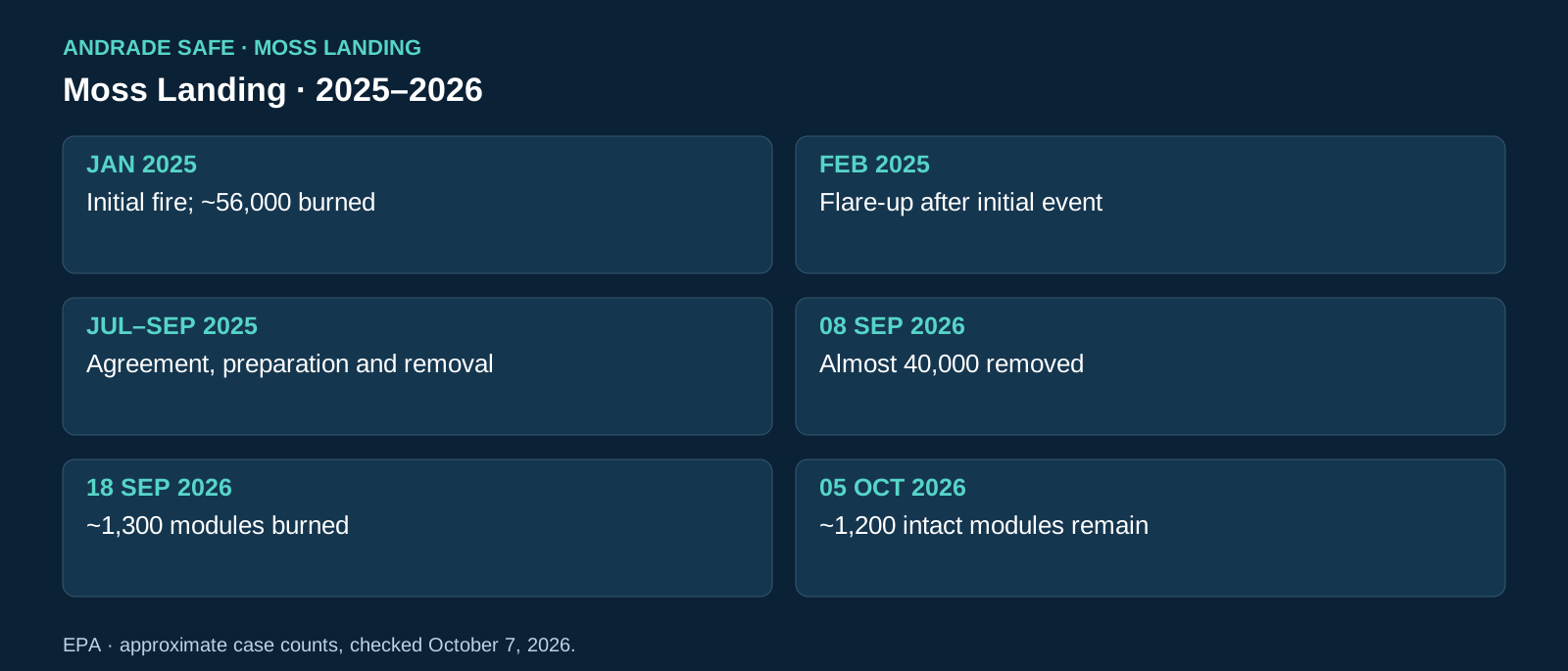
The initial fire began January 16, 2025, at Vistra’s 300 MW facility. The building contained about 100,000 modules. EPA’s September 2026 release described around 55% as damaged; its timeline later described about 56,000 as burned. These are approximate counts with different descriptions, not an exact material balance.
The initial fire subsided January 18, followed by a flare-up February 18. The July 2025 agreement formalised removal oversight and preparation, including building stabilisation. EPA’s timeline dates removal of the first set to September 29, 2025; July should not be presented as completed large-scale removal.
By September 8, 2026, almost 40,000 intact batteries had been removed, de-energised and sent for recycling. About 2,500 awaited Phase 2 access; approximately 1,300 burned September 18. EPA’s October 5 update described about 1,200 intact modules still awaiting safe structural access.
Checked October 7, the exact cause of the September fire remains unknown in EPA’s account. One or more remaining modules initiated the event, which affected adjacent modules. The evidence does not establish a short circuit, BMS failure, water, manufacturing defect or human error as the cause.
Disconnected does not mean de-energised
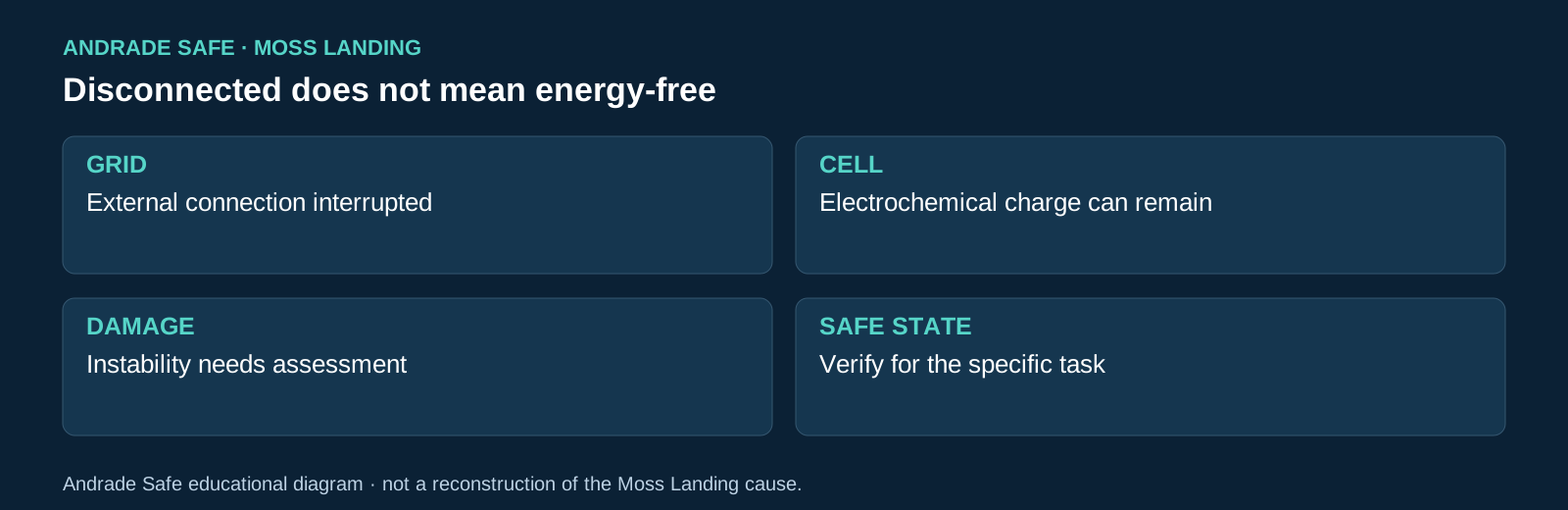
State of charge (SoC) estimates available charge relative to battery capacity. Opening a breaker, stopping the power conversion system or isolating the grid does not automatically discharge the cells. The source of energy can be inside the equipment.
EPA says the remaining modules had been at 100% SoC before the original fire and likely retained high charge. That is not a measurement showing every battery remained at 100% in September 2026. Elapsed time and external appearance cannot prove absence of energy.
Stranded energy remains available in damaged equipment or outside normal operating pathways, sometimes difficult to access or remove safely. Instrumentation may also be unavailable. Assessment must consider electrical paths and physical, thermal and chemical condition.
A safe state must be established for the specific task. Measuring voltage at an external point does not demonstrate that every cell is discharged. Recovery plans need validated methods, limits, instruments and stopping criteria.
What is thermal runaway?
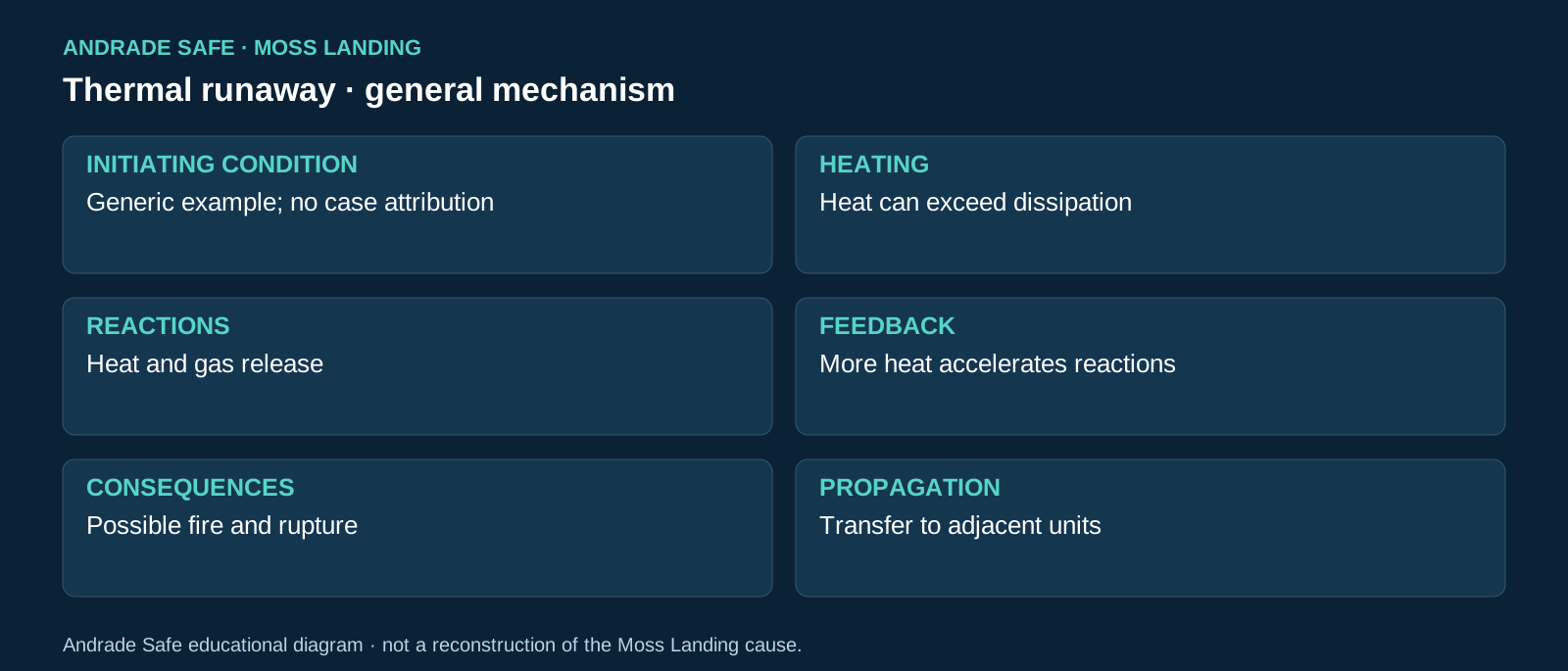
Thermal runaway is self-accelerating heating: internal reactions release heat, that heat accelerates further reactions, and generation can exceed dissipation. Gas release, rupture, fire and transfer to adjacent cells or modules may follow. Not every temperature rise becomes thermal runaway.
Internal damage, electrical faults, heat exposure and other conditions can initiate such mechanisms. These are general examples, not a finding about the September Moss Landing fire.
Extinguishing an external flame and stopping reactions inside a cell are different objectives. Heat and gas generation may continue without visible flame, requiring assessment of temperature trends, atmosphere and propagation.
Commercial lithium-ion batteries must not automatically be treated as metallic-lithium Class D fires. Chemistry and system architecture matter to the response.
Why can batteries catch fire again?
In general, remaining energy, internal damage, retained heat and delayed propagation can support later events. An apparently intact module may have suffered heat exposure or lost protective functions without an obvious external sign.
A flare-up involving hot material and a new event in remaining modules months later are not necessarily the same mechanism. Do not assume one cell stayed hot for the entire interval or that all later fires share an ignition source.
For Moss Landing, the established fact is another fire in remaining inventory; its specific cause is unknown. Removal and de-energisation must be planned without assuming disconnection and time have eliminated the hazard.
Cell, module, rack and BESS: scale changes protection
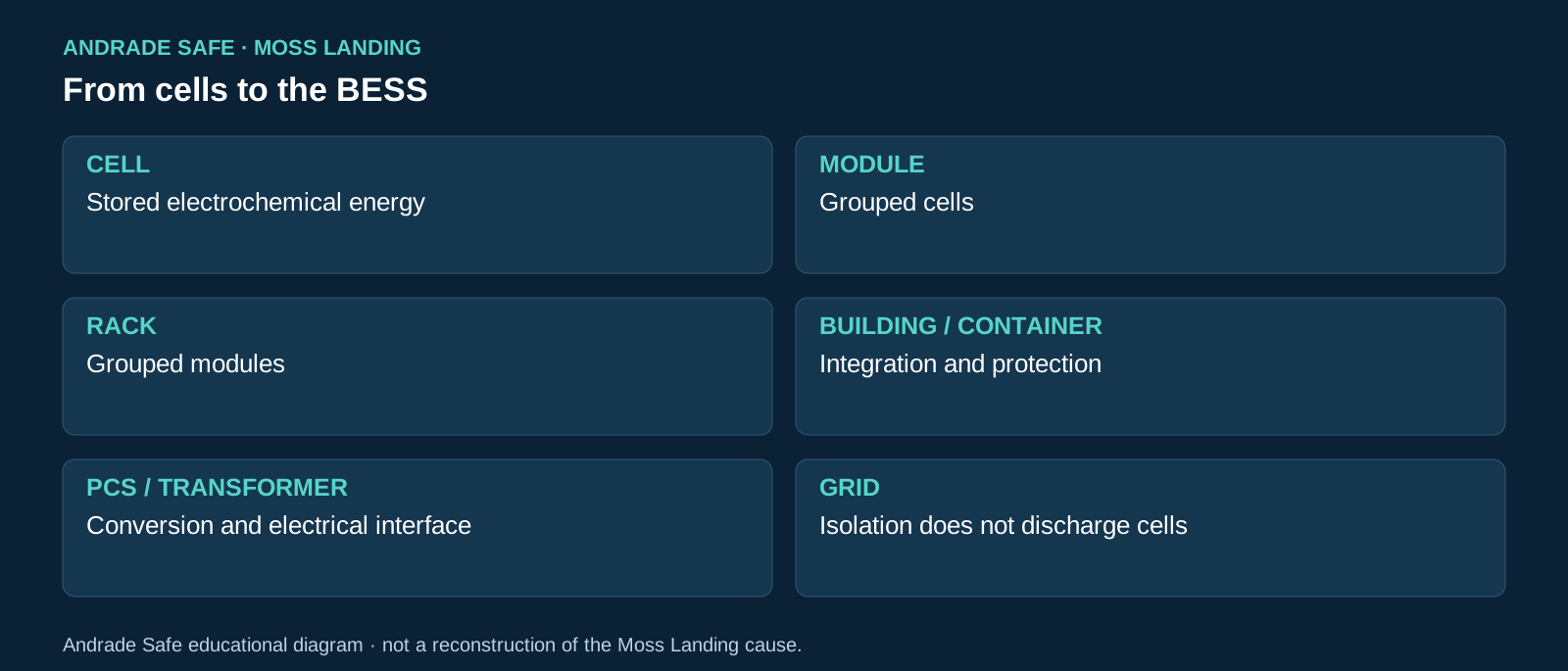
Cells form modules; modules form racks integrated into containers or buildings. A BESS adds power conversion (PCS), controls, protection and the transformer/grid interface. Electrochemical energy remains in cells even when the external circuit is open.
A cell event and a multi-rack fire differ in scale, access and tactical objectives. Cell barriers, module separation, ventilation and distances between units require assessment of the installed configuration.
Test evidence should be compared with chemistry, capacity, arrangement, SoC, enclosure, ventilation and active systems. A report describes a tested configuration, not a universal guarantee for similar batteries.
How the September fire was managed
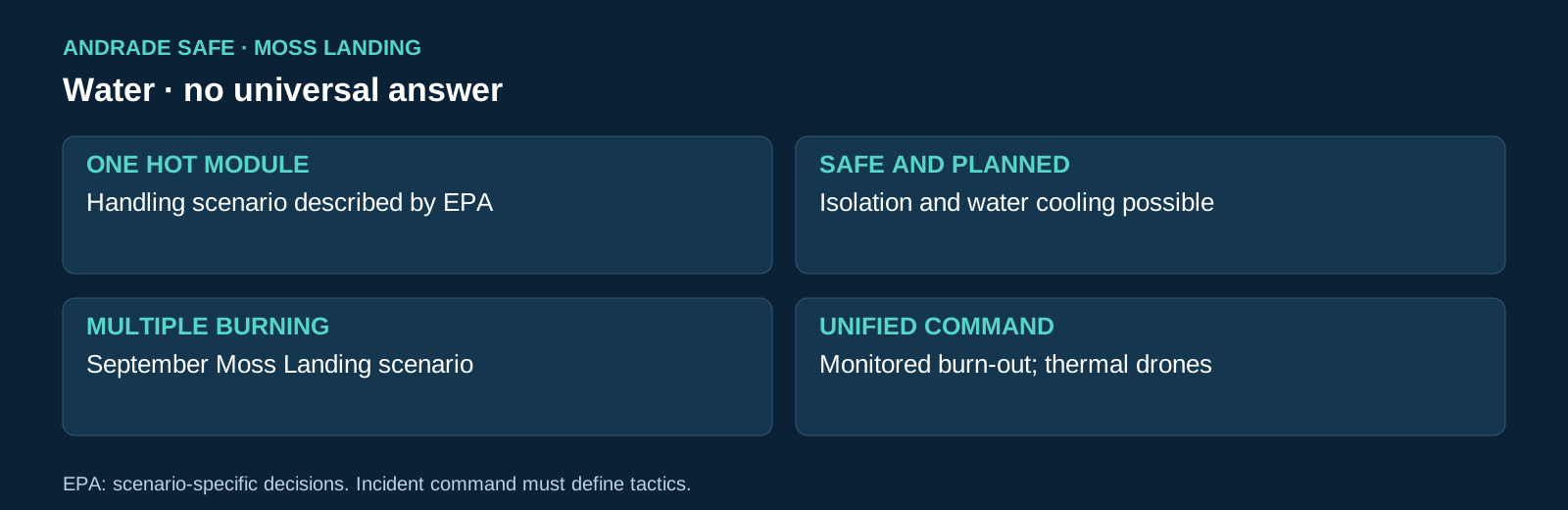
EPA says North County Fire Protection District and Unified Command chose to let the involved batteries consume their energy while using drones and thermal imaging to monitor conditions. This was a scenario-specific decision for closely spaced modules in a damaged building.
The fire subsided around 10 a.m. A precautionary shelter-in-place covered approximately one-third of a mile, about 540 metres, and remained until around 4:15 p.m. because of possible renewed fire. No injuries were reported.
Monitoring is not abandonment: it requires command, access controls, thermal and atmospheric observation, notifications and capacity to react. The decision is not advice to let every battery fire burn.
Can water be used? The scenario determines the answer
EPA distinguishes circumstances. For multiple burning modules in this event, command judged water was not the best course and could destabilise neighbouring batteries. That assessment does not establish that water caused the fire.
For an individual module overheating during handling, EPA describes isolation and water cooling if safe, supported by on-site tanks and isolation boxes. This is a prepared-team protocol, not an instruction for untrained intervention.
The objective may be cooling, preventing propagation, protecting exposures or controlling consequences. Chemistry, scale, architecture, access, testing, manufacturer guidance and incident command determine the strategy. Neither “never use water” nor “water always puts it out” is a sound universal rule.
After the flame: recovery still needs engineering
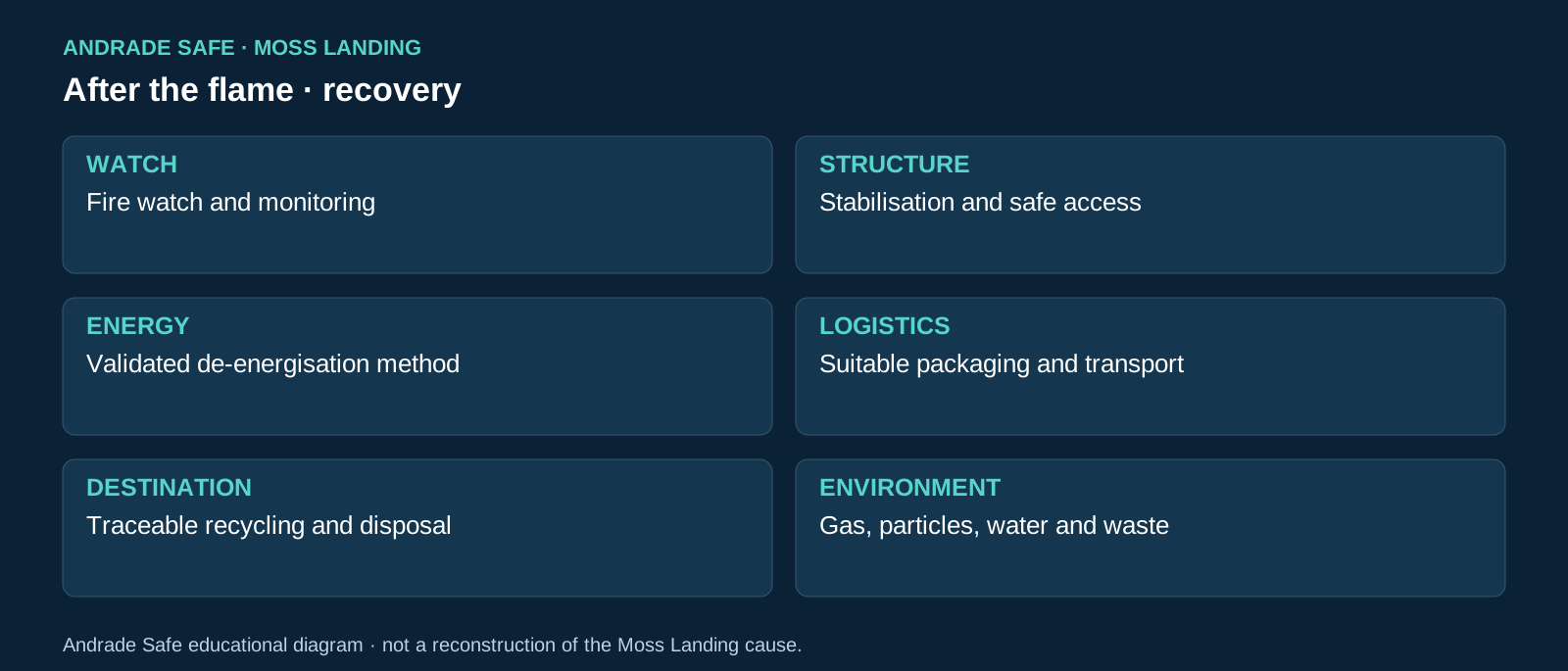
Damaged BESS equipment may retain energy, emit gases and remain unstable while structural damage restricts access. Fire watch, structural assessment, isolation, atmospheric monitoring and handling procedures are part of recovery. It is not routine scrap removal.
EPA describes stabilisation and access planning for roughly 1,200 remaining intact modules. The north wall required planned demolition to reach areas that could not be accessed without unacceptable worker risk. Speed alone does not establish safe removal.
De-energisation, packaging, transport, waste characterisation, recycling and disposal need coordination and traceability. Methods to remove charge must be validated and compatible with the damaged condition.
EPA’s September 8 projection placed completion of removal and demolition in mid-2027. It is a projection dependent on conditions, not a guaranteed deadline. Safety responsibilities continue throughout that period.
Gases and environmental monitoring: reading the evidence
Lithium-ion battery fires can produce hydrogen fluoride (HF), particles and other flammable or toxic gases. Visible smoke alone does not characterise the atmosphere; constituents depend on materials and conditions.
During September’s fire, EPA describes PM2.5 and HF monitoring expanded to volatile organic compounds (VOCs), oxygen percentage, lower explosive limit (LEL), hydrogen cyanide (HCN) and carbon monoxide (CO). LEL is a flammability reference, not a chemical species.
EPA reported no HF detections and no exceedances of the reported screening levels for additional parameters. Some perimeter PM2.5 readings were elevated but remained below the cited health-based standard. These results apply to sampled locations, periods and methods, not every possible exposure.
The Vistra-managed Moss Landing Response website’s October update reports nickel slightly above a screening level at one southwest location during the shelter-in-place. Other metals there and other off-site samples were below reported levels; off-site samples after the order ended did not detect metals. This institutional origin must remain explicit.
Monitoring tracks conditions over time; laboratory sampling assesses specific constituents. Non-detection depends on analytical limits. A screening exceedance warrants evaluation and is not automatic evidence of disease. Report results with their scope rather than claiming zero health risk.
UL 9540, UL 9540A and NFPA 855 have different roles
UL 9540 addresses ESS product/system safety. UL 9540A is a test method characterising thermal runaway, gas, fire and propagation behaviour. NFPA 855 addresses stationary storage installation and associated protection. None promises that a fire can never occur.
As checked October 7, 2026, UL Solutions discusses NFPA 855’s 2026 edition and UL 9540A’s sixth edition published March 13, 2026. Its explanation also identifies January 1, 2027, as the sixth edition’s effective date and discusses transition with the fifth edition. Publication, effectiveness and adoption are separate matters.
Identify the report’s edition and compare the tested configuration with the installation. Separation, enclosure, ventilation and active systems can change heat transfer and gas accumulation. Test evidence supports specific decisions.
This case study does not infer a standards violation at Moss Landing. Such a conclusion would require installation evidence and an authoritative finding.
BESS design lessons across the lifecycle
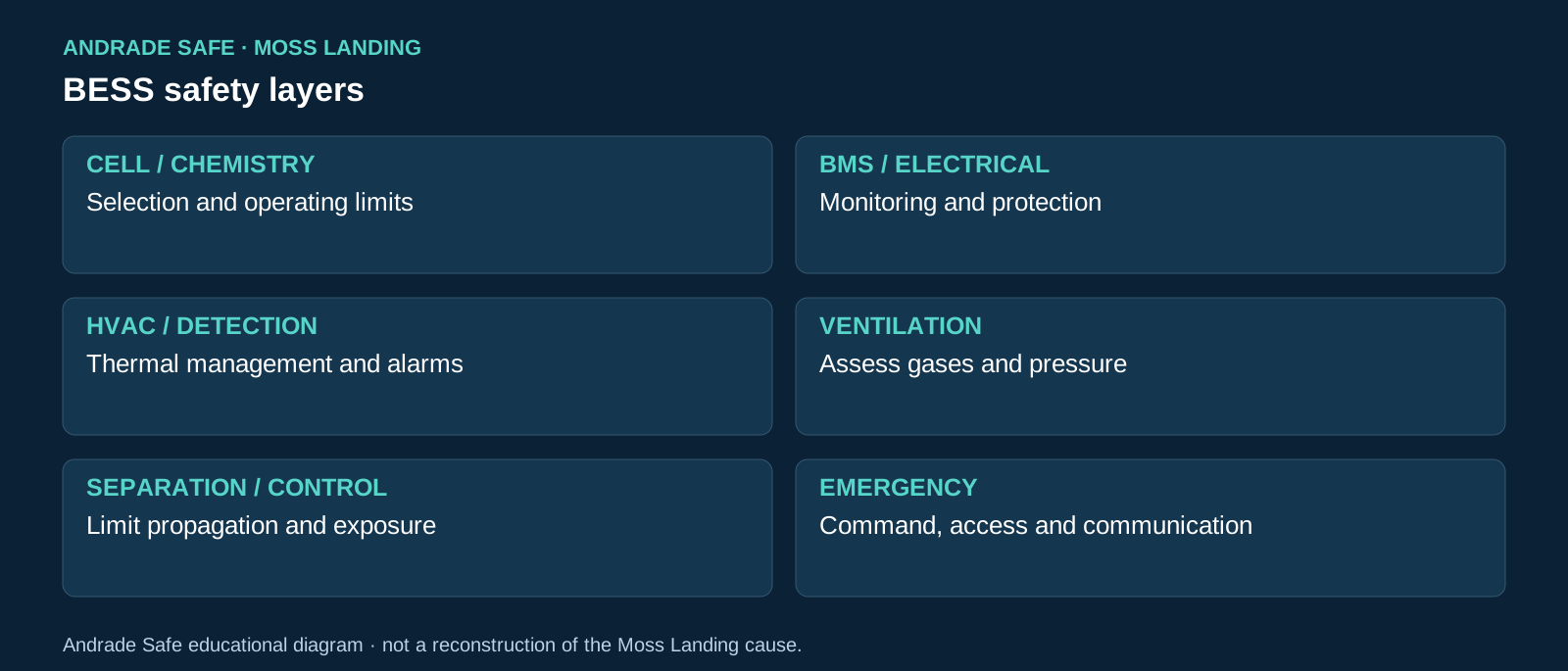
Cell chemistry and selection must connect with layout, thermal management and failure scenarios. The BMS monitors parameters and coordinates functions but cannot independently eliminate every instability mechanism. Electrical protection, HVAC, detection and ventilation are complementary.
Separation, compartmentation and fire control require justified design and evidence. EMS/SCADA and emergency stops should state what they interrupt and what remains energised. An emergency stop can isolate interfaces without discharging cells.
Detection must lead to a feasible response: who receives the alarm, what action is expected and how much time is available? The BP-Husky case shows why information and response capacity need to be designed together.
Include firefighter access, water and runoff where applicable, gases, community communication, damaged-material removal and end-of-life recovery. A complete design covers normal operation, emergency and recovery.
Applying the lessons in Brazil
NFPA and UL references do not automatically become Brazilian legal requirements. Their use depends on the project, contracts, authorities and applicable rules, as well as manufacturer guidance and installation configuration.
Brazilian occupational risk management, the PGR, NR-10 and NR-23 provide integration points for electricity-related work and fire protection within their scopes. The conceptual lesson is to inventory energy sources, establish procedures, train people and plan proportionate responses.
A damaged-BESS task assessment should include electrochemical energy, gases, thermal instability and structural conditions alongside external electrical supply. Define how the safe state will be verified for the activity and when work must stop.
Storage supports flexibility and energy transition. Managing its hazards means providing engineering across operation, failure, emergency and end of life.
Checklist: the flame is out, but is the work safe?
Use these questions in a multidisciplinary review. They support, rather than replace, the installation’s specific recovery plan.
- Have remaining inventory and charge been assessed using suitable methods?
- Is it clear what grid isolation disconnected and what energy remains?
- Are access controls and structural assessments in place?
- Do thermal monitoring and fire watch have owners and escalation criteria?
- Does the plan cover gases, particles, measurement limits and communication?
- Is the firefighting/cooling strategy specific to the actual scenario?
- Are handling and de-energisation methods compatible with damage?
- Do packaging, transport and destinations meet applicable requirements?
- Are waste, water and particulate controls traceable?
- Are transitions between emergency, recovery and release documented?
The key question: what can still release energy?
Moss Landing shows that the boundary between emergency and recovery does not simply follow visible flame. Stored energy, inaccessible modules, gases and structural damage may remain long after operation stops.
Energy transition does not end when a battery is installed, and safety does not end when the flame goes out. Lifecycle design includes operation, failure, emergency, stranded energy, recovery and end of life, with evidence supporting decisions.
Frequently asked questions
Can a disconnected battery catch fire?
State of charge (SoC) estimates available charge relative to battery capacity. Opening a breaker, stopping the power conversion system or isolating the grid does not automatically discharge the cells. The source of energy can be inside the equipment.
What is thermal runaway?
Thermal runaway is self-accelerating heating: internal reactions release heat, that heat accelerates further reactions, and generation can exceed dissipation. Gas release, rupture, fire and transfer to adjacent cells or modules may follow. Not every temperature rise becomes thermal runaway.
Can water be used?
The objective may be cooling, preventing propagation, protecting exposures or controlling consequences. Chemistry, scale, architecture, access, testing, manufacturer guidance and incident command determine the strategy. Neither “never use water” nor “water always puts it out” is a sound universal rule.
Does a BMS prevent every fire?
Cell chemistry and selection must connect with layout, thermal management and failure scenarios. The BMS monitors parameters and coordinates functions but cannot independently eliminate every instability mechanism. Electrical protection, HVAC, detection and ventilation are complementary.
References
- September 2026 Fire: How did the fire happen?US EPA
- Moss Landing — Response TimelineUS EPA
- Final phase of post-fire battery cleanupUS EPA
- Moss Landing — contaminants of concernUS EPA
- Administrative Settlement Agreement and Order on ConsentUS EPA / Vistra
- Understanding UL 9540A, NFPA 855 and Large-Scale Fire TestingUL Solutions
- Installation Codes and Requirements for ESS — FAQsUL Solutions
- Testing & Health — October 2026 updateMoss Landing Response / Vistra
- Moss Landing Power Plant Fire — incident statusCAL FIRE / North County Fire Protection District
- NFPA 855 — Standard for the Installation of Stationary Energy Storage SystemsNFPA