
Explore Google and Constellation’s 890 MW uprate plan: reactor limits, turbines, licensing and the grid supplying AI data centers.
AI has reached the turbine hall
AI competition is usually pictured as chips, servers and digital models. Yet those machines need substantial electricity, at the right location and with dependable supply. Digital expansion also involves steam, rotating equipment, transformers, transmission and licences.
On October 6, 2026, Google and Constellation announced a collaboration to enable 890 MW of additional nuclear capacity on the PJM grid through upgrades to operating units. Existing infrastructure can produce more only after investment, technical demonstration and applicable authorisations.
How can a programme add capacity comparable in scale to a large reactor without building another from scratch? Nuclear power uprates and improvements to conversion and support systems provide the mechanism.
This article separates commercial expectations, thermal power, electrical output and regulatory decisions. Sources were reviewed October 7, 2026.

The agreement in 60 seconds
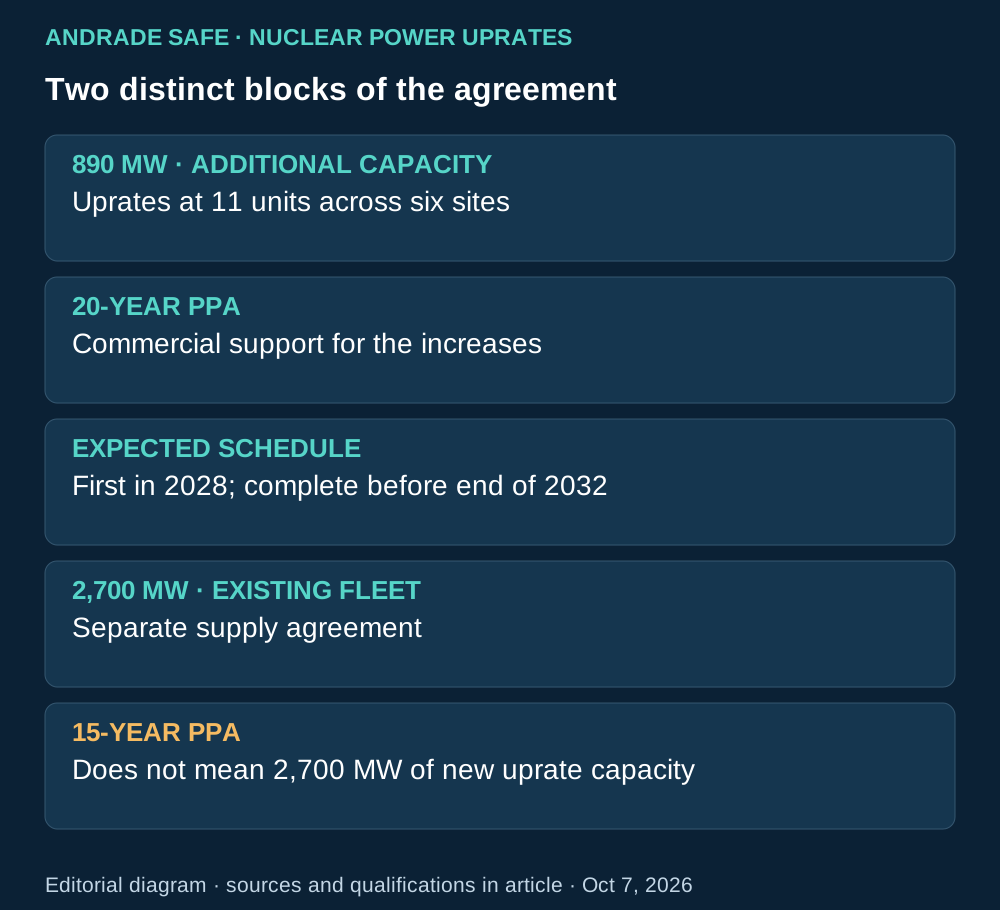
A 20-year power purchase agreement provides revenue certainty for upgrading 11 units at six sites. Constellation announced investment exceeding $4.3 billion. The releases estimate support for roughly 4,400 existing jobs and about 7,200 construction jobs during the work.
The first uprate is expected in 2028; Google targets the full 890 MW before the end of 2032. These are announced schedules, not delivered capacity or proof of approval for each project.
A separate 15-year supply agreement covers 2,700 MW from PJM’s existing fleet. That is different from the 890 MW increment. Combining the figures does not establish 3,590 MW of new generation.
The package also includes a five-year technology alliance with Google Cloud and Gemini Enterprise under AI for Energy. Power procurement, capacity construction and digital deployment have distinct objects and timelines.
Constellation: agreements and upgrades →
| Item | Announcement / condition |
|---|---|
| 890 MW | Planned additional capacity in PJM |
| 11 / 6 | Existing units / sites |
| > US$ 4.3 bi | Investment announced by Constellation |
| 2028 / 2032 | First expected uprate / full programme before end-2032 |
| 20 / 15 / 5 | Years: nuclear PPA / existing supply / technology |
| 2,700 MW | Separate existing-asset supply |
Eleven new reactors? These assets already exist
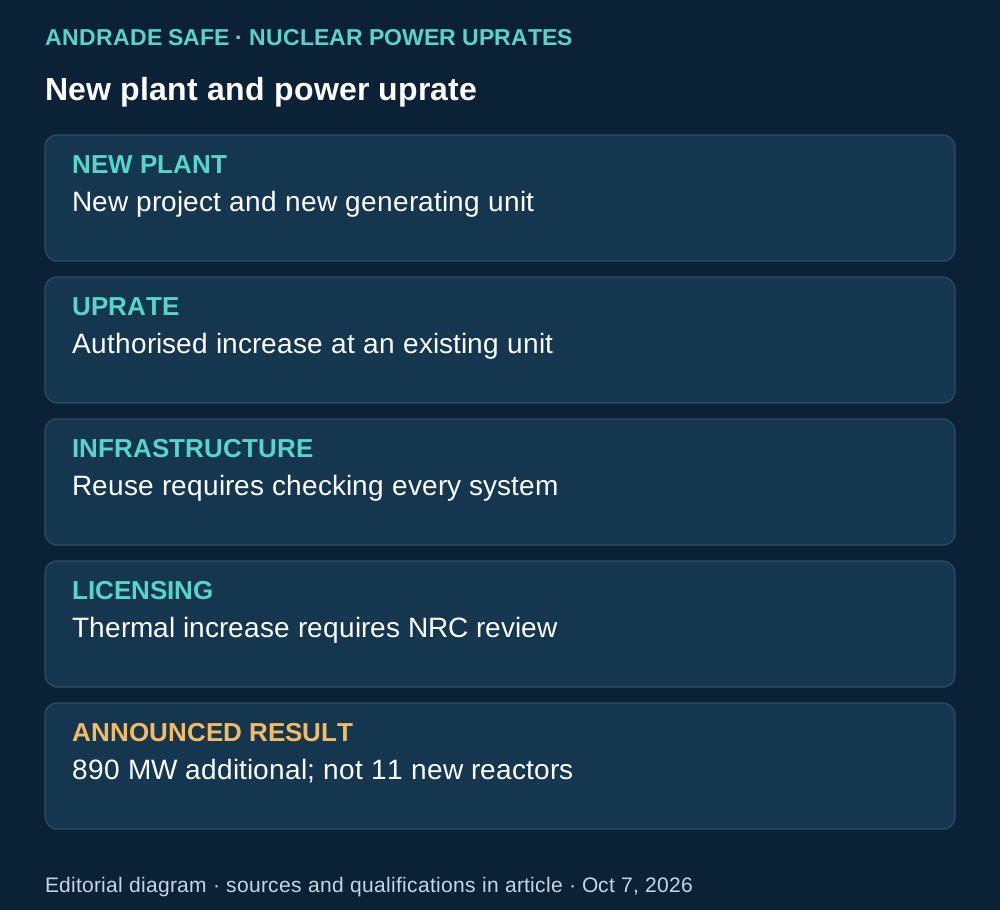
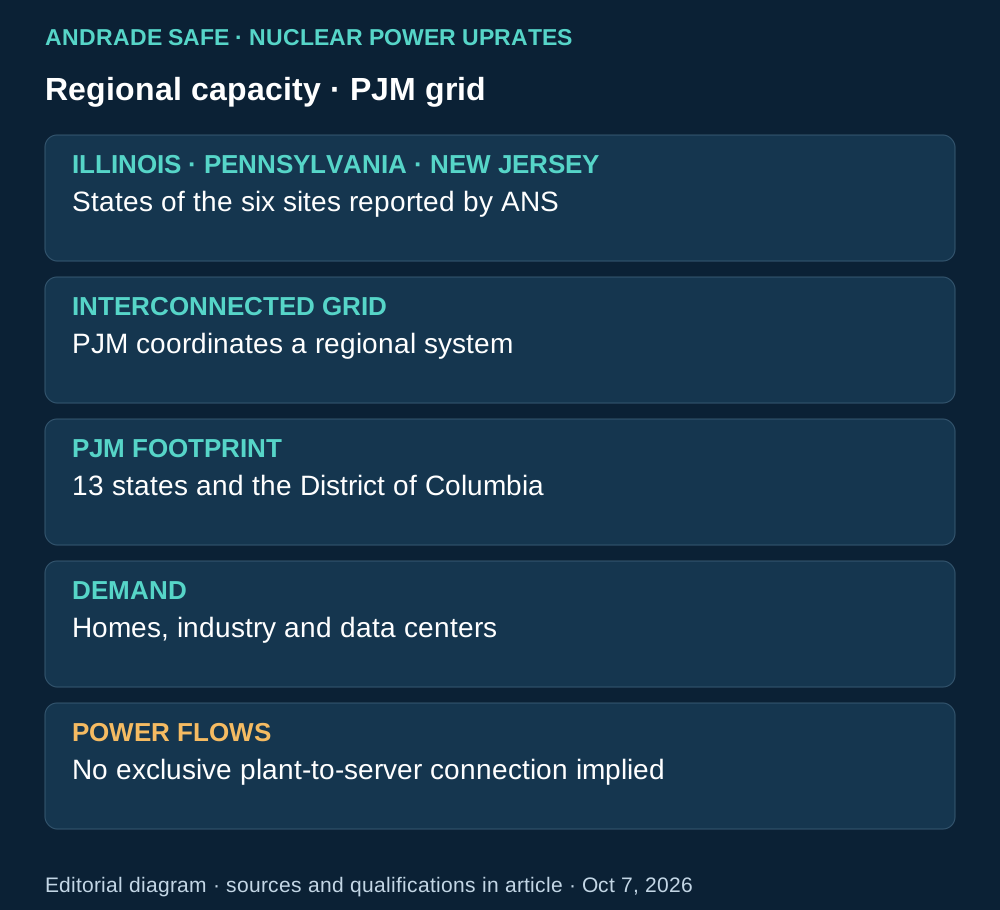
The announcement concerns existing units in Illinois, Pennsylvania and New Jersey, with incremental output serving a regional grid. It is not construction of 11 new reactors, purchase of 11 plants or a dedicated electrical link to one Google building.
A site can host multiple units, so six sites and 11 units describe different asset levels. The announcement does not allocate the 890 MW among individual units.
Nuclear News, published by the American Nuclear Society, quotes spokesman Paul Dempsey naming Braidwood, Byron, LaSalle and Quad Cities in Illinois, Limerick in Pennsylvania and Salem in New Jersey. This is explicitly attributed reporting, not a site list from the principal releases, and does not identify the selected 11 units.
A list of locations is not permission to operate at higher limits. Each unit needs its own engineering scope and evidence. The contract can fund that work but cannot substitute for its findings.
What is a nuclear power uprate?
The US Nuclear Regulatory Commission describes a power uprate as increasing the maximum power level at which a commercial plant may operate. The reactor’s thermal limit forms part of the licensing basis and safety analyses.
Changing that limit requires a licence amendment request. Systems, components and analyses must support the proposed configuration. Operation at the new authorised level follows approval rather than an investment decision alone.
An industrial analogy is a production line whose components have different capacities and margins. Increasing sustainable output requires finding restrictions and demonstrating the final system condition. Nuclear facilities add their specific regulatory demonstration.
This is not simply turning a knob. Safety margins cannot be freely consumed because they appear available; the new operating envelope must preserve the required criteria.
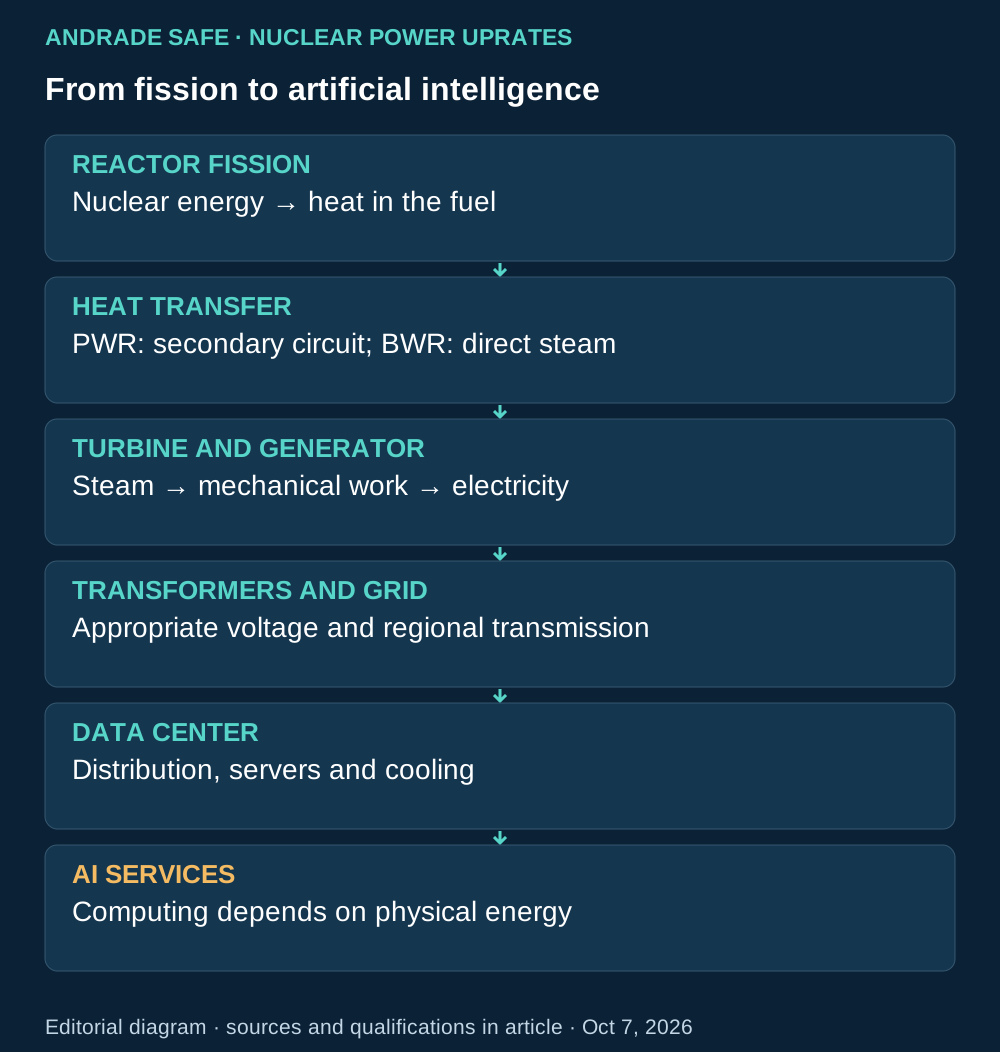
From fission to grid: the energy pathway
Fission releases heat in reactor fuel. That heat produces steam, which expands through a turbine and performs mechanical work. The turbine drives an electrical generator; transformers and switchgear connect output to the grid.
In a pressurised water reactor, the primary circuit transfers heat to a secondary circuit through steam generators. In a boiling water reactor, steam is produced in the reactor vessel and passes through the corresponding system to the turbine. These are distinct architectures.
After expansion, steam must be condensed and water returned, using cooling equipment, heat exchangers and pumps. The plant extends beyond the core: heat removal, flow and auxiliary equipment also affect performance.
The diagram shows functions rather than a design for the six sites. Data centers share the power system with other consumers; an electricity contract does not create an exclusive physical route for electrons.
Thermal MW, electrical MW and energy are different quantities
MWt measures the rate of heat production; MWe measures electrical power. Some heat becomes electricity and the remainder must be rejected by the cycle. The two quantities are not interchangeable.
Efficiency connects converted output to supplied energy within a defined boundary. Gross generator output and net output after auxiliary consumption also differ. Comparisons need matching boundaries and operating conditions.
MWh measures energy delivered over time. An additional 890 MW of capacity is not a specified annual MWh delivery. Availability, outages and dispatch affect realised energy.
Conversion improvements can raise electrical output from the same available heat. A thermal uprate changes the authorised reactor limit. Both can contribute to a project, but replacing a turbine does not automatically change licensed thermal power.
Where could the extra megawatts come from?
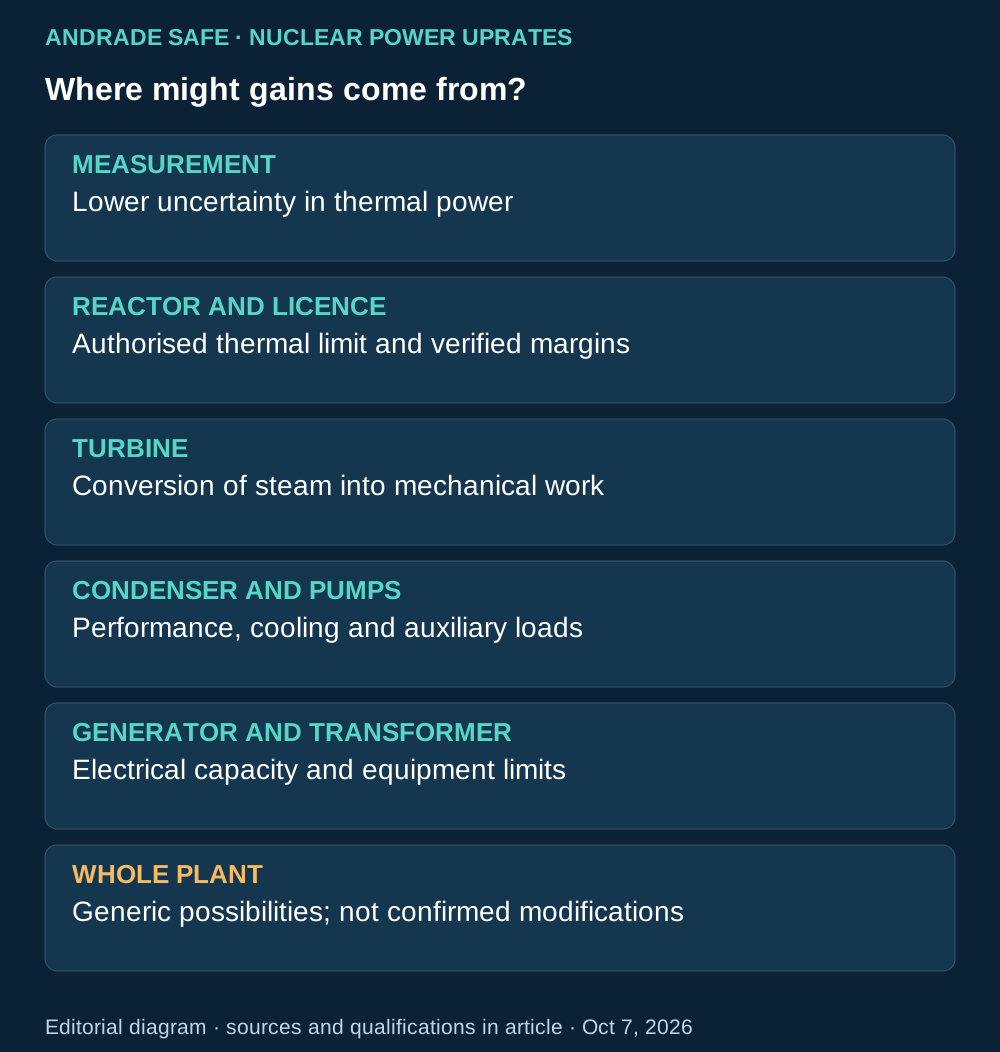
The release mentions turbines, steam generators and digital controls. These are families of modifications, not a universal replacement list for every unit. Reactor architecture and equipment condition shape each solution.
Balance of plant covers conversion and supporting systems outside the core, including rotating machinery, condensation, pumps and electrical interfaces. A restriction in that chain can limit useful output.
Assessment may include steam-flow capacity, turbine stages, condensation, pumps and motors, generators and transformers. Improving one component requires checking the next: more shaft work must remain compatible with electrical conversion, cooling and protection.
More accurate instrumentation requires calibration, validation and an approved methodology. The announcement does not establish specific fuel, enrichment, pressure or temperature changes for the 11 units.
The NRC’s three uprate categories
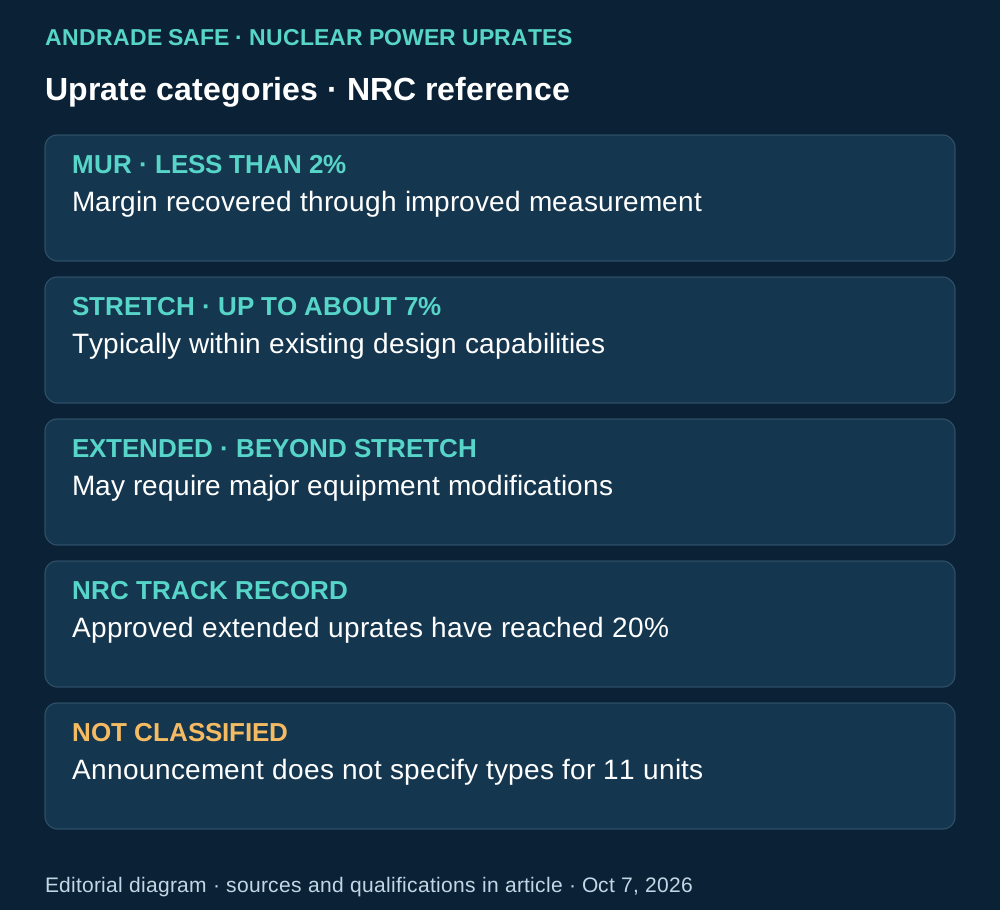
Measurement uncertainty recapture uprates are below 2%. Better measurement, especially of feedwater flow, reduces uncertainty in calculated reactor power. Reassessment uses an appropriate methodology rather than a sensor somehow creating energy.
Stretch uprates are typically up to 7%, within plant-specific design capacity. Instrumentation settings and operating conditions may change without major modifications. Available scope depends on that unit’s margins.
Extended uprates exceed the stretch range; NRC describes approvals as high as 20%. They may require substantial changes to high-pressure turbines, condensate pumps and motors, generators and transformers.
These are general categories. The releases do not classify each of the 11 units. This article does not assume all are extended uprates or apply a uniform percentage across the fleet.
NRC: categories and typical ranges →
| NRC category | General range | Core concept |
|---|---|---|
| Measurement uncertainty recapture | < 2% | Lower measurement uncertainty |
| Stretch | Typically up to 7% | Plant-specific design margins |
| Extended | Beyond stretch; approvals up to 20% | Major modifications may be necessary |
Higher output requires a whole-system assessment
Changing capacity can change flows and operating conditions. Piping, valves, pumps and heat exchangers need assessment against the actual proposal. Pressure and temperature will not necessarily increase uniformly throughout a plant.
Rotating machinery requires performance, vibration and integrity assessment. Electrical capacity, heating and protection coordination must match the proposed configuration. Cooling and other auxiliaries can limit useful gains.
Transients, postulated accidents, instrumentation and operating limits also enter the demonstration. The question is whether safety criteria remain satisfied across the scenarios supporting the licence, not just higher normal output.
Capital, engineering, suppliers, construction and testing are necessary. The installed configuration must match the analysed one, while operational documents reflect approval. Extra megawatts have value when availability and technical criteria remain intact.
A commercial announcement is not a regulatory approval
NRC reviews uprates as licence amendments through multidisciplinary assessment. The process includes public notices, comments and, where applicable, hearing requests.
The October announcement establishes commitments and funding, not a single permission covering all units. Signing a PPA does not demonstrate approval of all 11 projects.
The 2028 and 2032 milestones depend on programme execution. Equipment delivery, outage planning, documentation and regulatory decisions affect timing. Commercial targets do not remove those dependencies.
Nuclear safety involves design, margins, operation, maintenance, barriers and oversight. Risk should be treated through verifiable criteria and responsibility throughout the lifecycle, rather than promises of zero risk or inevitable danger.
Why have data centers changed PJM’s power discussion?
PJM coordinates wholesale electricity in all or parts of 13 states and the District of Columbia. Large, relatively continuous loads require generation, transmission and connection planning alongside procurement. The announcement refers to approximately 67 million people served.
The January 2026 forecast projects average annual summer-peak growth of 3.6% and net-energy growth of 5.3% over ten years. They are projections for different indicators, not confirmed consumption or percentages attributable solely to AI.
In September PJM described vetting large-load proposals, principally data centers, for likelihood and commitments. Duplicate or uncertain proposals can inflate expectations; timing matters alongside size.
Manufacturing and electrification also contribute. Our Equinix article examines backup equipment within a data center; this case moves upstream to the firm power supporting expansion.
PJM: January forecast analysis →
PJM: September large-load review →
How large is 890 MW? Comparison has limits
Constellation compares the aggregate increment with a large conventional reactor or several small modular reactors. This is a capacity-scale comparison, not equivalent design, unit count or guaranteed performance.
The increment is distributed among upgrades. There is no new 890 MW reactor in this agreement, and the number of data centers served cannot be calculated without their loads.
Firm generation offers high availability and potentially continuous supply under operating conditions. Maintenance, outages and network constraints remain relevant; firm does not mean no interruption ever.
The increment does not satisfy every projected PJM need. Generation, transmission, storage, flexibility and efficiency all remain part of a much larger planning task.
The 2,700 MW belong to a different agreement
The 15-year arrangement concerns supply from existing PJM assets. Its economic purpose differs from incremental capacity enabled by the 20-year nuclear PPA.
The release does not classify the entire 2,700 MW as newly built nuclear output. Existing fleet is not synonymous with the 11 upgraded units. Maintaining this distinction avoids overstating physical expansion.
Long-term revenue can support investment, but it does not automatically establish lower tariffs for every customer. Affordability and ratepayer protection are company objectives whose realisation depends on execution and market rules.
The agreement also includes demand flexibility for non-critical consumption during stressed conditions. This requires defined eligibility and coordination rather than indiscriminately interrupting essential equipment.
Can the AI using power help the energy system?
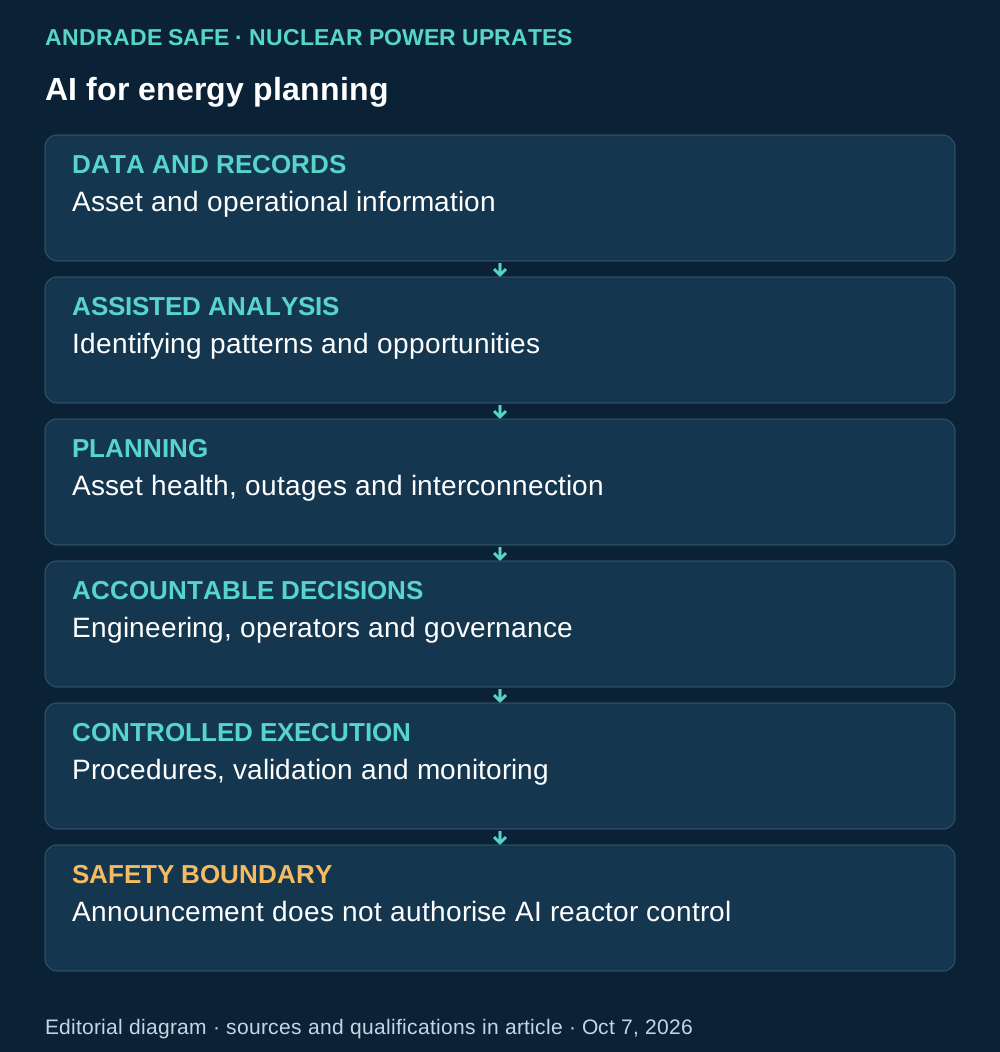
AI for Energy includes site selection, modelling, interconnection planning, asset health, outages and scenario optimisation using Google Cloud and Gemini Enterprise.
Models can organise documents, compare alternatives or identify patterns for investigation. Useful deployment requires suitable data, validated results and accountable decisions. A plausible suggestion is not an approved nuclear analysis.
Operational technology monitors or controls physical processes. Constellation mentions highly regulated networks, some air-gapped. Segmentation, access, traceability and controlled changes are architectural requirements, not incidental details.
The agreement does not establish Gemini as an autonomous reactor controller or a replacement for licensed operators and protection systems. Planning support and safety-critical functions require different governance and boundaries.
Uprates, restarts and new reactors are distinct routes
Google reports enabling more than 1.5 GW through US uprates and restarts. It cites Georgia Power uprates and a Duane Arnold restart with NextEra. Commitments do not mean all capacity is already operating.
Its portfolio also includes Kairos Power and TVA advanced-reactor development. Upgrading an operating unit, restarting a dormant plant and building a new reactor have different scopes and dependencies.
DOE’s UPRISE initiative supports use of existing infrastructure and nuclear expansion. Programme context does not constitute technical approval of a specific project.
Existing assets can contribute to growth, but condition, lifecycle and performance need evidence. Cost and schedule advantages should be established for particular projects, not promised universally.
Lessons for engineers and safety managers in Brazil
Debottlenecking identifies and removes production restrictions. The complete chain matters: improving one element can expose another limit. A larger pump does not prove piping, valves, supports, electrical supply and the process can support the change.
Management of change integrates analysis, documentation, authorisation and preparation. Procedures, alarms, inspection and training must reflect the new configuration. A capacity gain cannot remain only in an investment spreadsheet.
Mechanical integrity, maintenance and reliability connect with productivity. Access, maintenance interfaces, outages, testing and return-to-service criteria matter to workers. Digital upgrades add human factors and OT cybersecurity.
This case does not establish uprate suitability for Angra 1 or 2. The transferable lesson is method, subject to Brazilian requirements and installation-specific studies. Safety and productivity can advance together through evidence and verification.
Before raising capacity: questions needing evidence
A modernisation project should define desired output, measurement boundary, current restrictions and whole-system performance. Otherwise nominal gains are easily confused with sustainable usable capacity.
Assign owners to mechanical, electrical, instrumentation, operations and safety interfaces. Identify margins, common failures, regulatory needs, testing and stopping criteria. Documentation should connect design, installation and actual results.
Engineering continues beyond new equipment. Existing-asset integrity and reliability can unlock major gains. AI growth is also a race for steam, turbines, transmission, licences and megawatts: the digital era remains deeply physical.
- Is the target defined as thermal, gross electrical or net electrical capacity?
- Have whole-system restrictions and margins been assessed?
- Have flows, loads, vibration and cooling been checked?
- Are generators, transformers, auxiliaries and protection compatible?
- Have transients, instrumentation and operating limits been reviewed?
- Do authorisations have owners and schedules?
- Have logic, alarms and interfaces been validated?
- Are OT, access, segmentation and data governed?
- Have operations and maintenance received documents and training?
- Do tests and return criteria verify the approved configuration?
Frequently asked questions
What is a nuclear uprate?
An increase in a plant’s maximum authorised power level following technical assessment and regulatory approval.
Is Google building 11 new reactors?
No. The announcement concerns upgrades to 11 existing units at six sites.
How much new capacity is planned?
890 MW on PJM. The separate 2,700 MW arrangement must not be counted as new capacity.
When will the capacity arrive?
The first uprate is expected in 2028; Google targets completion before the end of 2032. Execution and authorisations remain necessary.
Can an existing plant increase output?
Yes, when analyses and modifications demonstrate compliance with applicable criteria and the authority approves the new limit.
What equipment needs modification?
It varies by unit: instrumentation, turbines, pumps, steam systems, generators, transformers and other equipment may need assessment or modification.
Why are data centers seeking nuclear power?
Large loads require reliable electricity. Nuclear contributes high availability and low operational emissions within a broader power system.
Will AI control the reactors?
The announcement concerns planning, asset health, optimisation and infrastructure. It does not establish autonomous reactor control or replacement of protection systems.
Are the 2,700 MW new generation?
They are not presented as newly created physical capacity; they belong to a separate 15-year agreement involving the existing fleet.
Is an uprate always faster than a new plant?
Existing infrastructure may provide advantages, but timing and cost depend on scope, condition, construction, suppliers and licensing.
References
- Google: announcement and timelineGoogle
- Constellation: agreements and upgradesConstellation Energy
- NRC: power-uprate backgroundNuclear Regulatory Commission
- NRC: categories and typical rangesNuclear Regulatory Commission
- NRC: licence-amendment processNuclear Regulatory Commission
- NRC: from heat to electricityNuclear Regulatory Commission
- PJM: 2026 load forecastPJM
- PJM: January forecast analysisPJM
- PJM: September large-load reviewPJM
- PJM: regional grid and footprintPJM
- DOE: UPRISE initiativeU.S. Department of Energy
- ANS: sites identified by spokesmanAmerican Nuclear Society / Nuclear News