
Learn what Panama's magnitude 7.7 earthquake reveals about seismic design, ductility, ground motion, and post-earthquake safety.
Panama's earthquake: the facts, affected communities, and provisional reporting
Updated on 10/10/2026 at 22:18 (Brasília time, UTC−03:00). Editorial verification at a recorded time; this page is not a live automatic update.
On October 9, 2026, a magnitude 7.7 earthquake struck Panama. The preferred USGS solution places it near Pitaloza Arriba at a depth of approximately 12.6 kilometers. The event raises an engineering question: why can buildings exposed to the same earthquake perform so differently? The answer involves local ground motion, geometry, materials, connections, construction quality, and deformation capacity. Understanding those interactions is more useful than assuming that stronger concrete alone guarantees safety.
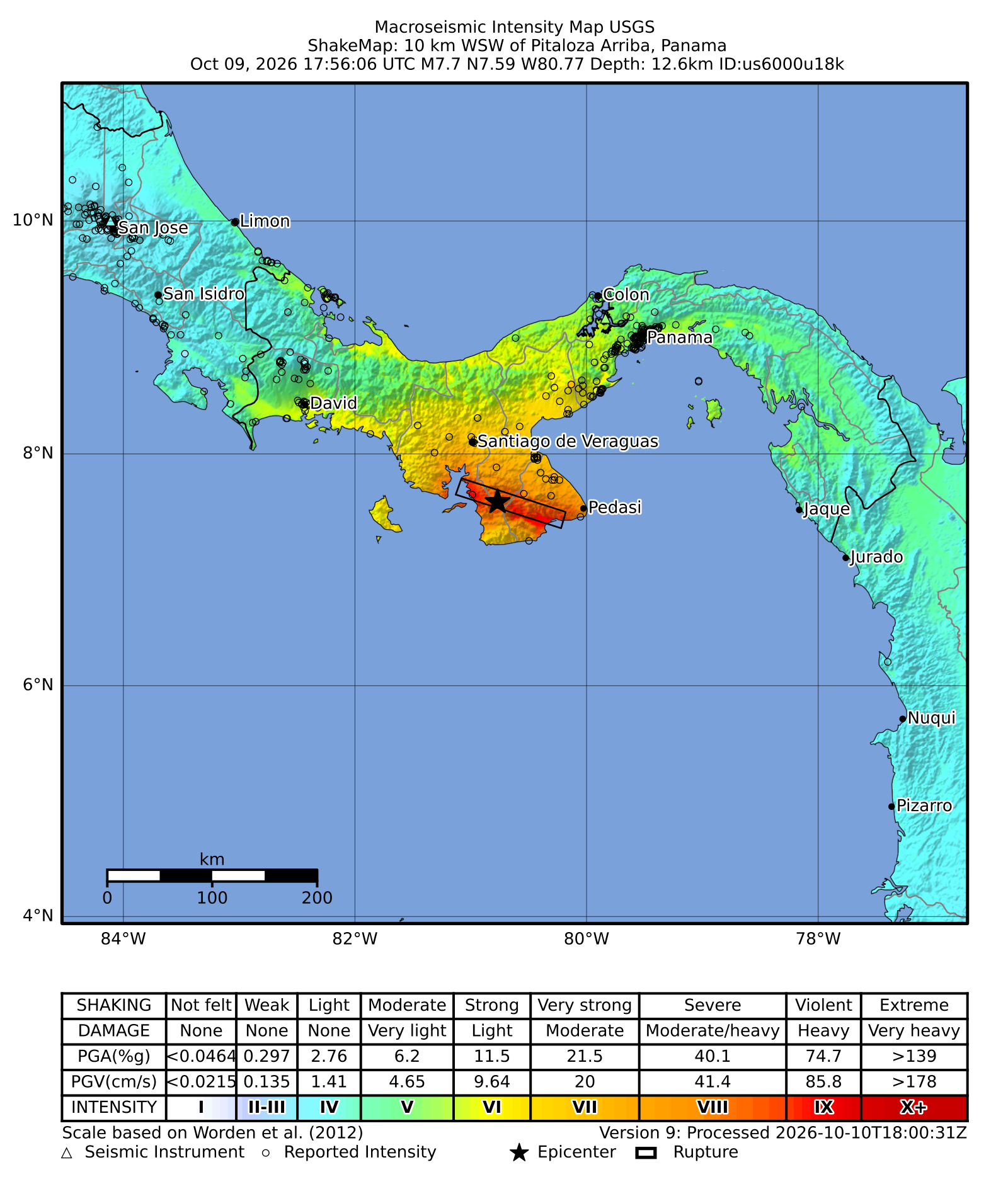
The recorded origin time is 17:56:06 UTC, corresponding to 12:56 p.m. in Panama and 2:56 p.m. in Brasília. The preferred epicenter is at 7.587° N, 80.769° W, approximately 12 km west-southwest of Pitaloza Arriba. Catalog parameters can change as solutions are revised. The epicenter does not automatically identify the most affected neighborhood, and a point on a map does not describe the entire rupture surface.
Panama's Presidency announced a state of emergency in an October 10 statement. Its preliminary report mentions approximately 21 people treated for injuries and assessments of 426 homes, 419 schools, and 21 health facilities. Later AP and Folha reporting gives 27 injured. The reporting scopes and cutoffs have not been reconciled; these figures should not be presented as one consolidated national total. Affected families and communities need responsible information, with respect for their circumstances and without turning damage into spectacle.
Source: USGS — M 7.7, Pitaloza Arriba, us6000u18k →
Source: Gobierno declara estado de emergencia para atender a familias afectadas por sismo →
Source: Panama declares a state of emergency as powerful quake aftershocks rattle communities →
Source: Ao menos 27 pessoas ficaram feridas devido a terremoto de 7,7 que atingiu o Panamá →
What is established, and what still requires assessment?
The USGS also lists a separate magnitude 6.6 event near Río Grande at 20:25:39 UTC on October 9. An earthquake sequence may include significant subsequent shaking, which can place additional demands on already damaged structures. Catalog entries cannot predict the exact time or magnitude of the next earthquake. The later event has its own identifier and must not be combined with the first into a single magnitude or treated as a duplicate observation.
International PTWC final message number 4, headed 19:39 UTC on October 9, stated that the tsunami threat from the principal event had passed. These messages support national authorities, which determine their own alert levels. An estimated threat, a national alert, a measured wave, and the end of a threat are distinct information. The bulletin does not establish a destructive tsunami. Its preliminary earthquake parameters also do not replace the revised preferred USGS solution.
News reports describe continued Canal operations and a temporary interruption followed by resumption at Tocumen. An accessible primary statement confirming all those details was not recovered, so these remain attributed reports. They do not certify the integrity of the facilities. The early summary below distinguishes catalog facts from ongoing assessments. Readers interested in the enduring engineering principles can continue to the explanation of how tectonic motion reaches a building.
Source: USGS — M 6.6, Río Grande, us6000u19w →
Source: PTWC Final Tsunami Threat Message — number 4, 19:39 UTC →
Official ShakeMap PDF — version 9 →
Go to the engineering explanation →
| Record | Value / status |
|---|---|
| Principal event | USGS us6000u18k; Mw 7.7; depth 12.6 km |
| Time and epicenter | October 9, 2026, 17:56:06 UTC; 7.587° N, 80.769° W |
| Established | USGS parameters; reported damage; separate Mw 6.6 event |
| Under assessment | Consolidated injuries, restrictions, losses, individual building performance, final tectonic characterization |
From tectonic strain to seismic waves
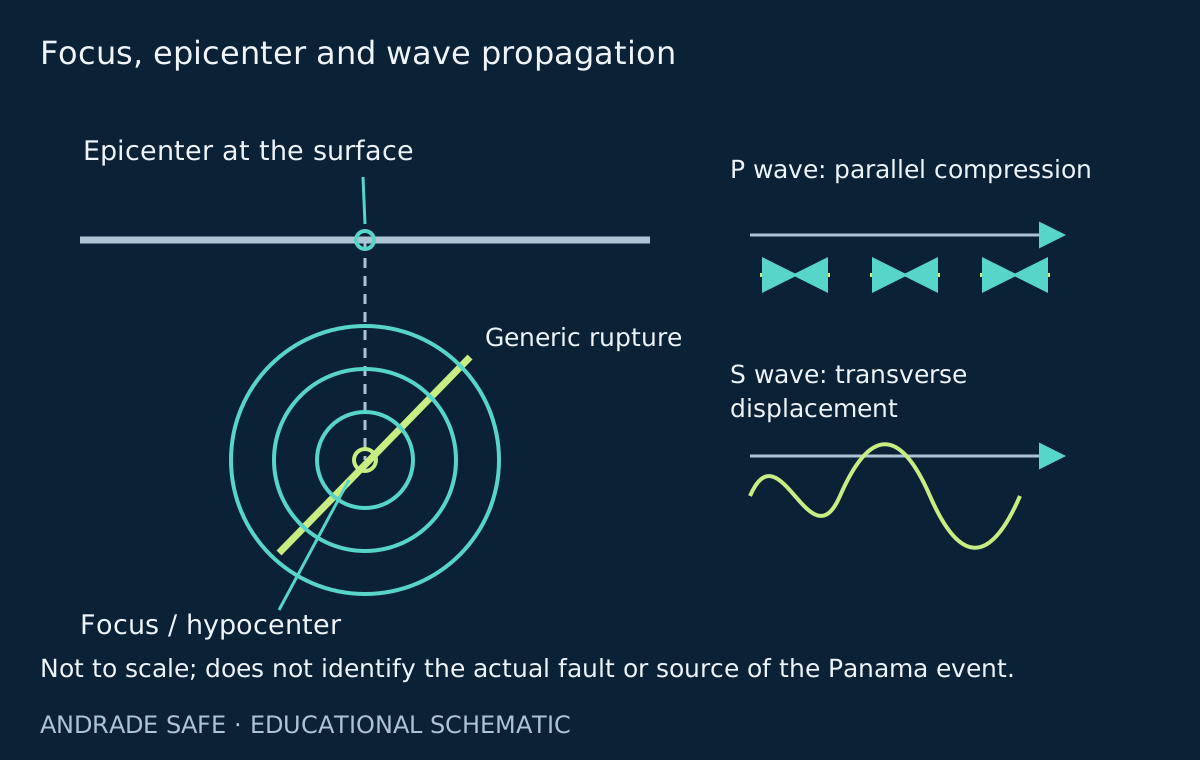
Plates and crustal blocks move gradually while some interfaces remain locked. Elastic deformation accumulates until resistance is exceeded and rupture occurs. Part of the released energy travels as waves. The USGS describes Panama as a complex tectonic region near the interactions of the Cocos, Nazca, Caribbean, and South American plates and the Panama microplate. This regional context does not establish a specific named fault as the source of this earthquake without primary seismological confirmation.
The focus, or hypocenter, is the location where rupture starts at depth; the epicenter is its projection onto the surface. A major rupture extends across an area rather than occurring at only one point. P waves involve compression parallel to propagation, while S waves involve transverse movement. Surface waves and the combination of arriving waves also contribute to observed motion. The geological illustration here is generic and does not reconstruct the actual Panama source geometry.
Depth influences the travel path but does not determine damage by itself. Distance to the rupture, propagation direction, duration, frequency content, topography, and the materials traversed affect the shaking demand. Two sites equally distant from the epicenter can experience different motion. A seismic hazard investigation therefore needs more information than circles drawn around a map point. Ground observations and appropriate models help characterize the local conditions that a design must address.
Magnitude, intensity, and ground motion answer different questions
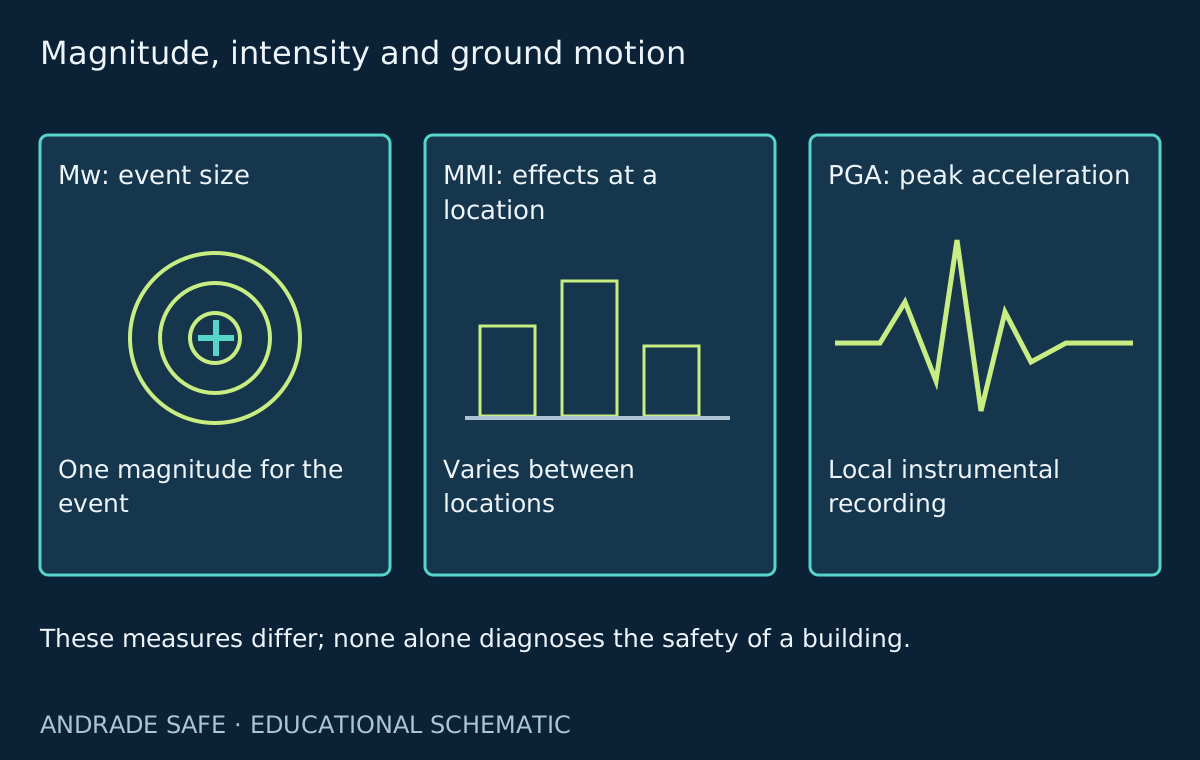
Moment magnitude, Mw, characterizes source size through seismic moment, which relates rock rigidity, rupture area, and slip. Richter local magnitude, ML, was developed for particular recording conditions and distances. Calling every earthquake value a Richter reading obscures that distinction. Modified Mercalli intensity, MMI, describes the severity of effects at a location. A single earthquake produces different intensities across a region, reflecting local shaking and the evidence used to assess its effects.
PGA is peak ground acceleration; PGV is peak ground velocity. Spectral acceleration relates motion to the response of systems with a specified period and damping. None of these measurements, in isolation, predicts damage to every building. They help engineers characterize the demand, which must then be compared with the response and capacity of the structure. A short, high acceleration peak and sustained motion with different frequency content are not interchangeable descriptions of loading.
ShakeMap combines observations and models to estimate the distribution of shaking. Its colors and general damage descriptions are not building inspections. PAGER estimates exposure and potential losses, with uncertainty; it is not a count of confirmed casualties or the cost of completed repairs. The official map in this article provides regional context and retains its version and legend. A color should never be converted directly into an occupancy decision for an individual property.
Source: Earthquake magnitude, energy release, and shaking intensity →
Source: ShakeMap — Background →
| Concept | What it describes | Limit |
|---|---|---|
| Mw | Source size | Not shaking in every neighborhood |
| MMI | Local effects | Not the event magnitude |
| PGA / PGV | Peak acceleration / velocity | Not a diagnosis of every building |
| Observed damage | Response of a specific structure | Cannot be inferred from map color alone |
Dynamic response: the ground moves while mass resists acceleration
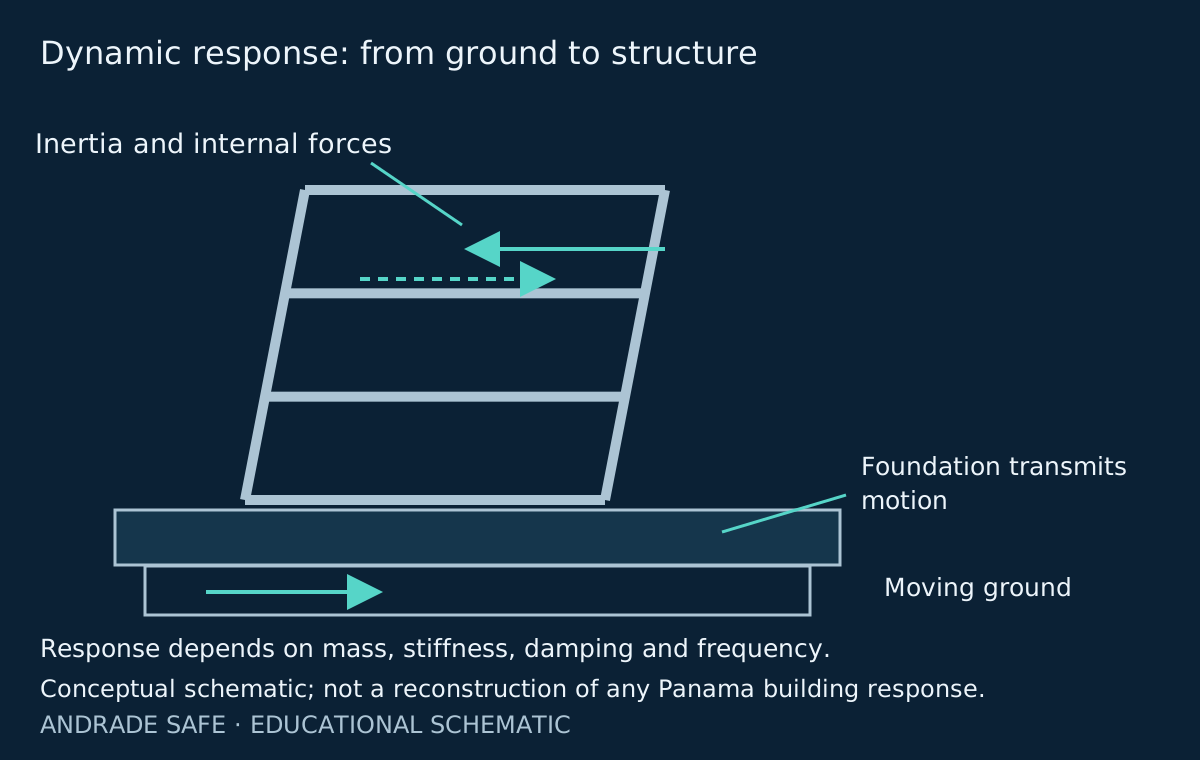
Earthquake-resistant engineering designs and evaluates systems for defined seismic performance, reducing the likelihood of collapse and loss of life. It does not stop earthquakes or promise damage-free buildings. Foundations transmit ground motion to the structure while mass resists changes in velocity. This inertia generates internal forces and deformations that change throughout the shaking. The demand is dynamic, so evaluating only the weight a building carries under ordinary conditions is insufficient.
Mass, stiffness, and damping influence natural periods, the characteristic times of oscillation. A building has several modes rather than one universal frequency. Their relationship to the frequency content of the shaking matters, along with duration and inelastic behavior. Resonance is a useful introduction to dynamic amplification, but the word alone does not explain the performance of a real building. Structural response also changes when damage alters stiffness and the distribution of resisting mechanisms.
Actions travel through foundations, vertical elements, floors, and connections. Floor diaphragms distribute forces to the lateral resisting systems, while collectors and connections must transfer them continuously. A strong wall that terminates without an adequate transfer path cannot solve the entire system. Analysis also addresses relative movement between stories, torsion, and the effects of gravity loads acting on the displaced structure. These interfaces need design and construction verification, not merely labels on drawings.
Source: FEMA P-749 — Earthquake-Resistant Design Concepts, second edition →
Why can neighboring buildings perform differently?
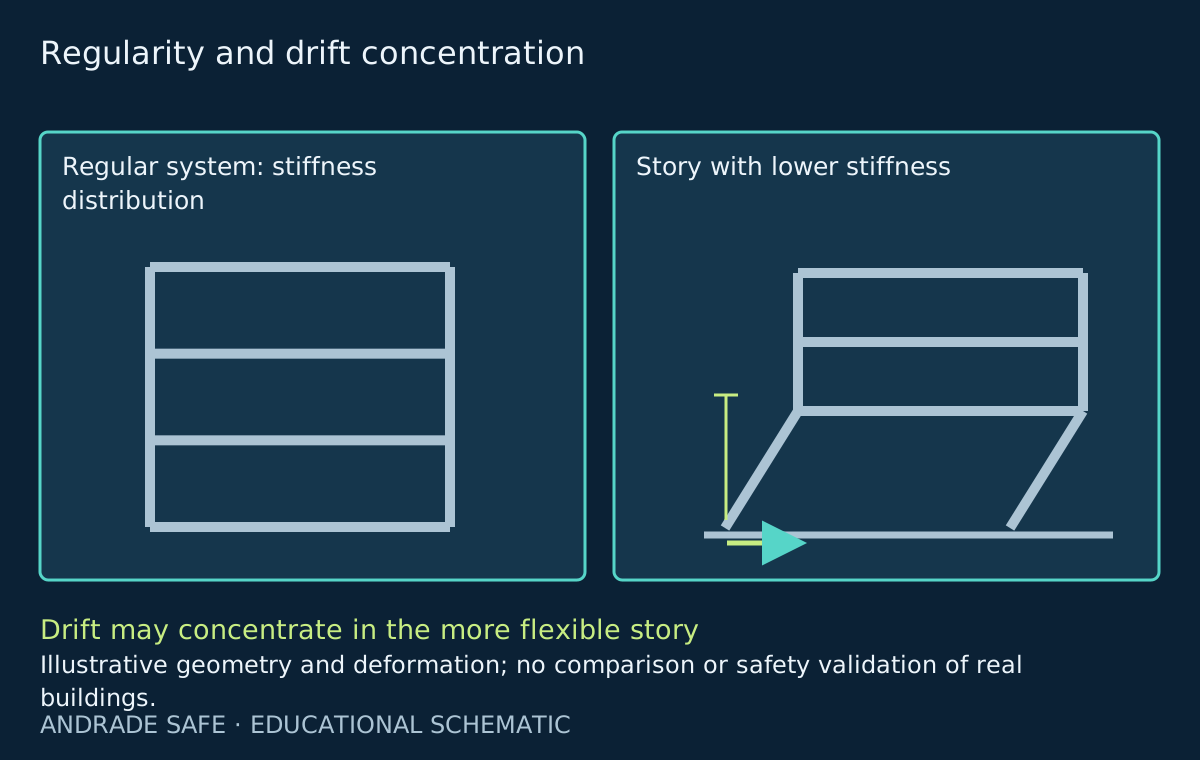
A moment-resisting frame relies on beams, columns, and their connections; structural walls and bracing provide other load paths. Dual systems combine mechanisms with requirements for compatibility and participation. Height, mass distribution, wall locations, openings, and separation from adjacent buildings also affect response. Similar façades do not reveal the hidden structural systems or connection capacities. Comparing the appearance of two buildings cannot establish that they received equal demands or had equivalent resistance.
Plan irregularities can promote torsion, particularly when stiffness and mass distributions create eccentricity. Abrupt changes in stiffness or strength over the height can concentrate deformation. An open, relatively flexible ground story is a familiar example, but a photograph of a parking level cannot establish its safety. Reduced stiffness and insufficient strength are different conditions, although they may coexist. Their consequences require the appropriate analysis of the actual system and its deformation demands.
Detailing, workmanship, foundations, corrosion, and alterations influence available capacity. Removing an element, adding weight, or modifying a connection can affect the system without visibly changing the façade. A stiffer building is not automatically better, and a more flexible one is not automatically safe. Performance depends on demand, resistance, acceptable deformation, and failure mechanisms together. The schematic comparisons illustrate principles; they are not assessments of any specific building affected in Panama.
Source: FEMA P-749 — Earthquake-Resistant Design Concepts, second edition →
| Factor | Why it matters |
|---|---|
| Demand and ground | Frequencies, duration, layers, and foundations |
| Geometry and stiffness | Torsion, irregularities, concentrated drift |
| Strength and ductility | Capacity and deformation without brittle mechanisms |
| Details and construction | Connection continuity and actual quality |
| Service life and equipment | Alterations, maintenance, anchorage, and response |
Geotechnical conditions: amplification, liquefaction, and slope stability
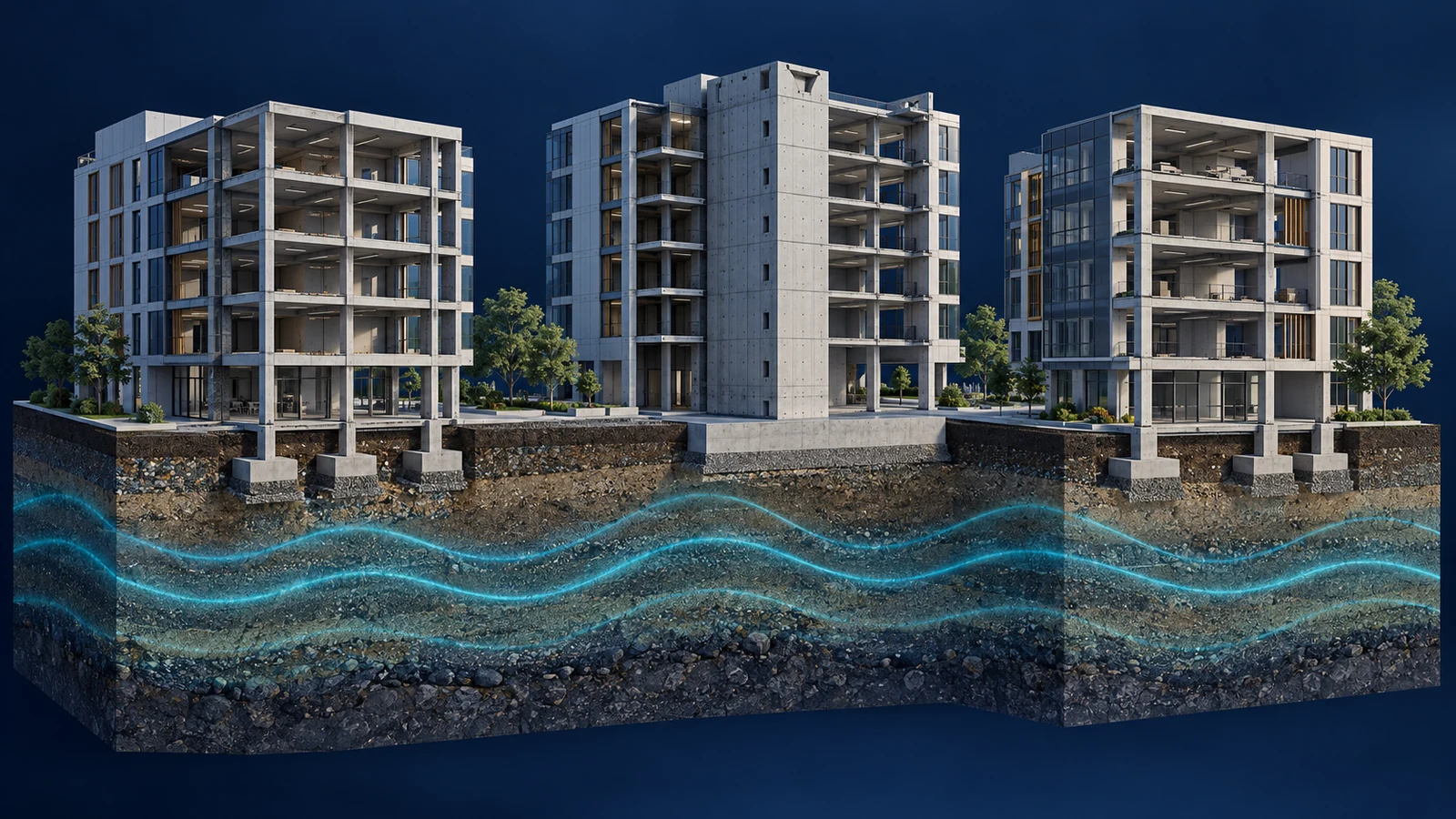
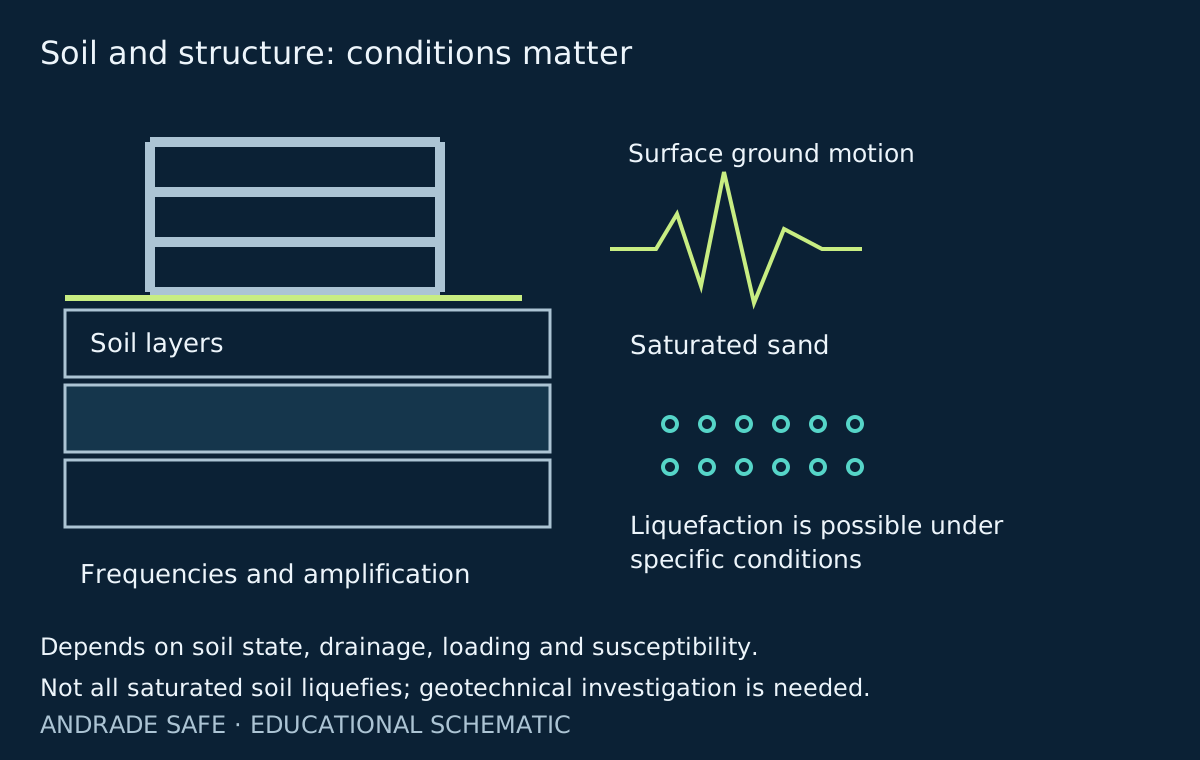
Soil layers can change the amplitude, duration, and frequency content of motion reaching the surface. Soft soil does not amplify every motion by the same amount: layer thickness, contrasts between materials, incident motion, and nonlinear behavior matter. The ground's characteristic response can interact with that of the structure. Establishing site conditions requires geotechnical investigation. The appearance of a street or a ShakeMap color cannot replace information about the subsurface profile and its behavior.
Liquefaction can occur in susceptible loose, saturated granular materials when cyclic loading increases pore-water pressure and reduces effective stress and resistance. Settlement and lateral displacement can then damage foundations and buried networks. It does not occur in every saturated soil. Grain size, density, drainage, groundwater, and shaking characteristics must be considered together. A general explanation of the mechanism should not be mistaken for evidence that liquefaction occurred at a particular site in this earthquake.
Slopes can also become unstable depending on geology, geometry, water, and loading. Foundations must preserve their transfer of actions through the actual ground, including possible displacement and deformation. These are general engineering mechanisms, not confirmed diagnoses of Panamanian properties. Identifying a specific cause requires field evidence, records, and professional analysis. Investigations must also respect safe access restrictions, because entering an unstable site to collect evidence can expose the team to additional hazards.
Source: FEMA P-749 — Earthquake-Resistant Design Concepts, second edition →
Strength, stiffness, and ductility serve complementary purposes
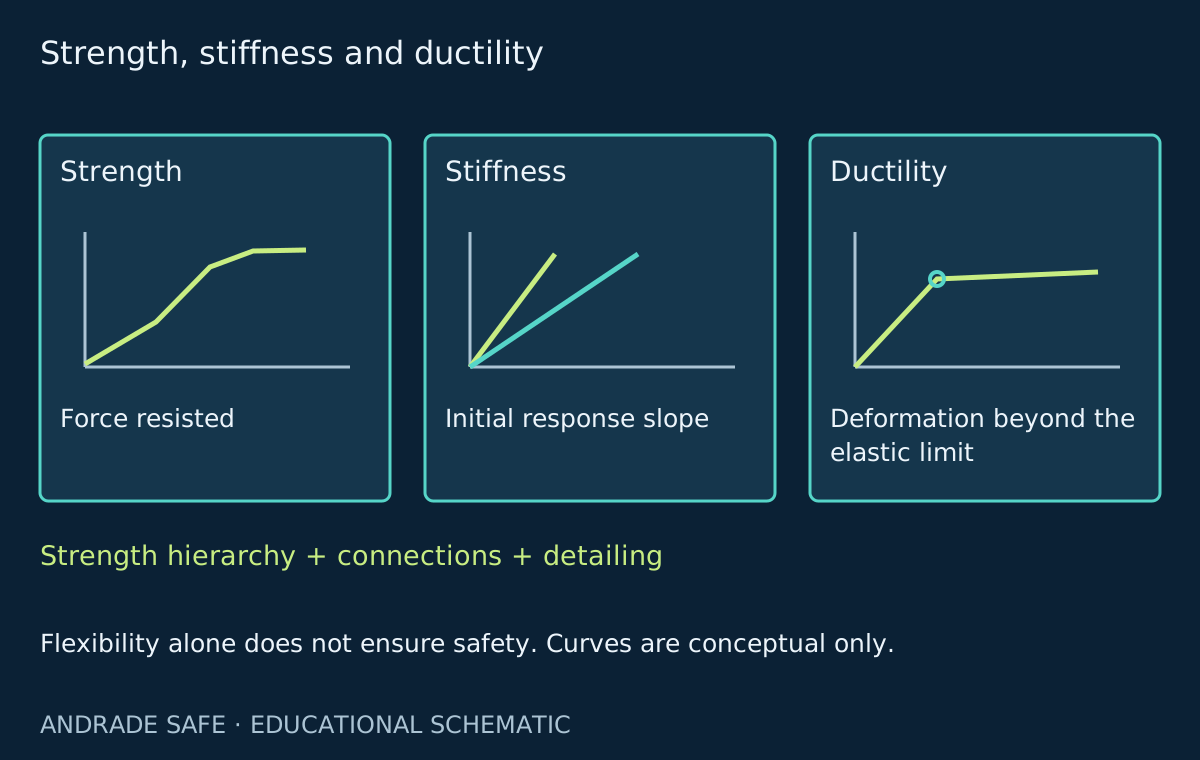
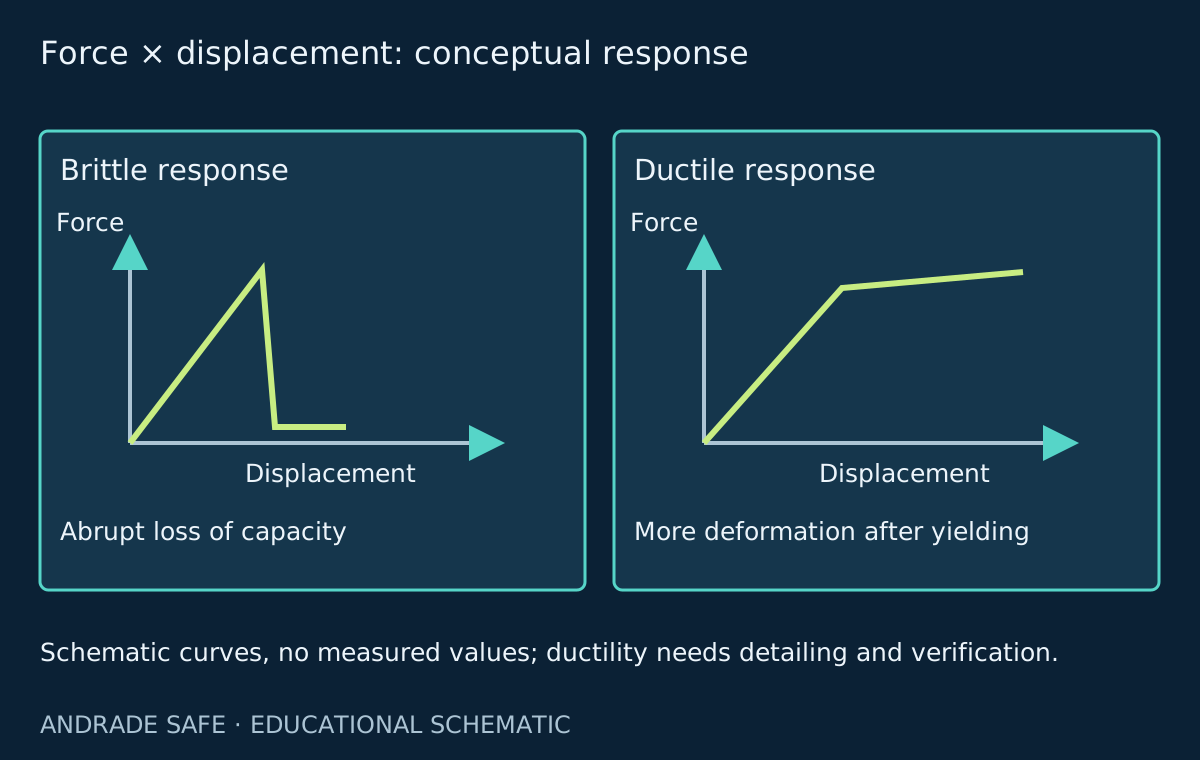
Strength is the ability to resist forces; stiffness relates force to deformation; ductility is the ability to develop substantial inelastic deformation before losing the required capacity. A strong component can still fail abruptly. A very flexible component can undergo movements incompatible with stability or services. The appropriate balance depends on the structural system, material, demand, and performance objective. These terms should not be used interchangeably when explaining how earthquake-resistant construction works.
Where inelastic response is allowed, engineers seek controlled deformation and energy dissipation mechanisms. Capacity design establishes a hierarchy: regions intended to deform must be capable of doing so, while connections and undesirable mechanisms receive appropriate protection. Allowing any arbitrary part to yield is not a strategy. A brittle shear failure or loss of a connection can prevent the intended ductile mechanism from developing and compromise the transfer of forces through the system.
In reinforced concrete, confinement, anchorage, splices, and joint details affect deformation capacity. In steel structures, connections, local stability, and member behavior are equally important. The locations and extent of inelastic regions require analysis and detailing. The force–displacement curves in this article are conceptual, without design values. They cannot be used to size reinforcing bars, anchors, or devices. Ductility must be provided by the actual constructed details, not assumed because a material is generally described as ductile.
Source: FEMA P-749 — Earthquake-Resistant Design Concepts, second edition →
Base isolation and supplemental damping are different strategies
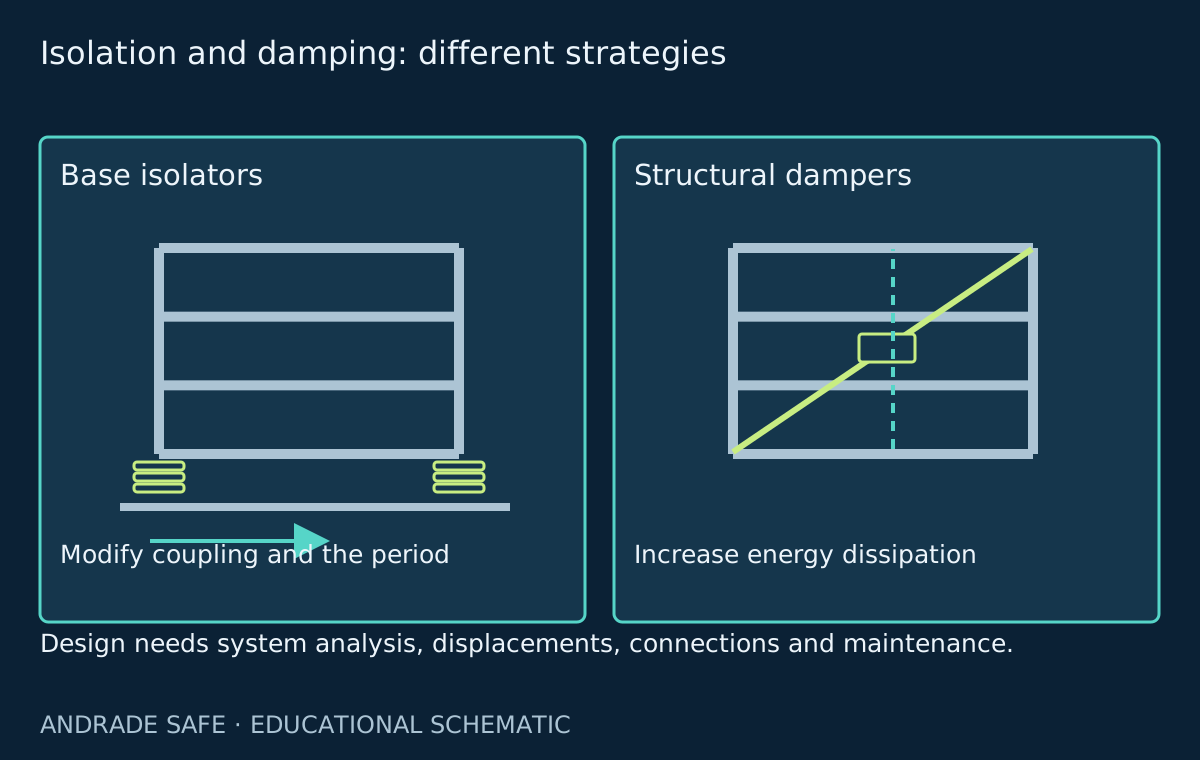
Seismic isolation introduces a deformable interface that changes the coupling and response period of the building, often at its base. It aims to reduce certain demands transmitted to the superstructure. This can require substantial movement at the interface, perimeter clearance, and flexible connections for services crossing it. Isolating a structure without addressing stairs, piping, and access can create incompatible movements. The isolation plane is therefore an interface involving more than the bearings themselves.
Supplemental energy dissipators add dissipation mechanisms, for example through relative movement between parts of the structure. They are not synonymous with isolators, although isolation systems can also dissipate energy. Inherent damping arises from the behavior of materials and components. Each mechanism's contribution must be represented in the model and checked for service and earthquake conditions. Describing all these devices as shock absorbers hides important differences in how they change the building's response.
Selection involves local hazard, the existing system, space, displacement, maintenance, device inspections, and life-cycle cost. Retrofitting can require major intervention and carefully designed temporary conditions. It is not a simple installation suitable for any existing building. FEMA P-749 provides an American educational reference for these concepts; it is not Panama's mandatory regulation or a substitute for a specific design. Project decisions need the relevant jurisdiction, competent professionals, and verified information about the building.
Source: FEMA P-749 — Earthquake-Resistant Design Concepts, second edition →
Nonstructural components and continuity of services
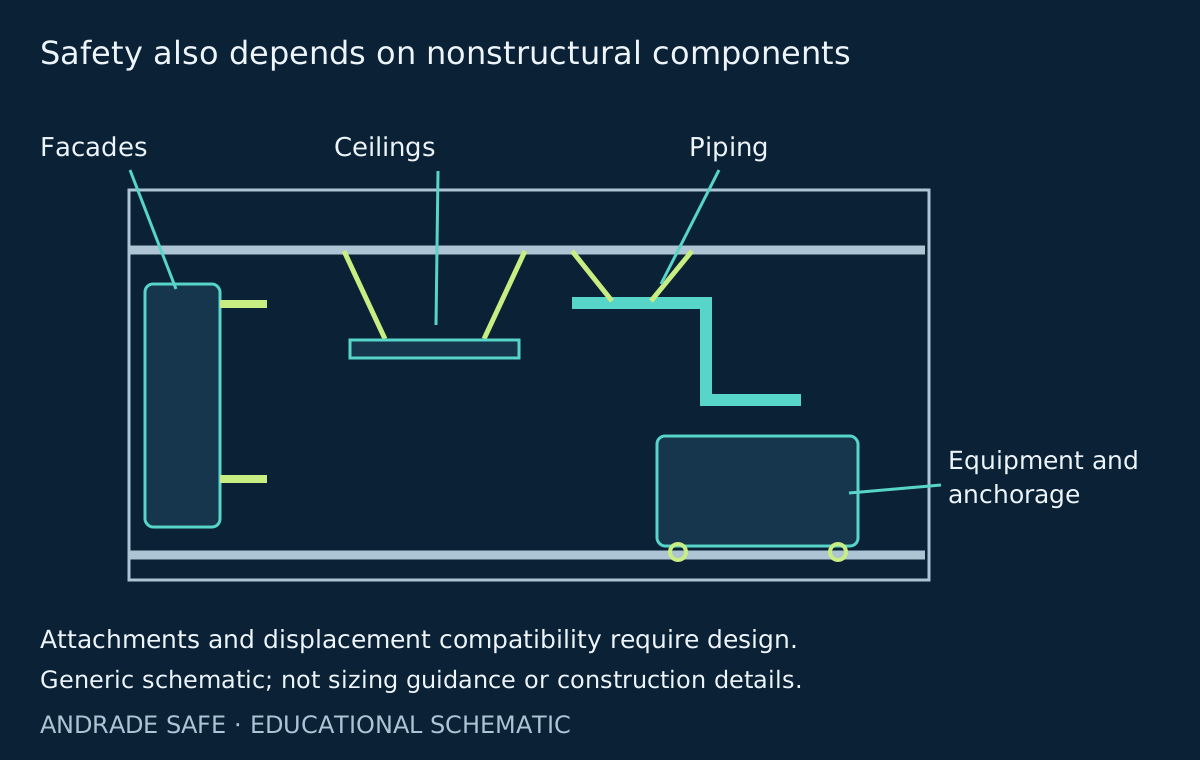
Even without global collapse, façades, glazing, ceilings, and finishes can fall and cause injury. Partitions and piping can be affected by relative story movement; equipment, tanks, and furniture can slide or overturn under acceleration. Elevators, ventilation, fire protection, and electrical supply require assessment of their interfaces. A component described as nonstructural can still be essential to life safety and facility function. The term describes its structural role rather than the importance of its consequences.
Anchors and supports must resist the relevant actions and accommodate compatible movement. Attaching equipment to the nearest wall or copying a catalog fixing is insufficient. Gas and electrical damage can create secondary hazards, while water and communications failures can interrupt care. Hospitals, industries, logistics facilities, and data centers need to assess dependencies beyond their main frames. A service can fail because one critical connection or external supply becomes unavailable even when the building remains standing.
On October 10, Panama's MINSA announced the transfer of Hospital Sergio Núñez Núñez operations to Minsa Capsi de Ocú because of structural damage. This is an official operational decision, not an engineering report reproduced here. Maintaining stability, authorizing occupancy, and sustaining service are related but distinct objectives. Resuming an operation does not prove that every component is undamaged. Recovery plans need to define what has been assessed, what remains restricted, and which dependencies can support the intended service.
Source: Comunicado 2 — Hospital Sergio Núñez Núñez →
Source: FEMA P-749 — Earthquake-Resistant Design Concepts, second edition →
After the shaking: screening, assessment, and formal clearance
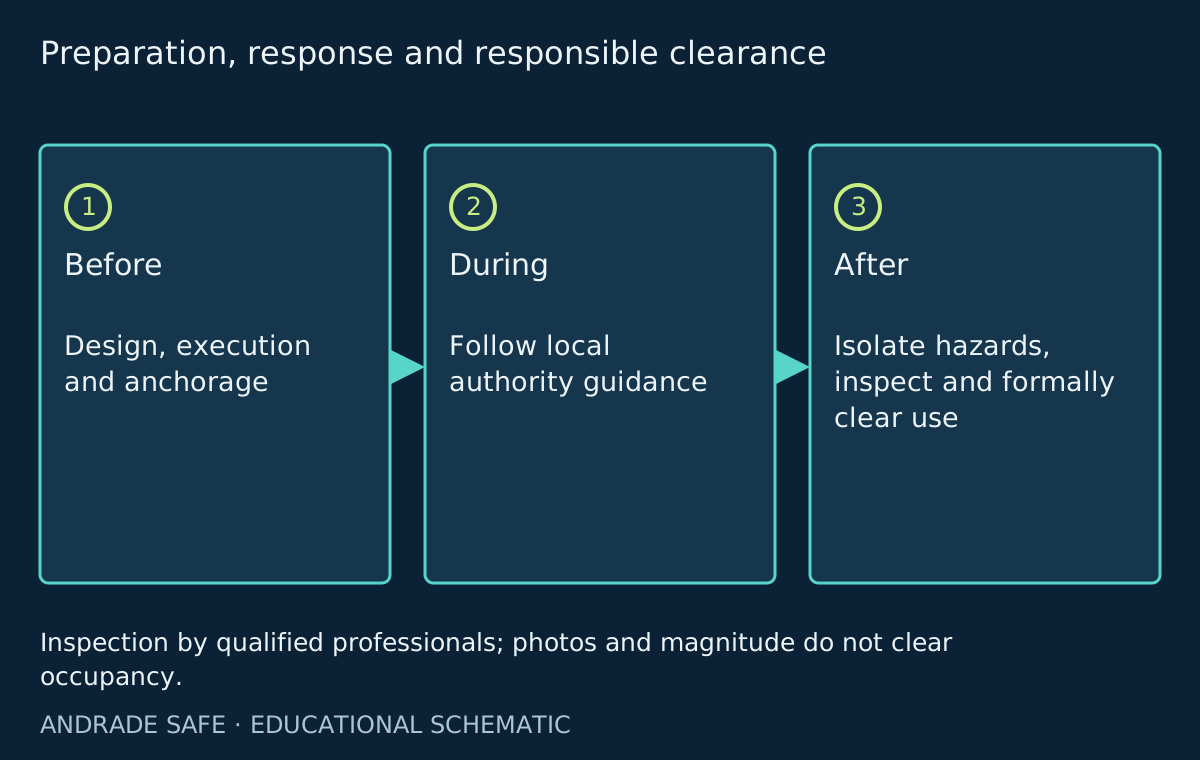
Response begins with protecting people, following local authority guidance, and controlling access to potentially hazardous areas. Subsequent shaking, loose objects, damaged networks, and ground instability can add risk. Management must know who coordinates the emergency and who is competent to assess the building. Reentry into an affected structure to retrieve papers or photograph cracks should not be improvised. Access decisions are part of the organized response, not an individual visual judgment.
Rapid screening identifies priorities and initial restrictions; it is not necessarily a detailed assessment of residual capacity. Qualified teams examine the structural system, displacements, connections, foundations, ground, and services as appropriate. Records, designs, maintenance history, and alterations help interpret damage. Additional testing and analysis may be needed before recovery measures and use conditions can be established. The required investigation depends on the damage and uncertainty, rather than one universal crack-width threshold or a short checklist.
Clearance must follow the formal process and competent authorities of the jurisdiction. Photographs, AI tools, a blog checklist, or an isolated crack measurement cannot certify stability. Shoring and demolition also need engineering planning rather than improvisation. Emergency preparedness and investigation methods help organize decisions and evidence without replacing specialist judgment. Continued restrictions may be necessary while information is incomplete, and subsequent shaking can require reassessment of a building's condition.
Panama's REP-2021: the applicable edition matters
The Reglamento Estructural Panameño REP-2021 was adopted through Resolution JTIA 020-2022. The legal record distinguishes the resolution's effective date, August 6, 2022, from the regulation's implementation on April 30, 2023. Confusing the dates obscures the normative reference. Resolution JTIA 023-2023 modified Annex 1 concerning performance-based design. This chronology identifies the legal documents; it does not supply a complete design specification or establish the requirements for every damaged property.
The chronology alone does not show which edition governed a building affected in 2026. Design date, permitting, alterations, use, and applicable provisions must be checked against actual records. Nor does damage demonstrate noncompliance, or prove that a code prevented all damage elsewhere. Observed performance requires investigation; responsibilities depend on evidence and the competent process. A regional earthquake article cannot establish those individual conclusions by comparing photographs or construction dates alone.
Performance objectives can distinguish life protection, damage control, and continuity of function. The applicable requirement depends on the standard and context, without a universal promise of immediate operation. This article does not extract height limits, acceleration values, or a general isolation requirement from REP. Panamanian rules belong to their own jurisdiction and require competent application. They should not be transferred automatically to projects in another country, even where the underlying engineering principles are useful.
Brazil: structural seismic design and occupational risk management
Brazil has ABNT NBR 15421:2023, Design of earthquake-resistant structures. The catalog confirms that edition; applicability, parameters, and related standards must be checked by the responsible designer. A lower frequency of major earthquakes does not remove the need to assess relevant actions. It also does not justify inventing one nationwide acceleration or prescribing the same structural system for every building. The responsible project assessment is where site and structural information become specific design requirements.
Reliable documentation, ground investigation, construction control, and alteration management remain essential. Lessons about connections and load paths connect with investigations such as Champlain Towers, but the mechanisms differ: punching shear and progressive collapse are not equivalent to regional seismic loading. Comparing them can clarify interfaces without assigning another case's forensic conclusions to Panama. Likewise, lessons from seismic risk in mining should be interpreted within their own operating conditions rather than used as a building code.
The Brazilian PGR manages occupational risks during construction, inspection, recovery, and rescue activities. It is not a structural calculation standard or a certificate that a property is safe. Teams facing falls, electricity, unstable equipment, and damaged access need task-specific planning. Structural seismic analysis and safe organization of work complement each other, with distinct responsibilities and scopes. Neither document should be used to imply that the other discipline's assessment has already been completed.
Source: ABNT NBR 15421:2023 — catalog record →
Glossary: six terms used in seismic analysis
These definitions help explain maps and engineering discussions. Parameters need context and are not independent criteria for approving a building.
| Term | Definition |
|---|---|
| Mw | Moment magnitude: size of the earthquake source |
| MMI | Modified Mercalli intensity: local severity of effects |
| PGA | Peak ground acceleration at a location |
| Response spectrum | Maximum responses of systems with different periods and specified damping |
| Natural period | Characteristic time of an oscillation in a particular mode |
| Damping | Energy dissipation mechanisms that influence oscillation |
Prevention and recovery are decisions throughout a building's life
Before an event, prevention brings together hazard assessment, geotechnics, design, controlled construction, nonstructural anchorage, and emergency management. During shaking, protection follows local guidance without improvising an exit through a compromised route. Afterwards, priorities include access control, assessment, and recovery with defined return criteria. The summary table organizes responsibilities; it is not an operational rescue procedure. Every phase depends on information and decisions prepared before pressure to resume normal activity becomes urgent.
Managers need records of changes and an understanding of dependencies between structures, services, and external networks. Training, accessible communication, planned routes, and arrangements for vulnerable users improve response. Critical infrastructure may require specific continuity and redundancy objectives, verified technically. Communicating what has not been assessed is part of safety, especially when economic pressure encourages premature reopening. Clear limits allow users and decision-makers to understand what an inspection actually supports.
Nature produces the motion. Engineering can influence how a structure responds, without eliminating all uncertainty. Responsible learning rests on understood mechanisms, evidence, and professional decisions, with respect for affected communities. Andrade Safe brings together technical content and risk management to support safer decisions. Its published services are not presented here as an offer of earthquake-resistant structural design; the article's educational explanations do not replace that specialist professional scope.
View Andrade Safe’s published services (Portuguese) →
| Phase | Responsibility |
|---|---|
| Before | Local hazard, design, construction, anchorage, preparedness |
| During | Follow local guidance; avoid compromised routes |
| After | Control access; qualified assessment; recovery and formal clearance |
Frequently asked questions
What were the magnitude and depth of Panama's 2026 earthquake?
The preferred USGS solution consulted for event us6000u18k gives moment magnitude 7.7 and a depth of approximately 12.6 km. It occurred near Pitaloza Arriba on October 9 at 17:56:06 UTC. Those parameters remain subject to revision. The later magnitude 6.6 earthquake has a separate identifier and should not be confused with the principal event or added to its magnitude.
How do Richter magnitude, moment magnitude, and Mercalli intensity differ?
Richter refers to local magnitude, developed for particular recording conditions. Moment magnitude describes the size of the earthquake source. Modified Mercalli intensity describes the severity of effects at a location and varies across the affected region. None of these values, by itself, certifies safety or predicts the damage to a specific building. Engineers need local motion and structural information as well.
Why does an earthquake affect buildings differently?
Local motion depends on rupture, propagation, and ground conditions. Building response depends on mass, stiffness, height, resisting system, connections, and deformation capacity. Construction quality, foundations, maintenance, and alterations also matter. Nearby or visually similar buildings can therefore have different demands and capacities. Explaining a particular damage pattern requires investigation rather than comparison of photographs or distance from the epicenter alone.
How does an earthquake-resistant building work?
It provides continuous load paths, resistance, and deformation capacity compatible with defined performance objectives. Connections, floor diaphragms, and foundations must function as a system. Depending on the design, energy may be dissipated in specially detailed regions or supplemental devices. No single material or accessory guarantees earthquake safety independently of the structure, its ground conditions, and its constructed details.
Can an earthquake-resistant building crack without collapsing?
Yes. Some design objectives allow damage and inelastic deformation to reduce collapse risk during strong shaking. That does not make every crack acceptable or guarantee immediate use. The type, location, development, and structural context of damage require professional assessment. Life safety, repairability, and operational continuity are different objectives. Visible cracking alone cannot establish whether any of them has been achieved.
What does structural ductility mean?
Ductility is the ability to develop substantial inelastic deformation before losing the required capacity. It is not the same as flexibility or high strength. It depends on materials, geometry, connections, and detailing, including protection against brittle mechanisms. In a properly designed system, a strength hierarchy helps direct deformation toward regions capable of accommodating it rather than allowing uncontrolled failure elsewhere.
What are base isolation and seismic dampers?
Base isolation changes the coupling between ground and superstructure, altering response and requiring compatible movement at the interface. Supplemental dissipators add mechanisms for energy dissipation. Their effects can be combined, but they are different strategies. Both need specific analysis, appropriate connections, inspection, and maintenance. Neither is a simple retrofit accessory suitable for every existing building regardless of its structural configuration.
What is soil liquefaction?
It is a possible response of susceptible loose, saturated granular materials when cyclic loading increases pore-water pressure and reduces effective resistance. Settlement and displacement can then damage foundations and services. It does not occur in every saturated soil. Evaluation requires geotechnical investigation and information about earthquake motion. The possibility of the mechanism does not establish that it occurred at a particular Panamanian property.
When can a building be occupied after an earthquake?
When technical assessment and the competent authority's formal process establish conditions for use. Initial screening can impose restrictions and require further investigation. Structures, ground, and services must be considered as appropriate. Photographs, AI, or an absence of obvious cracks do not replace that assessment. Follow local guidance in affected areas, and do not improvise reentry before the necessary clearance.
Does Brazil have a seismic design standard?
Yes. ABNT NBR 15421:2023 addresses the design of earthquake-resistant structures. The responsible designer must verify the current edition, applicability, parameters, and related standards. Panama's REP-2021 belongs to a different jurisdiction. Brazil's PGR and occupational safety rules organize work activities and occupational risks; they do not replace structural calculation or establish that a building is safe for occupancy.
References
- USGS — M 7.7, Pitaloza Arriba, us6000u18kUSGS
- USGS — M 6.6, Río Grande, us6000u19wUSGS
- Gobierno declara estado de emergencia para atender a familias afectadas por sismoPresidencia de Panamá
- Panama declares a state of emergency as powerful quake aftershocks rattle communitiesAssociated Press
- Ao menos 27 pessoas ficaram feridas devido a terremoto de 7,7 que atingiu o PanamáFolha de S.Paulo
- PTWC Final Tsunami Threat Message — number 4, 19:39 UTCNOAA / PTWC
- Comunicado 2 — Hospital Sergio Núñez NúñezMINSA Panamá
- Earthquake magnitude, energy release, and shaking intensityUSGS
- ShakeMap — BackgroundUSGS
- PAGER — BackgroundUSGS
- FEMA P-749 — Earthquake-Resistant Design Concepts, second editionFEMA / WBDG
- Resolución JTIA 020-2022 — REP-2021Procuraduría de la Administración, Panamá
- Resolución JTIA 023-2023 — Anexo 1 REP-DSBD-2021Gaceta Oficial de Panamá
- ABNT NBR 15421:2023 — catalog recordABNT / DIN Media
- Copyrights and creditsUSGS
- USGS ShakeMap intensity map — version 9, processed 2026-10-10 18:00:31 UTCUSGS