
How stellarator fusion works, what Type One Energy plans for Infinity Two, and why plasma gain is not yet commercial electricity.
Why fusion investment leads to an engineering question
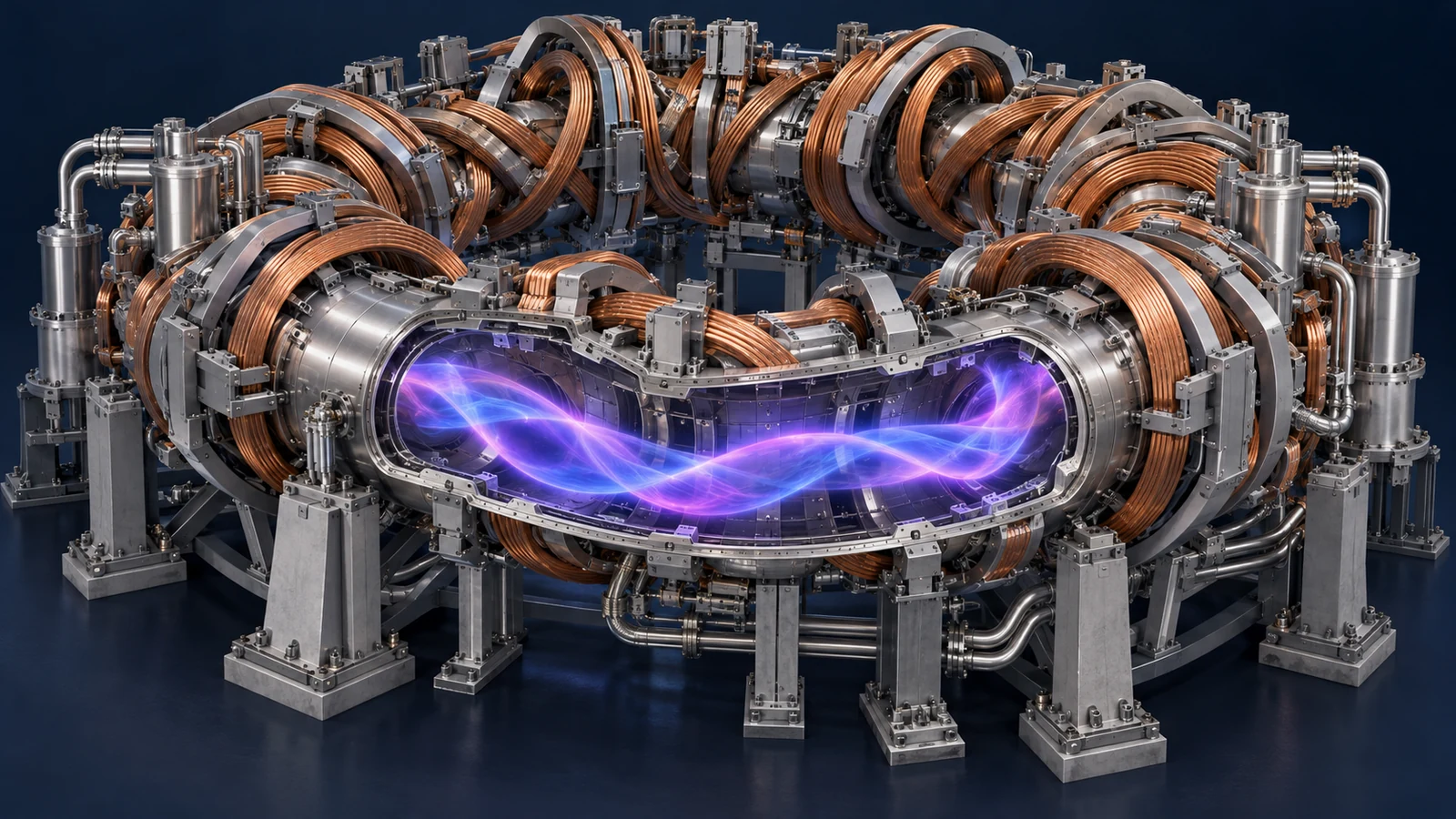
A stellarator looks extraordinary: shaped coils surrounding a vacuum vessel, with extremely hot charged particles inside. The useful industrial outcome, however, would be electricity delivered reliably to customers. That requires a machine whose fuel systems, heat extraction, protection and maintenance work together. A bright plasma is one milestone in that much larger undertaking.
On October 6, 2026, Type One Energy announced a $200 million Series B, co-led by Breakthrough Energy Ventures and Clutterbuck Capital. Siemens Energy Ventures joined other investors. Reuters reported cumulative funding above $400 million. These are financing figures, not a demonstrated construction cost or evidence of commercial electricity generation.
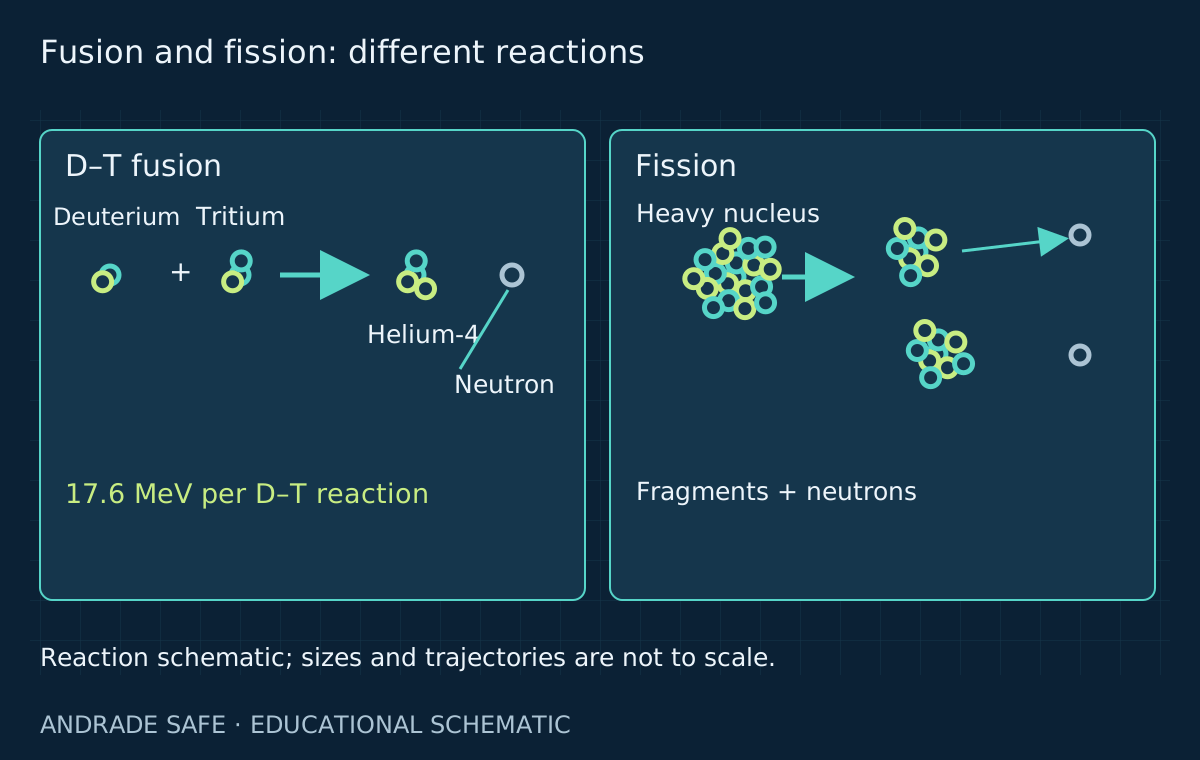
Fusion and fission use different nuclear reactions
Fusion combines light nuclei. The deuterium–tritium reaction considered here is D + T → helium-4 + neutron + 17.6 MeV. Deuterium and tritium are hydrogen isotopes. Fission splits a heavy nucleus; conventional commercial reactors typically use uranium-containing fuel and a controlled chain reaction. The two processes can supply heat, but their fuel, operating conditions and industrial maturity differ.
Our article about Google, Constellation and planned nuclear uprates covers additional output from existing fission plants. Type One's stellarator proposal addresses a different technology. Upgrading a licensed generating unit and demonstrating a new fusion plant share thermal and mechanical engineering concerns, but their evidence requirements are not interchangeable.
Safety also needs a specific comparison. Fusion D-T does not rely on the same self-sustaining fission chain. It still involves radioactive tritium and neutron-activated materials. Neither an attractive safety characteristic nor an established operating history removes the need to assess a particular installation.
Google and Constellation: uprates at fission plants →
| Aspect | D-T fusion | Typical commercial fission |
|---|---|---|
| Reaction | Light nuclei combine | Heavy nucleus splits |
| Fuel | Deuterium and tritium | Uranium-containing fuel |
| Conditions | Suitable plasma and confinement | Controlled chain reaction |
| Materials and hazards | Tritium, activation, industrial hazards | Fission products and specific controls |
| Maturity | Generating plants under development | Established commercial generation |
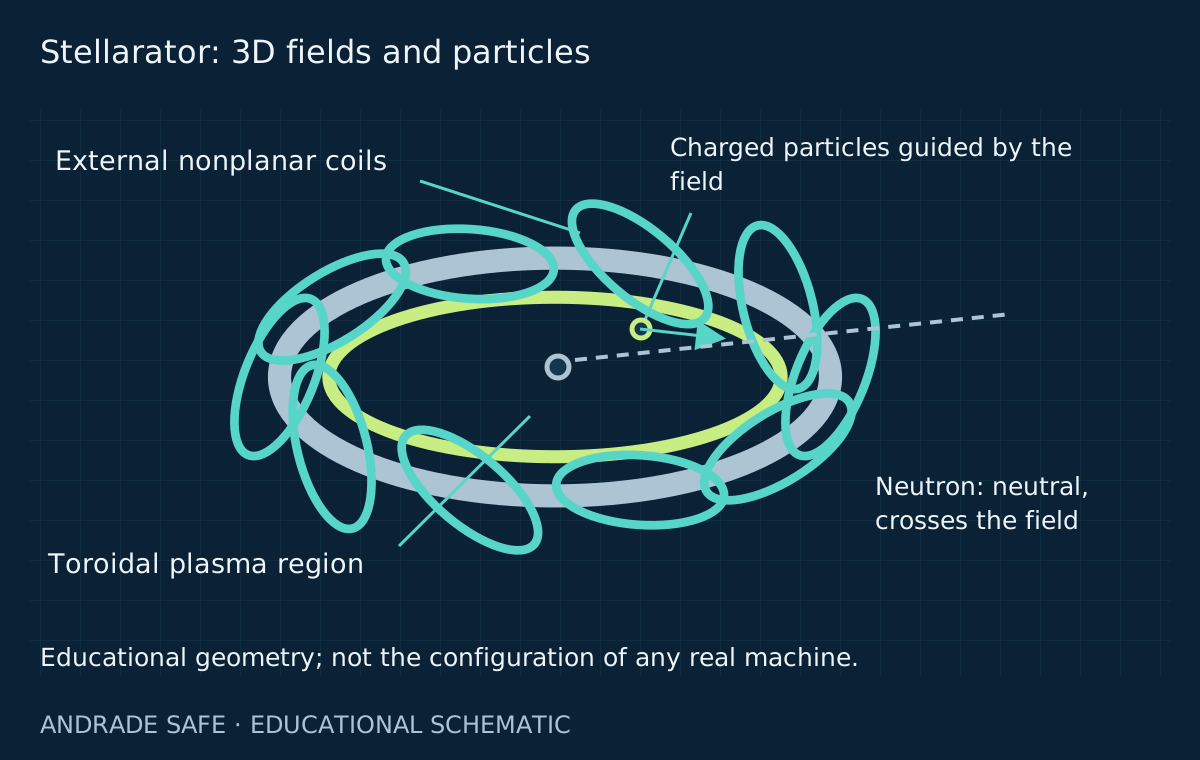
What makes a stellarator's magnetic geometry unusual?
Plasma contains free electrons and ions. Their electric charge allows magnetic fields to guide their motion. A stellarator uses external coils to create a three-dimensional configuration intended to retain plasma on closed magnetic surfaces inside a toroidal vacuum chamber. The field is a means of confinement rather than a physical wall.
The twisted geometry serves a purpose: reducing losses associated with particle motion and energy transport. Modern optimization examines many configurations while respecting physical constraints. Engineering then asks whether the selected coils, structures, access ports and surrounding systems can be made, assembled and inspected.
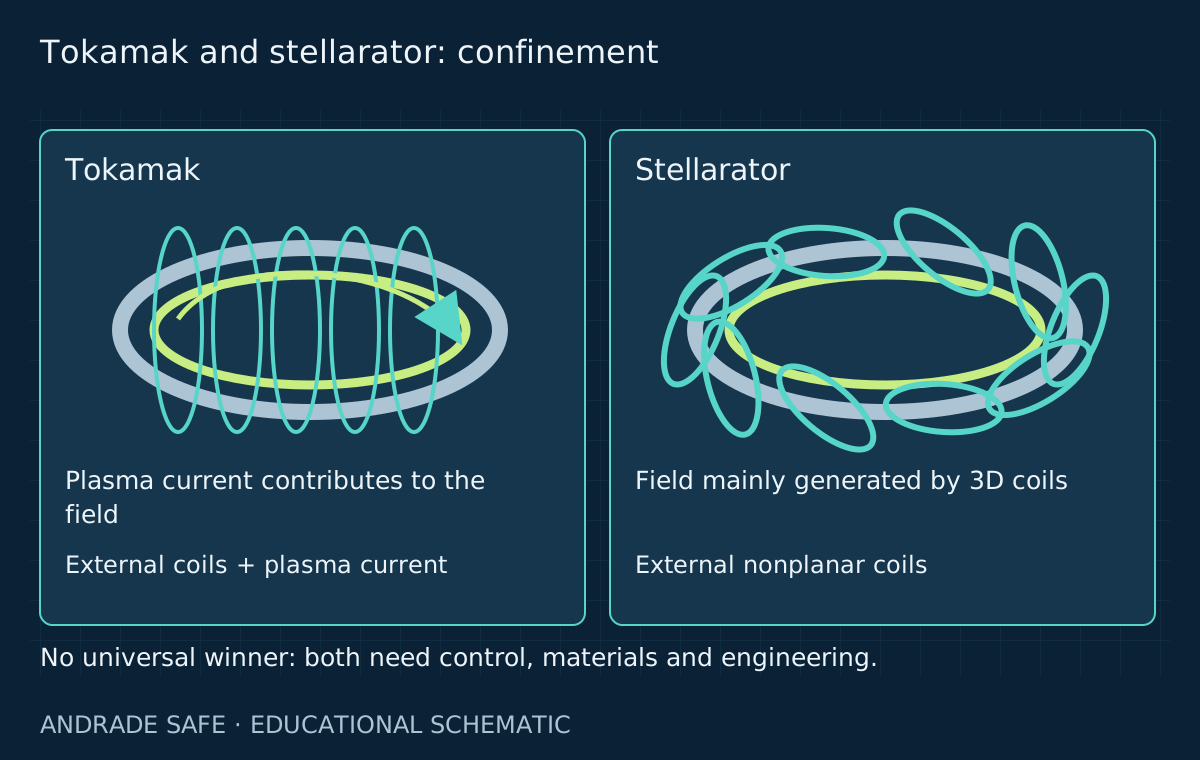
Tokamaks and stellarators make different trade-offs
A tokamak combines external magnetic fields with an essential contribution from a strong plasma current. A stellarator obtains its confinement topology mainly from external three-dimensional coils. Reduced dependence on sustaining that strong current supports the prospect of steady-state operation. It does not mean that every plasma current disappears or that heating, diagnostics and control become unnecessary.
Tokamak programs also pursue long operation and non-inductive current drive. Their challenges include controlling instabilities and mitigating abrupt losses of confinement known as disruptions. Stellarators move substantial complexity into field optimization, coil manufacture and assembly. Both approaches require materials, heat exhaust and integrated plant engineering.
| Aspect | Tokamak | Stellarator |
|---|---|---|
| Confinement field | External coils and strong plasma current | Mainly external 3D coils |
| Coils | Typically more symmetric architecture | Optimized non-planar geometry |
| Operation | Current control; long-pulse research | Steady-state potential; controls still needed |
| Challenge | Instabilities, disruptions and integration | Manufacturing, access, transport and integration |
| Evidence | Depends on experimental mission | Depends on experimental mission |
Temperature alone does not establish a fusion power source
Positive nuclei repel one another. Relevant fusion performance requires temperature, particle density and sufficient energy confinement together. The triple product combines ion temperature, density and energy confinement time. It is a physics metric, not a complete balance sheet for pumping power, refrigeration, outages or cost per megawatt-hour.
Energy confinement time also differs from pulse duration. A discharge may continue because heating and fuelling replenish losses. That does not mean an individual portion of thermal energy stayed confined throughout the entire discharge. Reports need to identify the measured quantity and the conditions used to calculate it.
Extreme temperatures describe the plasma rather than the surrounding metal. Walls and exhaust surfaces encounter other temperatures and demanding local loads. Neutrons are electrically neutral and escape magnetic confinement. Charged particles and radiation follow additional paths that also affect heating and component design.
Superconducting coils still need a cold, protected machine
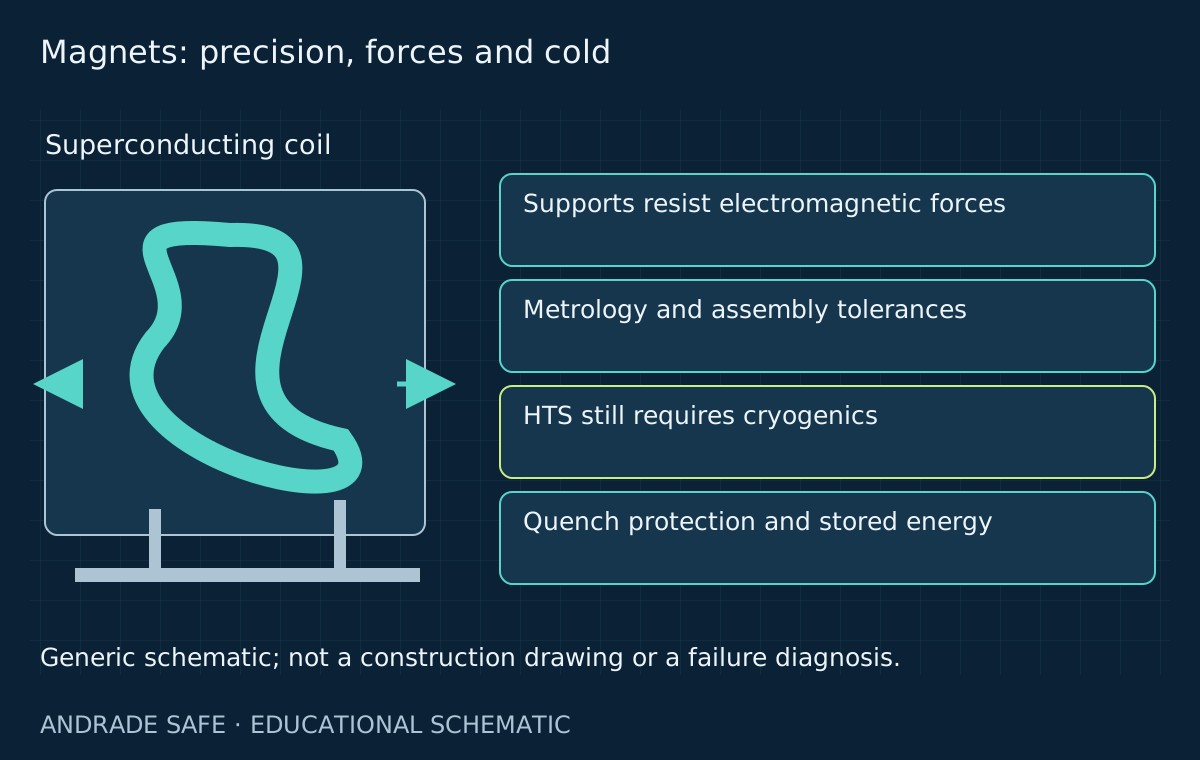
High-temperature superconductors operate within limits involving temperature, magnetic field and loading. “High temperature” compares their critical temperatures with other superconducting materials; fusion magnets still require cryogenic operation. Refrigeration and supporting systems consume electricity even when the superconducting conductor has very low resistance.
Electromagnetic forces must be carried through coil supports and structures. Manufacturing tolerances, alignment and thermal movement affect stresses and magnetic geometry. Material qualification, joints, insulation and inspection are general engineering concerns here, not reports of defects in Type One's equipment.
A loss of superconductivity can lead to a quench. Detection and protection must manage stored magnetic energy and local heating. Safe discharge, fault response and loss of supply require coordinated electrical, thermal and mechanical design. The sculptural appearance of the coils hides demanding manufacturing and protection work.
From fusion energy to net electricity
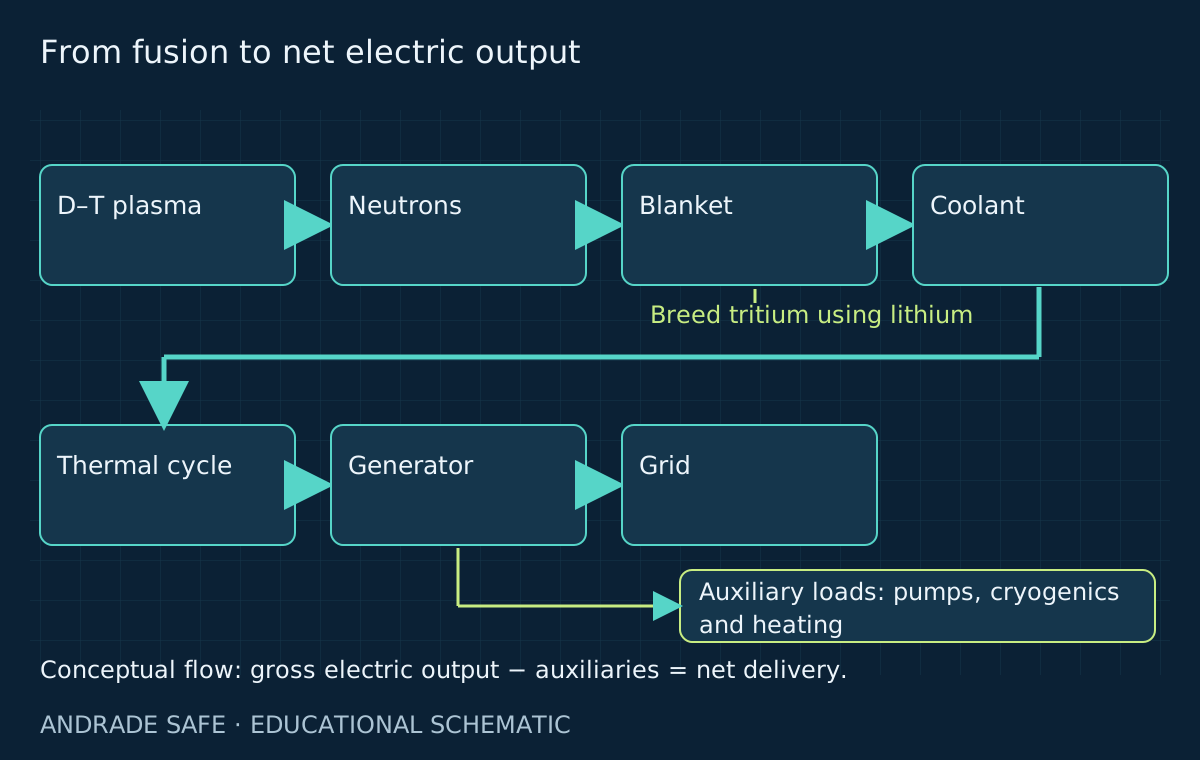
Most energy from the D-T reaction is carried by the neutron. A surrounding blanket would absorb that energy and transfer heat to coolant while shielding outer equipment. A breeding blanket containing lithium would also regenerate tritium. These functions have to coexist with material limits and access for replacement.
Coolant carries heat to heat exchangers and the selected power cycle. A turbine and generator can convert part of that heat into electricity, depending on the architecture; cooling systems reject the remainder. Temperature, pressure losses, corrosion, leakage and component interfaces influence performance.
Gross electric output comes from the generator. Net output subtracts auxiliary consumption within a declared system boundary. The reference physics scenario of 800 MW of fusion and the company's current 400 MWe grid target do not establish a measured 50% efficiency. They are project values, not matching readings from an operating plant. Our data-center power article explains why conversion and auxiliaries matter in other generating systems too.
Tritium breeding and pellet injection solve different problems
Deuterium can be extracted from water sources. Tritium is radioactive and scarce, requiring containment and inventory control. A future fleet of D-T plants would need more than an initial fuel purchase: breeding, extraction, recovery and replacement of losses must work together. Water availability does not demonstrate a self-sufficient fuel cycle.
Lithium in a breeding blanket reacts with neutrons to produce tritium. That fuel must be recovered and returned to the system. Losses and retention in materials affect the required breeding margin; calculated production alone cannot validate a complete operating process.
In August 2026, ORNL and Type One announced licensing of cryogenic pellet fuelling technologies. Pellets deliver fuel into the plasma. They do not produce the tritium consumed by fusion. Injection, breeding and recycling are complementary functions with different equipment and performance requirements.
Long plasma operation is not annual plant availability
The first wall and divertor face different loads. A divertor handles part of the particle and heat exhaust; erosion and impurities can affect both hardware and plasma performance. Neutron irradiation changes materials too. A plant must define service limits, monitoring and replacement criteria before degradation compromises its functions.
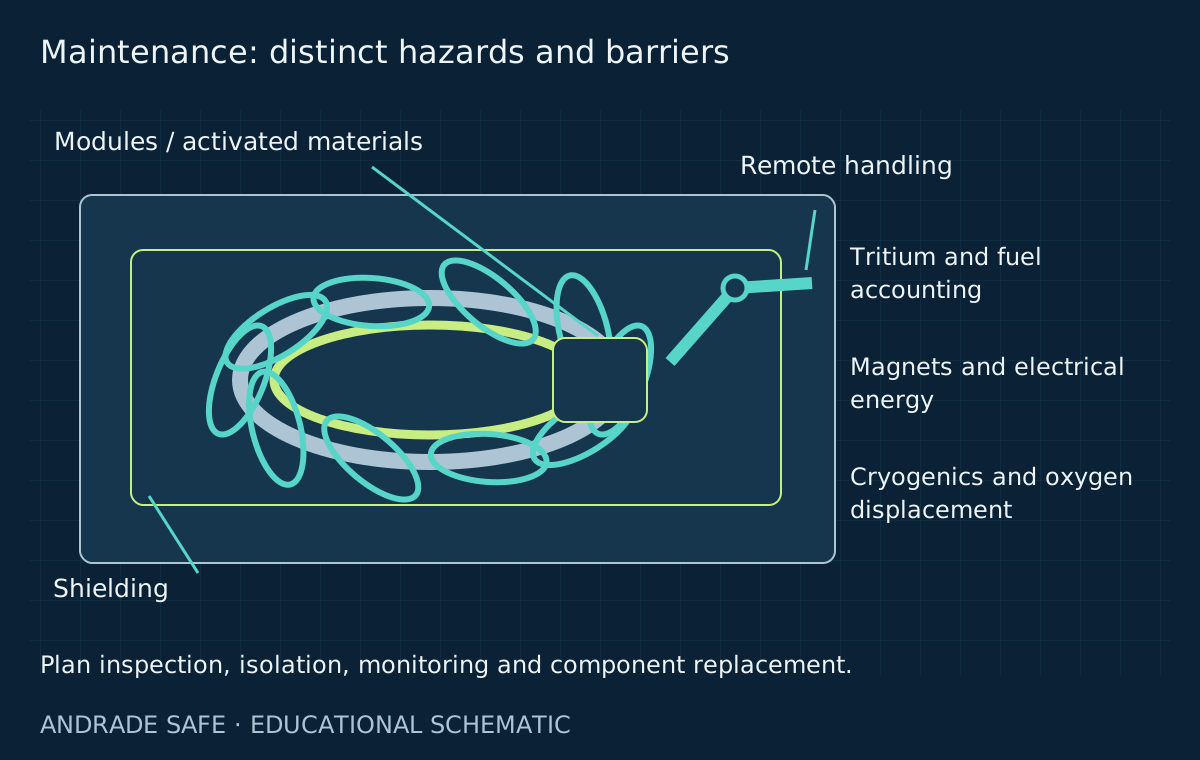
Activated components can require shielding and remote handling. Replacement depends on access, connections, transport routes and verification after reassembly. A removable module in a drawing does not establish a short maintenance outage. Tools, tolerances and recovery from unsuccessful handling operations need representative trials.
Pulse duration describes one event. Duty factor describes operating time within a defined period; availability concerns readiness to operate; capacity factor compares actual energy with potential production at reference power. Long confinement supports industrial development, but does not establish annual output or competitive maintenance cost.
Infinity One and Infinity Two have separate jobs
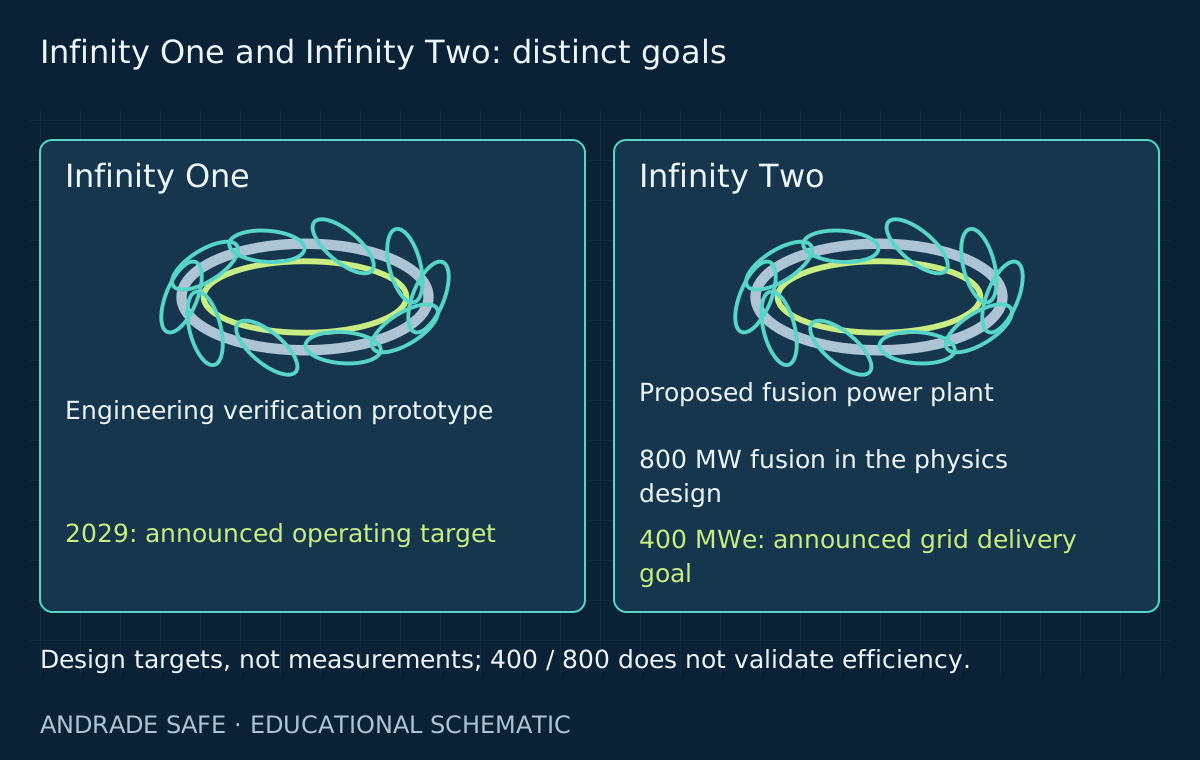
Type One describes Infinity One as an engineering-verification and training platform at Bull Run, Tennessee, with a communicated 2029 operating target. Infinity Two is the proposed generating plant, currently presented with a 400 MWe grid-output goal. The prototype should not be described as an already delivered commercial power station.
The 2025 peer-reviewed Journal of Plasma Physics studies set out physical models and simulations for Infinity Two, including an 800 MW fusion reference scenario. They make assumptions available for scrutiny; they do not prove hardware construction or operating output. Current electrical targets should not be combined casually with earlier design versions.
Type One develops the technology; Siemens Energy Ventures participates in financing; TVA and AECOM are partners cited in deployment and planning. On August 31, TDEC announced a fusion-specific byproduct material license. That regulatory milestone does not certify a finished plant, net performance or completion of every required authorization.
Inside HSX: The Fusion Experiment That Shaped Type One Energy
Official Type One Energy video. Research background, not evidence of commercial generation.
Type One: current technology and targets →
Wendelstein 7-X: an important result with a qualification
W7-X is a real stellarator experiment operated by Germany's Max Planck IPP. On June 3, 2025, IPP reported a triple-product result sustained for 43 seconds within its comparison of prolonged high-performance discharges. That is confinement evidence, not a report of commercial electricity.
IPP's June 30 update matters: it acknowledged then-unpublished JET tokamak results with comparable performance sustained for periods up to 60 seconds. It described W7-X and JET as joint leaders within that comparison. We therefore avoid presenting W7-X as the absolute record holder across all fusion experiments.
Wendelstein 7-X fusion device — visualized from construction data
Official Max Planck IPP animation based on W7-X construction data.
Fusion safety includes industrial and radiological hazards
Magnetic D-T fusion does not require a self-sustaining fission chain reaction. Losing the necessary plasma conditions stops fusion production. Equipment may nevertheless retain heat, stored energy and radioactive inventories. Safety must address shutdown and maintenance as well as normal operating conditions.
Tritium and activated materials require appropriate containment, monitoring and management. Conventional hazards include strong magnetic fields, electricity and stored magnetic energy, cryogenic releases that can displace oxygen, pressure systems, vacuum equipment and lifted loads. Radiological exposure and ordinary industrial accidents need distinct assessments, including their interfaces.
Controls should follow lifecycle risk assessment, access restrictions and authorized interventions. Applicable requirements depend on jurisdiction and licensed activities. Brazilian workplace regulations are not automatically applicable to this US project. Favorable characteristics cannot justify claims of zero radiation, zero waste or zero risk.
Plasma gain and the plant electricity balance are different
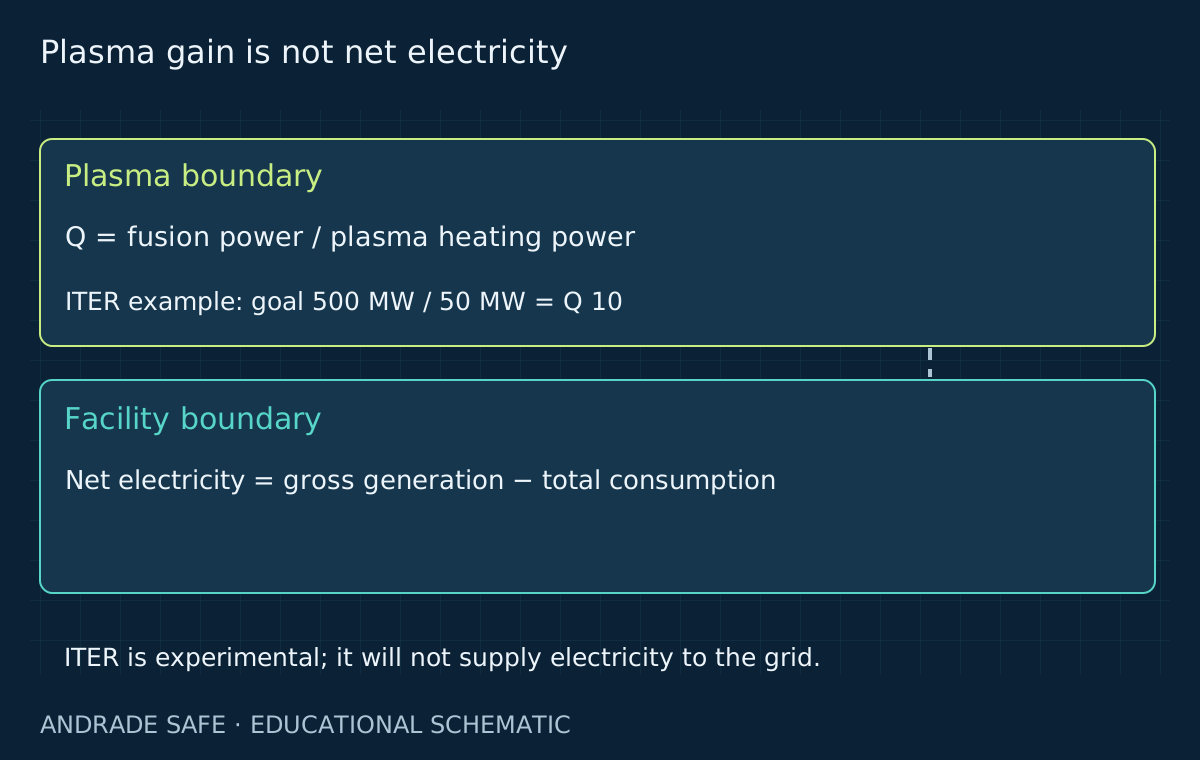
Plasma Q compares fusion power with power supplied to heat the plasma under a specified definition. ITER's goal is 500 MW of fusion from 50 MW of plasma heating: Q=10. It is an experimental objective, and ITER is not designed to deliver electricity to the grid.
Total site consumption includes heating-system conversion and supporting equipment. An electricity plant must then convert heat, supply its own auxiliaries and sustain export. A high plasma Q therefore does not directly establish net electric output. Reports should make the system boundary explicit.
Economics adds capital cost, delivered energy over time, replacement work, staff, fuel, outages and financing. A successful pulse or peak power figure cannot independently establish cost per MWh. The following table separates quantities that need different measurements.
ITER: Q=10 goal, no electricity generation →
| Quantity | Boundary or question |
|---|---|
| Fusion power | Reaction energy released per unit time |
| Plasma Q | Fusion / plasma-heating power |
| Site consumption | Heating, cryogenics, pumps and auxiliaries |
| Gross electricity | Generator output |
| Net electricity | Gross minus consumption within stated boundary |
| Cost per MWh | Lifecycle cost / delivered energy |
What would establish commercial readiness?
Reuters reported Type One's ambition to reach a commercial plant within roughly a decade. DOE's finalized June 2026 roadmap, following its 2025 document, supports an industrial pathway toward the mid-2030s. These are goals contingent on evidence, resources and collaboration, rather than guaranteed dates for electricity supply.
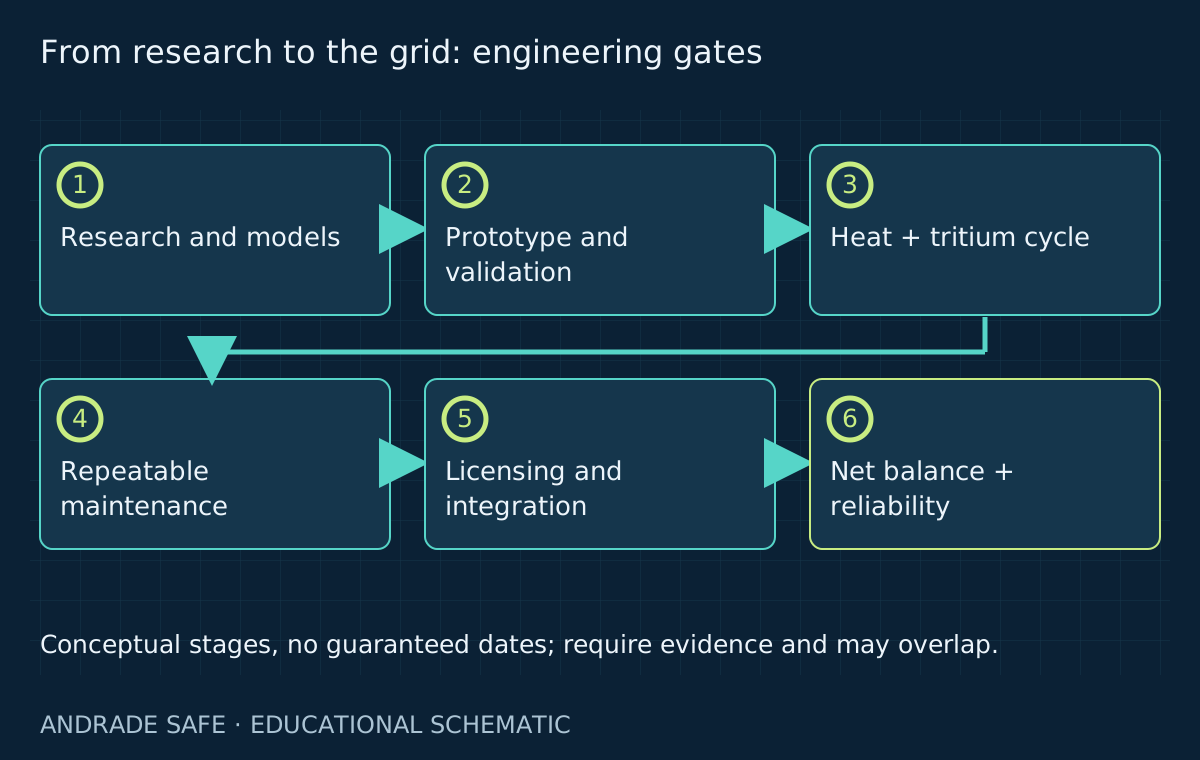
Necessary work includes prototype verification, plasma and magnets, blankets and fuel cycling, heat extraction, repeatable maintenance, further authorizations, positive net output and reliable economics. Several activities progress in parallel; a weak interface can change output or schedule even when an individual component works.
What engineers and safety professionals can take from fusion
Commercial fusion will require plasma, magnets, materials, cryogenics, fuel and thermal systems to operate as one maintainable installation. Funding makes development possible. Evidence of safe net electricity production will determine whether that development becomes a practical power source.
Frequently asked questions
What is nuclear fusion?
Fusion combines light nuclei and releases energy. In D-T fusion, deuterium and tritium produce helium-4 and a neutron. A power station must also confine suitable plasma, extract heat, convert it and supply its auxiliaries. Observing fusion is therefore different from establishing a commercial electricity source.
How do stellarators differ from tokamaks?
A tokamak relies on an essential contribution from strong plasma current as well as external coils. A stellarator obtains its magnetic topology mainly from shaped external coils. The approaches make different control and manufacturing trade-offs. Neither automatically establishes commercial superiority, and both need heat exhaust, materials and maintenance solutions.
Does a stellarator already supply commercial electricity?
The verified sources do not establish commercial generating operation for Infinity Two or W7-X. Infinity Two is a proposed plant; W7-X is a confinement experiment. Financing, stated power targets and sustained plasma results are important milestones, but do not equal reliable net electricity delivered to customers.
Does fusion produce radioactive material?
D-T fusion involves radioactive tritium and energetic neutrons that can activate surrounding materials. Waste characteristics depend on material selection and exposure. Not requiring the same fission chain reaction does not justify claims of zero radiation or waste. Containment, monitoring and material management remain necessary parts of plant engineering.
Why does tritium breeding matter?
Tritium is scarce and radioactive. A future D-T plant needs inventory control, fuel recovery and demonstrated production from lithium to replace consumption and losses. Pellet injection delivers fuel into plasma but does not create it. A calculated breeding margin cannot independently validate the complete plant fuel cycle.
Are high-temperature superconductors warm in operation?
Not in the fusion-magnet context. The term compares critical temperatures with other superconducting materials; cryogenic operation remains necessary. Temperature, field and current limits matter, while refrigeration consumes electricity. Loss of superconductivity requires protection that can detect heating and manage stored magnetic energy during a quench.
What are Infinity One and Infinity Two?
Infinity One is Type One’s proposed engineering-verification and training platform, with a communicated 2029 operating target. Infinity Two is the proposed generating plant, currently announced with a 400 MWe grid-output goal. Both descriptions concern future milestones rather than evidence that commercial operation has already been established.
Does Q=10 mean ten times more electricity?
No. ITER’s target compares 500 MW of fusion with 50 MW of plasma heating. That boundary does not include total site electricity consumption or thermal conversion losses. ITER will not supply grid electricity. An electricity plant must separately demonstrate its gross generation, auxiliary demand and net export.
When will fusion become commercial?
There is no guaranteed date for this project. Type One communicates an ambition of roughly a decade, while public roadmaps set future goals. Prototype evidence, materials, fuel, licensing, resources and integration influence timing. A maintainable plant with demonstrated net electricity and reliable operation would be the meaningful commercial milestone.
References
- Type One Energy completes $200M Series B financingType One Energy
- Fusion firm Type One in $200 million Siemens Energy-backed raiseReuters / Euronext
- Fusion with a twist — technology and Project InfinityType One Energy
- The Infinity Two fusion pilot plant baseline plasma physics designJournal of Plasma Physics / Cambridge University Press
- Governor Bill Lee, TDEC announce first license for commercial fusionTennessee / TDEC
- Wendelstein 7-X sets new records — including June 30 updateMax Planck IPP
- DOE explains stellaratorsU.S. Department of Energy
- DOE explains fusion reactionsU.S. Department of Energy
- DOE explains tokamaksU.S. Department of Energy
- Harnessing energy from nuclear fusionIAEA
- What will ITER do?ITER
- Tritium breedingITER
- ORNL, Type One Energy to advance fusion fuel cycleOak Ridge National Laboratory
- Finalized fusion science and technology roadmapU.S. Department of Energy
- Fusion nuclear science and technologyU.S. Department of Energy
- Remote handlingITER
- CryogenicsITER
- Deuterium-tritium fusion fuelU.S. Department of Energy
- Making fusion workITER
- Wendelstein 7-X — visualized from construction dataMax Planck IPP