
Is Tesla FSD autonomous? Understand SAE Level 2, driver supervision, European approval, safety validation and automation limits.
It looks autonomous. Who is still driving?
The car follows a lane, adjusts speed, turns and continues along its route. A passenger may feel that the machine has taken care of everything. For engineering, however, the decisive question is who must watch the surroundings, recognise a hazardous situation and correct the vehicle when assistance fails.
Tesla Full Self-Driving (Supervised) is advanced driver assistance, classified by its manufacturer as SAE Level 2. The driver continues to supervise. Performing complex manoeuvres does not mean the system is authorised to dispense with that person. This distinction frames the discussion of capability, safety and European approval.
Sources for this article were checked on 8 October 2026. The European case opens a question also relevant to machinery, control rooms and artificial intelligence: how can responsibilities be designed to work both during routine operation and when something unexpected happens?

What is happening in Europe on 8 October?
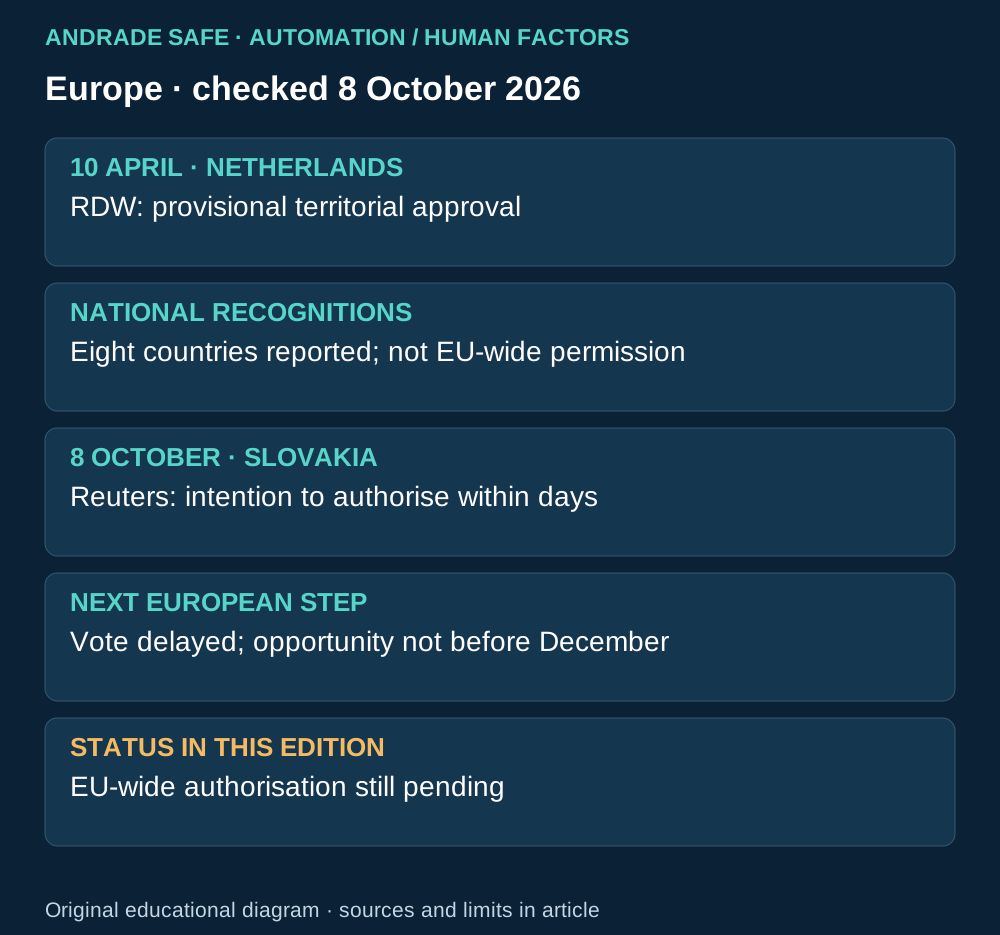
On 10 April 2026, RDW granted provisional approval initially valid in the Netherlands. Extending permission across the European Union is a separate process from national recognitions. Territorial permission should not be described as approval for the entire bloc.
Tesla’s list and Reuters’ chronology indicated eight authorising countries: the Netherlands, Lithuania, Estonia, Denmark, Belgium, Slovenia, Czechia and Croatia. On 8 October it reported that Slovakia expected to authorise the system within days, becoming the ninth if that step were completed. An intention, recognition and customer rollout are different stages.
According to Reuters, the European vote anticipated for October was delayed, with the next opportunity not expected before December. This edition's checks did not locate a public decision completing EU-wide authorisation. December is an expectation about the timetable, not a promise of approval.
Reuters · EU vote delayed / 25 September →
Reuters · Slovakia / 8 October →
Reuters · Czechia / 21 September →
Four different questions: name, capability, level and permission
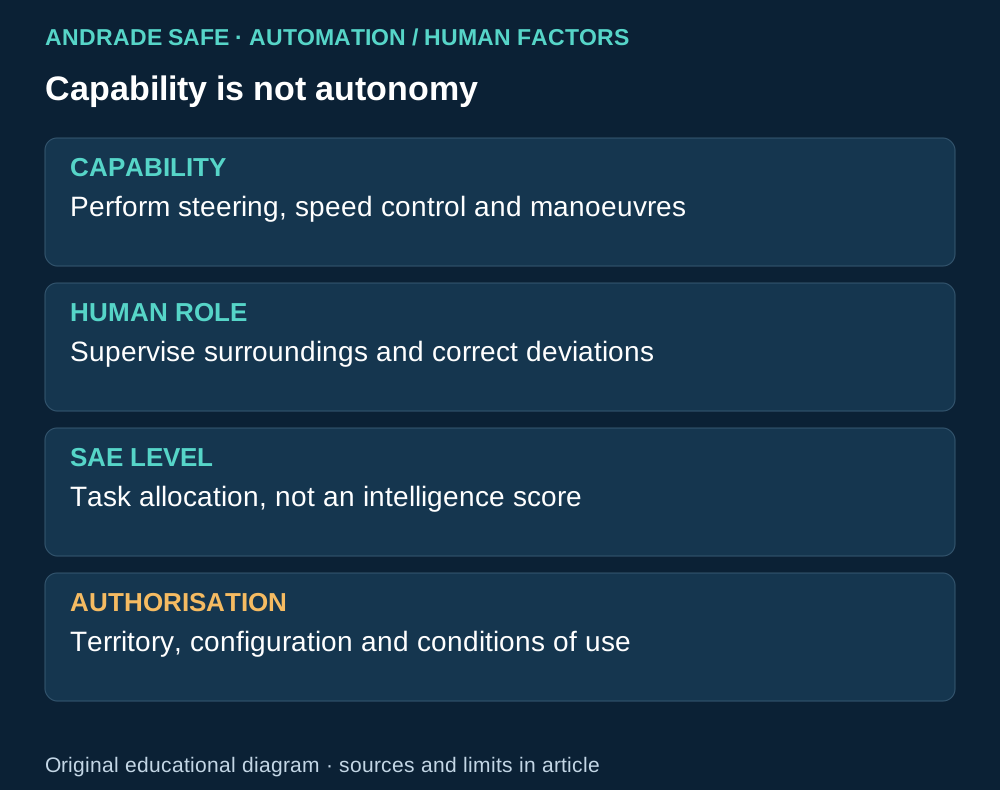
A commercial name identifies a product. Capability describes the tasks it can perform. The automation level defines the technical division between user and system. Regulatory permission specifies where and under what conditions a configuration may operate. Answering one question does not automatically answer the others.
A video of a successful journey demonstrates one example of performance. Alone, it does not establish coverage of every condition, failure frequency or driver readiness. Nor does it turn supervised assistance into driverless automation.
FSD (Supervised), proposed FSD (Unsupervised), Robotaxi and Cybercab are not interchangeable descriptions. This article addresses the supervised product. A driverless service or a future product promise does not change the duties of someone using this assistance today.
SAE levels: a classification of roles
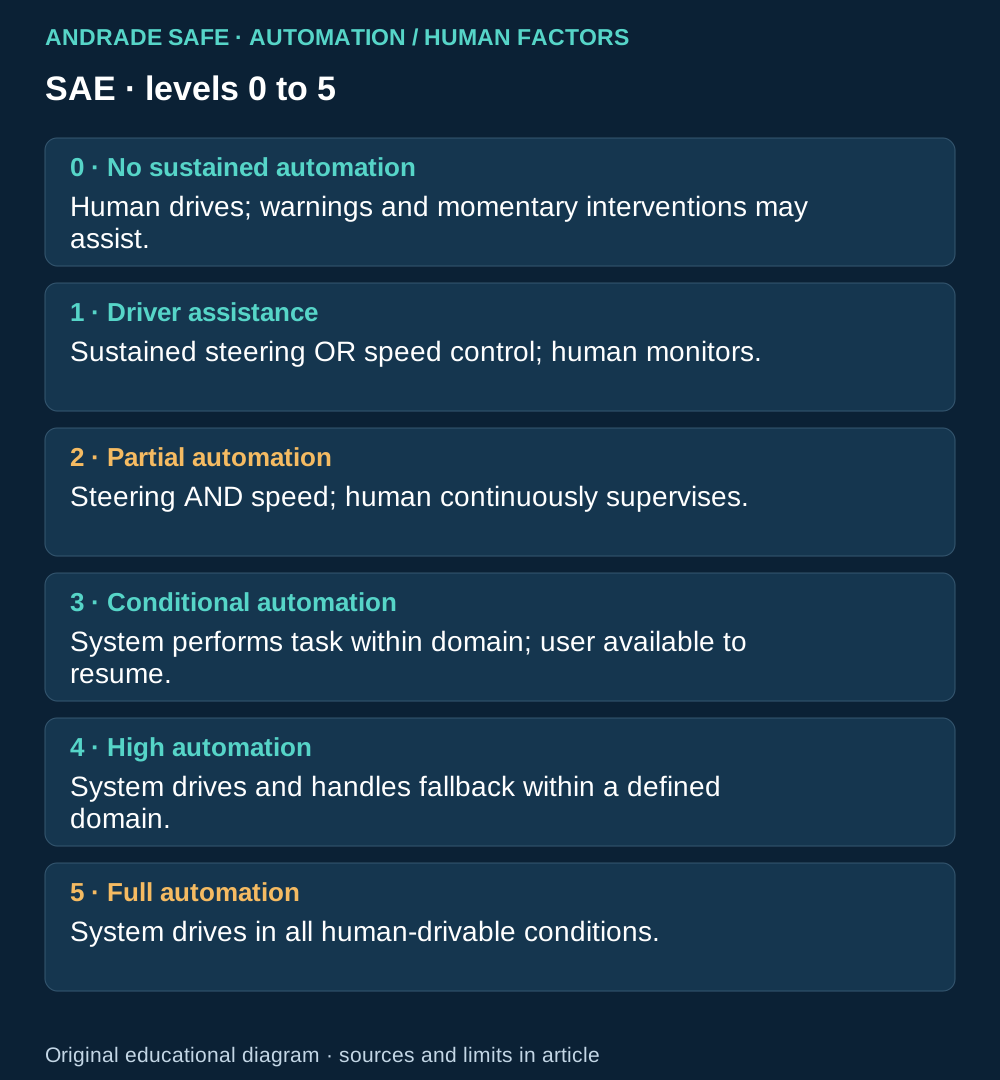
The current reference found in SAE's catalogue is J3016_202609, revised in September 2026. Levels 0 to 5 describe the allocation of the driving task. The table below is an original educational summary, rather than a full reproduction of the standard.
Classification applies to a feature under its intended operating conditions. A vehicle can offer different features; its level is not an overall intelligence score. More sensors or sophisticated manoeuvres do not, on their own, establish a higher level.
The taxonomy supports requirements but does not replace traffic law, approval conditions or civil-liability analysis. Responsibility here mainly refers to task allocation: who must perceive, decide and act during operation?
NHTSA · Automated Vehicle Safety →
| Level | Task allocation |
|---|---|
| 0 · No sustained automation | Human drives; warnings and momentary interventions may assist. |
| 1 · Driver assistance | Sustained steering OR speed control; human monitors. |
| 2 · Partial automation | Steering AND speed; human continuously supervises. |
| 3 · Conditional automation | System performs task within domain; user available to resume. |
| 4 · High automation | System drives and handles fallback within a defined domain. |
| 5 · Full automation | System drives in all human-drivable conditions. |
Level 2 versus Level 3: the important change
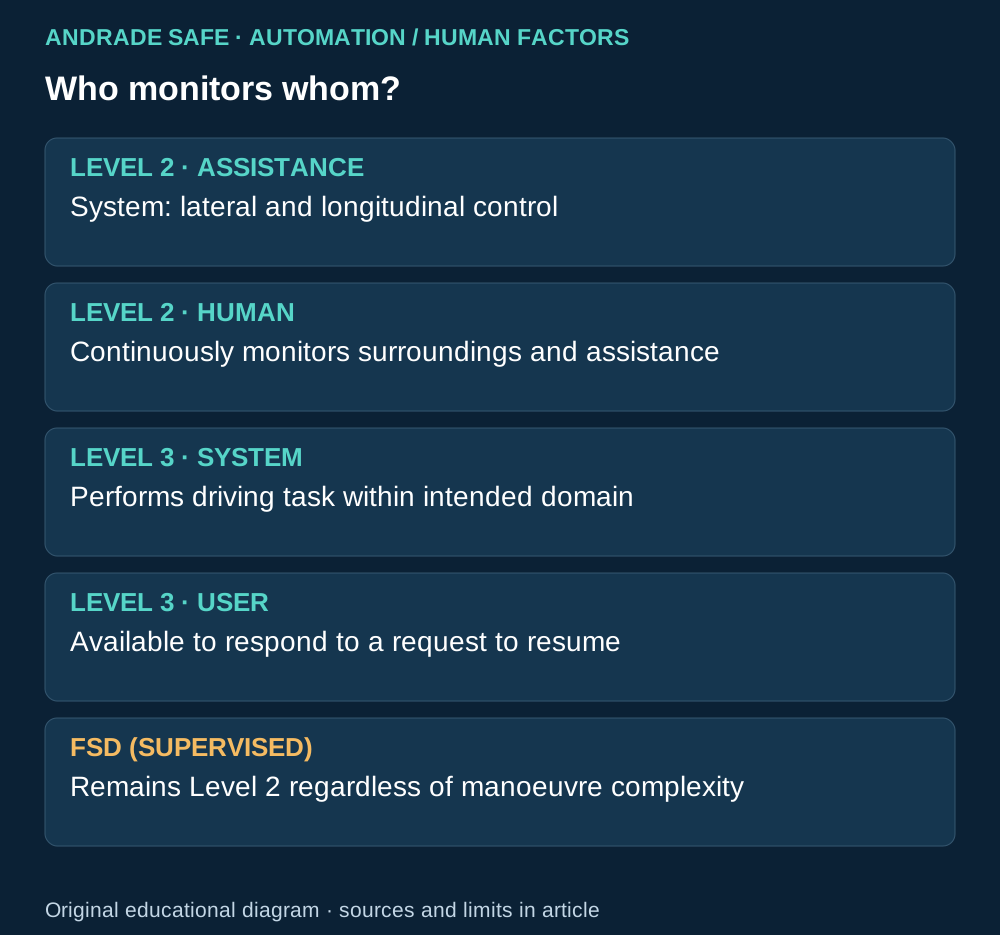
At Level 2, assistance sustains lateral and longitudinal control while the person continuously supervises. At Level 3, within defined conditions, the system performs the dynamic driving task; the user must be available to respond to a request to resume driving. This is more than a comfort improvement.
Imagine a hypothetical system smoothly following a lane over many kilometres. That capability can exist at Level 2. The conceptual change occurs when a feature no longer requires continuous human monitoring of the surroundings during valid operation and instead assigns that task to the system.
A transition must account for the human ability to understand the situation. A warning does not instantly create awareness. With supervised FSD, the driver must be ready for immediate intervention and should not wait for a formal request before recognising the need for a correction.
How assistance connects perception and movement
A useful diagram begins with environmental and vehicle signals. Perception produces usable information; planning selects a path and speed; control generates commands; steering, brakes and propulsion physically apply them. This is an educational architecture, not access to Tesla's complete internal software.
The loop must work within the available time. Correctly identifying an object too late may not produce an adequate response. A coherent modelled path also depends on physical conditions: grip, road geometry, other users' movements and actuator limits.
There is a parallel human path: attention monitoring, interface, driver interpretation and intervention. Assessing only automated motion omits this part of the system. In supervised assistance, the driver, information and controls belong to the solution that needs validation.
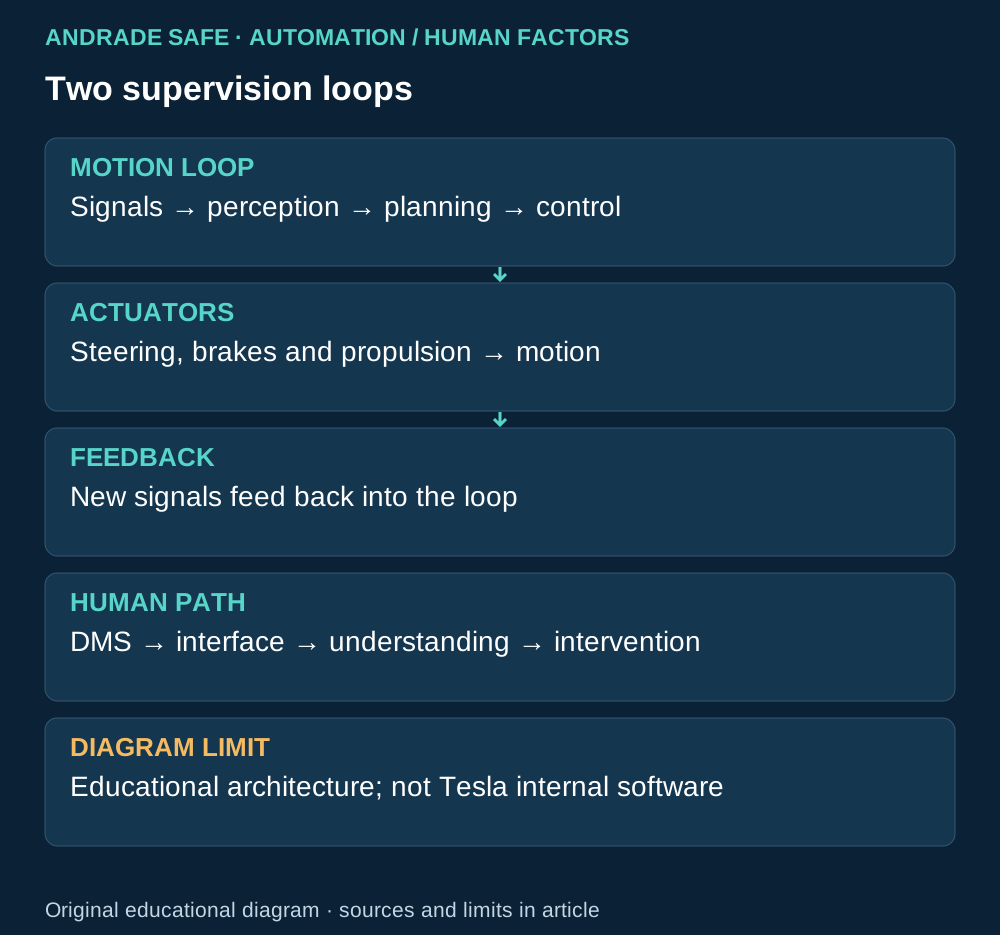
Driver monitoring: watching the person watching automation
A Driver Monitoring System, DMS, follows indicators of driver attention and availability. Tesla documentation describes a cabin camera and escalating warnings. These support supervision but do not establish that the driver correctly understood every external situation.
Someone may look towards the road without recognising a cyclist's intention or a temporary priority change. Visual attention, understanding and ability to act are related but distinct. The interface needs to communicate the active mode and its limitations clearly.
RDW's guidance for the approved configuration permits hands off the wheel if they remain available for immediate control. This does not permit reading, sleeping or abandoning driving. Specific conditions depend on the version, market and applicable instructions.
Operational limits remain despite a good record
Tesla's manual warns of situations requiring intervention, including roadworks, pedestrian interactions and degraded visibility. Errors can occur even under apparently straightforward conditions. As an engineering barrier, DMS should not be treated as a guarantee of detecting all inattention or ensuring understanding of a situation.
Engineering must translate limits into testable requirements: what conditions are covered, how is degradation recognised and how is the user prevented from expecting an unavailable capability? Clear instructions related to actual operation are more useful than a vague instruction to be careful.
Bypassing monitoring or treating assistance as an opportunity to abandon controls undermines its intended use. The technical issue is compatibility between feature, context and human role. A history of journeys without intervention does not authorise changing that role.
The automation paradox: less manual work, more supervision
Competent assistance can reduce repetitive effort. Meanwhile, overseeing rare exceptions requires sustained attention. This is not an accusation of carelessness; it is a human–machine design challenge also familiar in aviation and process control.
Automation bias means giving excessive weight to automated output. Complacency involves reduced vigilance; the out-of-the-loop problem concerns reduced participation and detailed understanding that can impair resuming control. These are possible risks, not inevitable outcomes for every user.
Calibrated trust matches confidence to demonstrated capability and current limits. Total distrust can prevent useful assistance; overtrust can increase exposure. Training, feedback and interfaces should help people recognise when assistance works and when correction is needed.
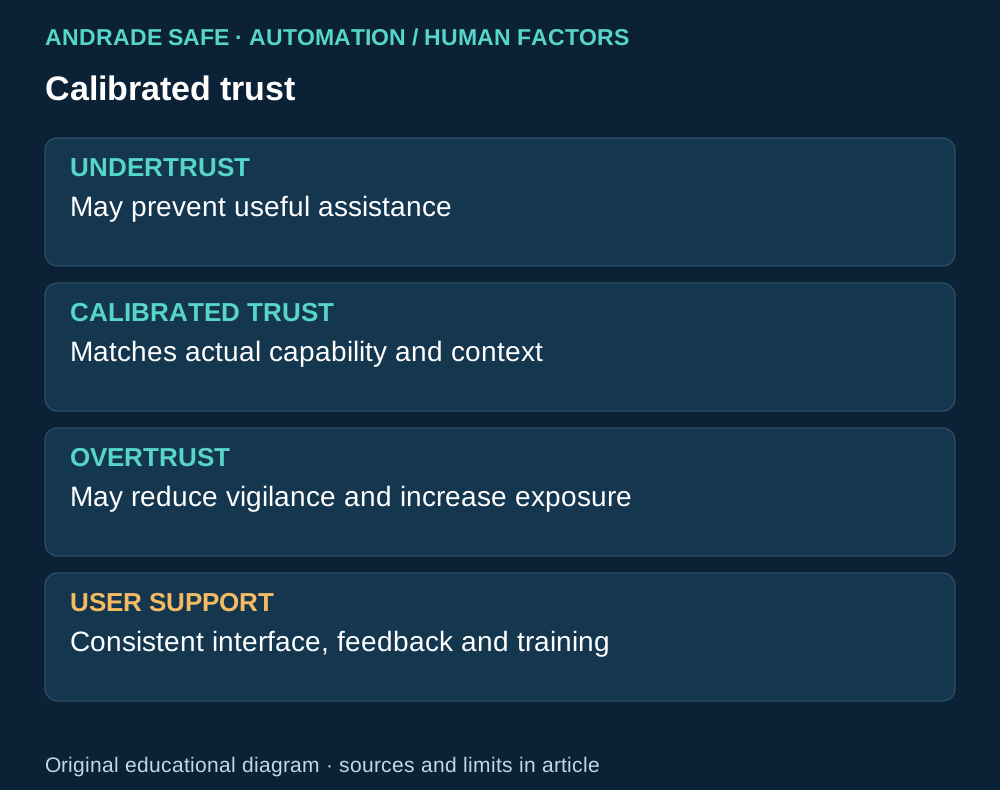
Resuming control is a sequence, not a button
Intervention means noticing a deviation, understanding its significance, selecting a response and carrying out the appropriate action. Even when quick, these steps are neither simultaneous nor guaranteed. A human-dependent barrier needs to account for that sequence.
In a hypothetical industrial example, a display may provide the correct warning while an operator deals with another event. The sound exists, but the response may miss the required deadline. The design question is whether action is feasible in actual working conditions, rather than merely mentioned in a procedure.
Mode awareness means knowing which mode is active and who has control authority. Silent changes, ambiguous messages or poorly differentiated alarms can undermine that understanding. Design should make the current state recognisable without investigation during an urgent event.
How can safety evidence be built?
Useful validation combines questions and methods. Simulation explores scenarios; a test track supports repeatable conditions; an engineering fleet exposes integration difficulties; real-world use broadens diversity. No environment alone represents the entire risk universe.
Comparisons need a denominator: collisions per distance, time or another suitable measure of exposure. Contexts should also be comparable. A fleet that mainly enables assistance on easier roads may show different rates for reasons beyond software performance.
Hard braking, intervention and near misses can signal problems, but they are surrogate measures. Braking can be the correct protective action; no horn use does not establish the absence of conflict. Collisions, injuries and severe events are distinct outcomes requiring consistent definitions.
Results should state uncertainty, coverage and limitations. Zero events in a sample does not mean zero risk. Updates, new roads and less-trained users can alter exposure. Safety is a bounded, monitored conclusion, not a word that ends the need for observation.
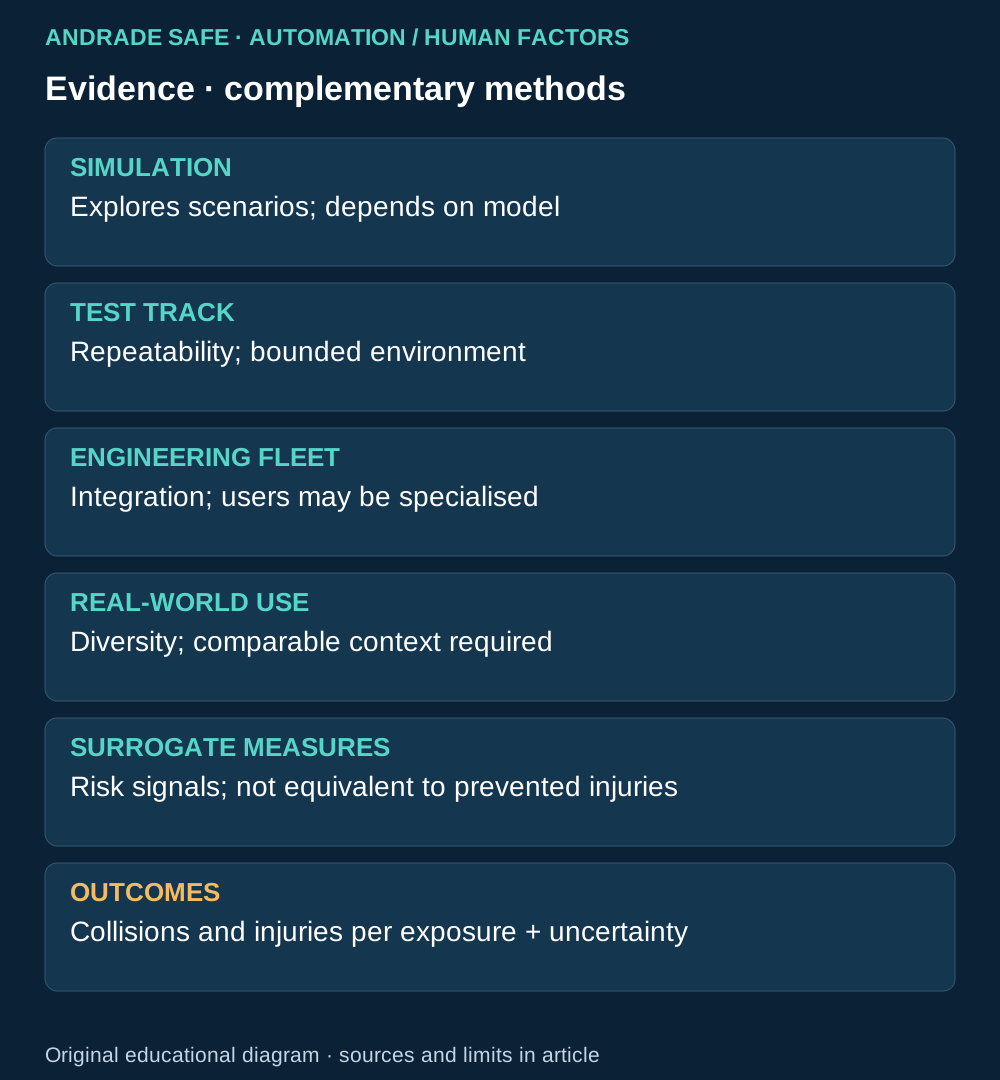
The European debate: independent tests and methodological criticism
RDW reported more than 3,000 testing hours, over 1,000 test runs and use of 1.8 million kilometres of European driving data. It described independent statistical review, its own tests and subsequent monitoring with monthly reports. The authority says the system meets applicable requirements.
Reuters' 7 October investigation reported researchers' criticism of surrogate measures and professional drivers. These objections concern the scope of conclusions; they do not alone demonstrate fraud or universal unsafety. Regulatory assessment and scientific debate answer related but different questions.
Tesla's dashboard acknowledges that fleet comparisons do not directly control every difference in traffic, weather, lighting and complexity. It presents results as observational associations with possible residual factors. That qualification matters when interpreting benefit claims, even when the company reports favourable rates.
Responsible interpretation checks population, version, context and outcome for each study. US numbers should not automatically be applied to European software. Equally, criticism of one method does not establish that every independent test was invalid.
UN R171 and Article 39: assistance and equivalent protection
UN Regulation No. 171 addresses Driver Control Assistance Systems, DCAS: sustained assistance with longitudinal and lateral control without taking over the entire driving task. UNECE associates this with Level 2. The regulation's existence does not automatically mean every assistance product meets its requirements.
Article 39 of Regulation (EU) 2018/858 provides a route for new technologies incompatible with existing requirements. It requires justification, equivalent protection and test results. It allows provisional territorial approval while European authorisation is sought; other states may recognise it under the procedure.
RDW distinguishes advance European type approval from US self-certification and subsequent oversight. That difference does not establish one model as inherently safer. It calls for care when comparing permissions, versions and evidence from different jurisdictions.
Names and interfaces also influence risk
Naming contributes to user expectations but must be considered alongside instructions, training and interface behaviour. Someone expecting autonomy may interpret a message differently from someone who understands they are using assistance.
Euro NCAP previously criticised the Autopilot name in assisted-driving assessments. That is historical context, not a test result for today's European FSD version. Its protocols also consider engagement and protection when assistance reaches its limits.
Reuters reported an offer to use Tesla Assisted Driving in European discussions. Consulted documentation still identifies the product as FSD (Supervised); a proposed name is not a completed official change. Whatever the brand, messaging needs to clarify the supervision required.
Euro NCAP · Assisted Driving →
From roads to industry: the same design question
An automated line may perform much of a cycle while still relying on inspection, authorisation or human intervention. A control room may keep processes stable for hours, then require a rapid decision during a deviation. The shared challenge is defining limits and transitions without assuming perfect attention.
This connection is Andrade Safe's engineering analysis, not an application of SAE levels to industrial machinery. Risk assessment must follow the installation's context. Guards, interlocks and safety functions cannot be replaced by a general expectation that someone will notice danger.
Software changes also require management: approved configuration, risk-proportionate tests, documentation, communication and return-to-service criteria. Changing alarms, modes or limits changes how an operator relates to machinery even if the physical equipment remains the same.
The lesson extends to AI in critical systems: supporting a decision and receiving authority to execute an action have different scopes. Specify who validates information, who authorises execution and what happens when data or automation become unreliable.
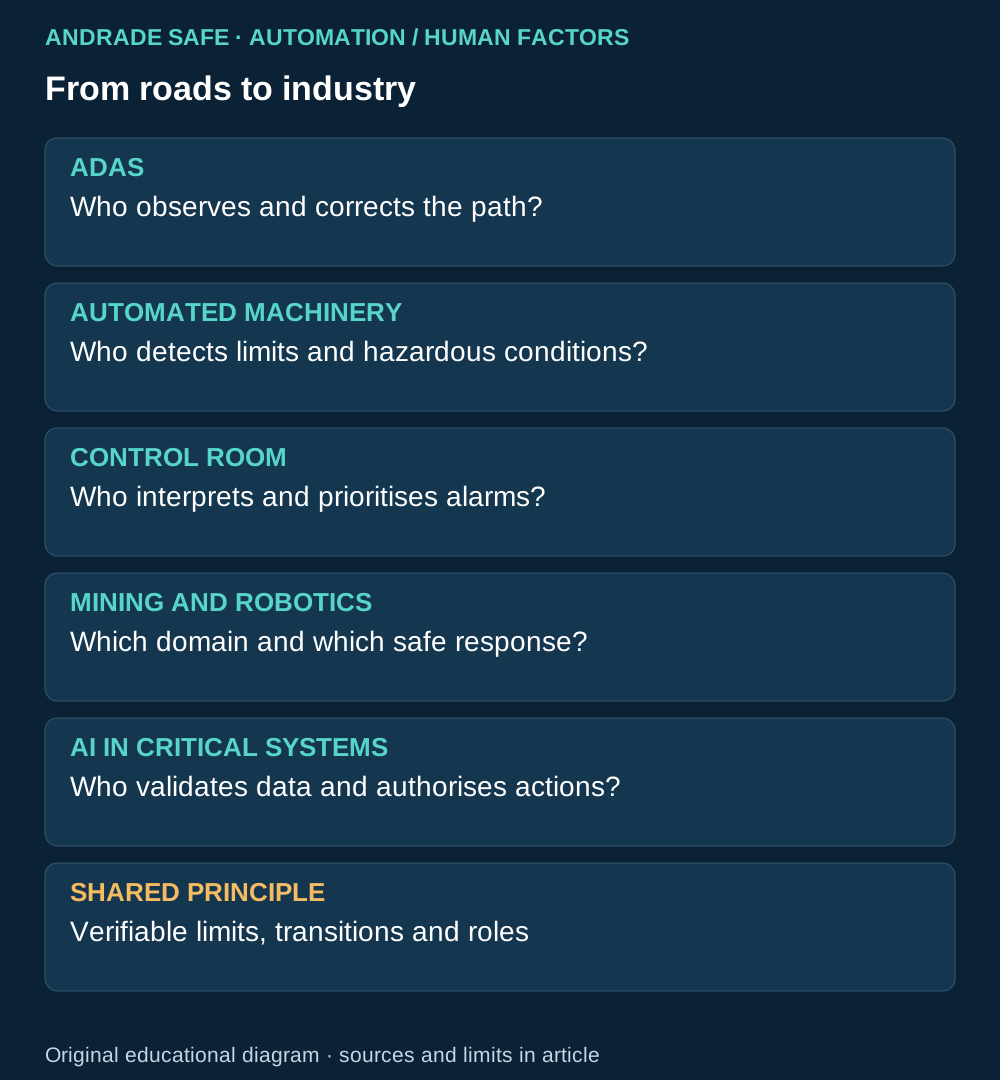
Seven questions before assigning a task to automation
The following checklist helps structure a design, training or change review. It is not safety certification and does not replace installation-specific validation. Its value is making the division of work visible and checking whether the answers are compatible.
The challenge is ensuring that, in every mode and at every limit, human and system know who acts, who monitors and who must respond. Driving competence matters; the quality of that partnership also needs to be demonstrated.
- What exactly is the system authorised to do?
- Under which conditions must it not operate?
- Who monitors the surroundings and detects deviations?
- How does the human know intervention is needed?
- How much time is available to understand and act?
- What happens if the human does not respond?
- How can safety of the human–automation combination be demonstrated?
Frequently asked questions
Is Tesla FSD (Supervised) autonomous?
It is SAE Level 2 assistance requiring active supervision and readiness to intervene.
What does Level 2 mean?
The system sustains steering and speed while the driver monitors the surroundings and assistance.
How does Level 3 differ?
At Level 3 the system performs the driving task under defined conditions, with a user available to respond to a request to resume.
Who must supervise with FSD active?
The driver. SAE classification does not by itself settle every legal liability question.
Can hands leave the steering wheel?
RDW describes a configuration allowing hands available for immediate control; attention remains required. Follow applicable rules and the version-specific manual.
How is attention monitored?
DMS indicators include a cabin camera and warnings. This barrier also has limitations.
Has the whole EU approved FSD?
At the 8 October 2026 check, EU-wide authorisation remained pending, alongside national recognitions.
Was Slovakia already the ninth approved country?
Reuters reported an intention to authorise within days on 8 October. This article does not treat that intention as a completed decision.
Does less braking mean fewer crashes?
Not necessarily. It is a surrogate measure whose meaning depends on context, definition and its relationship to outcomes.
What can industry learn?
Define limits, control authority, alarms, transitions, training and validation of the human–machine combination.
References
- Tesla · Article 39 evidence dashboardTesla
- Tesla · Model Y / FSD (Supervised)Tesla
- Tesla · FSD limitationsTesla
- Tesla · Vehicle Safety ReportTesla
- RDW · 10 April 2026RDW
- RDW · 17 June 2026RDW
- SAE · J3016_202609SAE
- NHTSA · Automated Vehicle SafetyNHTSA
- UNECE · UN R171 / DCASUNECE
- EUR-Lex · Regulation (EU) 2018/858 / Article 39EUR-Lex
- Euro NCAP · Assisted DrivingEuro NCAP
- Euro NCAP · 2026 protocolsEuro NCAP
- Euro NCAP · naming / 2025 assessmentsEuro NCAP
- Endsley & Kiris · Out-of-the-loop / 1995Endsley & Kiris
- NASA · Crew interfaces / automationNASA
- Reuters · 7 October investigationReuters
- Reuters · EU vote delayed / 25 SeptemberReuters
- Reuters · Slovakia / 8 OctoberReuters
- Reuters · German support / proposed name / 7 OctoberReuters
- Reuters · Czechia / 21 SeptemberReuters
- Reuters · Croatia / 29 SeptemberReuters