
The Tapiratiba case opens a discussion of equipment identification, integrity, maintenance and NR-13 without prejudging the accident’s cause.
One accident, many questions
An industrial incident killed two workers and injured three others at the Itaiquara plant in Tapiratiba, in the interior of São Paulo state, on October 9, 2026. Agência Brasil attributed to the state’s Public Security Secretariat, SSP, the information that the workers who died were performing maintenance. This is the report’s starting point, not a sufficient description of the task or failure mechanism.
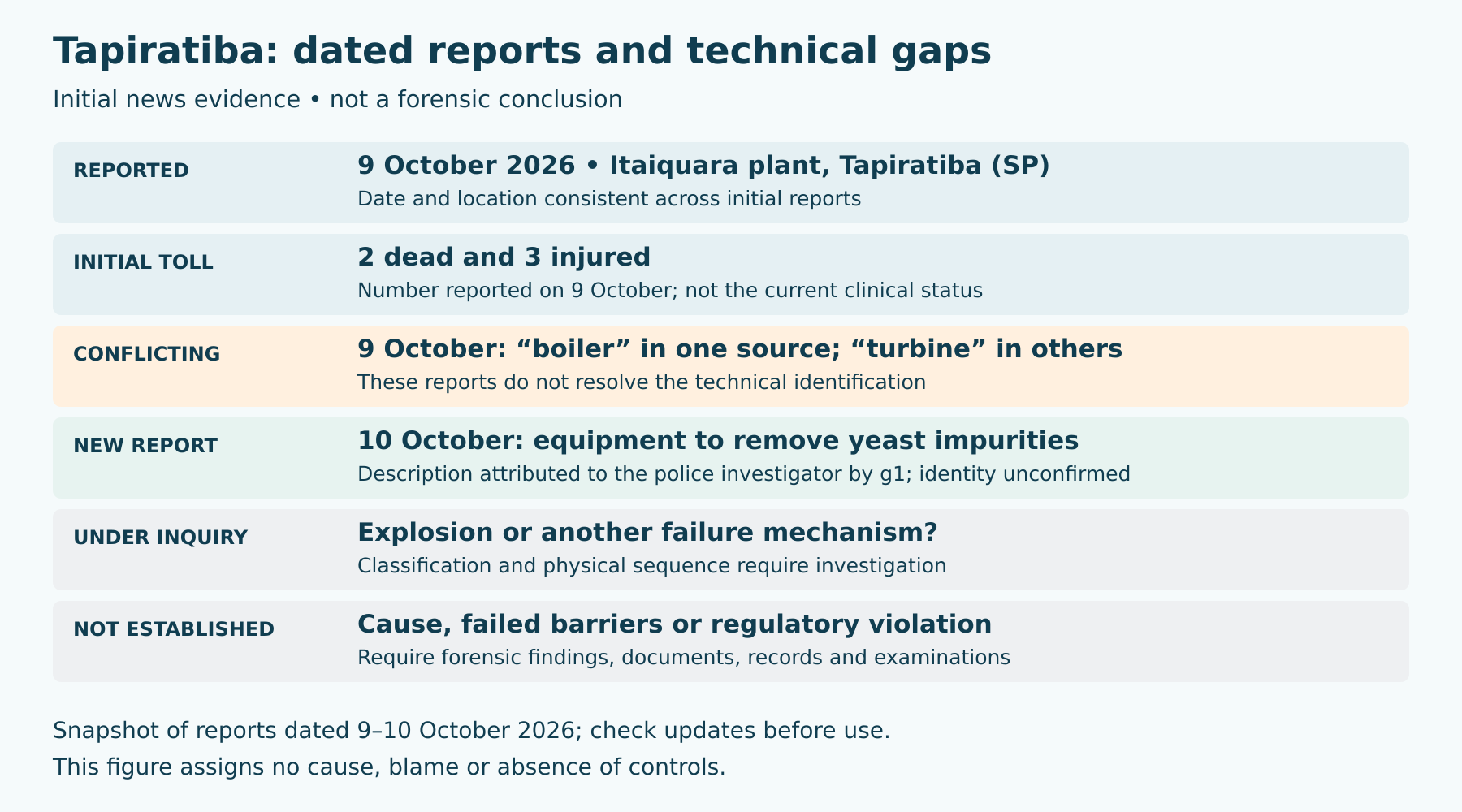
Equipment identification differs: Agência Brasil refers to a boiler; UOL and Agência Estado mention a turbine. Subsequent coverage also reinforces the need to establish the assembly’s technical identity. It is not possible to choose one of these names and construct a definitive explanation of the accident from it.
In October 10 coverage, the police investigator’s interview with EPTV, reproduced in a g1 report and accessed through a Votunews republication, describes the equipment called a turbine as used to remove impurities from yeast. The account leaves under investigation whether an explosion occurred or a failure involving fragmentation. The original g1 page could not be opened during this consultation; this update is attributed to the republished interview without definitive technical identification.
This article, published on October 14, separates news reports, unresolved questions and preventive learning. The two deaths and three injuries belong to the initial reports; severity described during that initial treatment should not be presented as a current clinical update. We found no public forensic conclusion in the consulted sources establishing the cause or resolving technical identification.
Agência Brasil — relato inicial, 9/10/2026 →
UOL — relato inicial, 9/10/2026 →
Votunews — reportagem g1/EPTV republicada, entrevista da delegada, 10/10/2026 →
What is known — and what remains unresolved
A news report states what its sources could describe at that time. A technical report must demonstrate a sequence consistent with physical evidence, records and examinations. Several outlets repeating the same information does not turn an informal designation into identification by nameplate, drawing or manufacturer.
The word explosion in this title follows the terminology used in news reports. It does not establish whether pressure rupture, fragmentation of a rotating part, a chemical reaction or another mechanism occurred. This distinction changes the examinations required and must remain open until sufficient technical evidence exists.
For those following the case, the useful approach is to retain the date of each piece of information and ask what it actually supports. A statement about maintenance does not demonstrate a lack of lockout; a photograph of debris does not alone reveal where failure began. The table below is a dated editorial synthesis without attribution of blame.
Agência Estado / UOL — relato inicial, 9/10/2026 →
| Information | Evidence status | Interpretation limit |
|---|---|---|
| October 9 incident, Itaiquara, Tapiratiba, São Paulo | Reported by Agência Brasil, UOL and Agência Estado | Date and location do not explain the cause |
| Two deaths and three injuries | Consistent initial totals | Not an October 14 clinical update |
| Maintenance in progress | Information attributed to SSP by Agência Brasil | Task scope and sequence not published in these sources |
| Boiler or turbine | Conflicting designations in news reports | Technical identification requires documentation and forensic examination |
| Pressure, temperature, speed and integrity | No event-specific technical data in consulted sources | Do not estimate operating conditions |
| Cause, barrier failures and compliance | Not established by a located public forensic conclusion | Do not assert negligence or a violation |
The first decision: identify the equipment and its boundaries
Before discussing a failure, the investigator needs to know which assembly was installed, its function and what was connected to it. Identification involves nameplate, serial number, manual, process diagram, drawing and actual configuration. The name used by production staff or the press may not distinguish a pressure-containing body, rotating machine, accessories and piping.
If identification confirms a steam boiler, attention turns to the water and steam circuit, pressure body, level, feed, combustion where present and protective devices. If it confirms a turbine or another rotating assembly, investigation examines rotor, bearings, couplings, speed, containment and control. These are conditional analysis paths, not hypotheses already proved in Tapiratiba.
The intervention’s boundaries must also be reconstructed. Stopped equipment may remain connected to other equipment in operation. Lines, valves, electrical supply and drives define relevant interfaces. Incomplete identification may lead to preserving records from the wrong system or overlooking the energy source that actually created exposure.
Switched off does not necessarily mean free of energy
Electricity, pressure, heat, motion, chemicals and suspended loads represent different hazards. The investigator must distinguish the source supplying the system from energy remaining in it after shutdown. The state of a button or indicator light does not demonstrate the physical state of every component.
In general examples, a volume may retain pressurized fluid, a surface may retain heat and an assembly may move under gravity or inertia. Evidence is needed to establish each condition in the real case. Steam, overpressure or rotation should not be assumed merely because a news report uses the words boiler and turbine.
The technical question is concrete: which energies could reach the work area, through which paths and in which process states? The answer guides examination of procedures, diagrams, devices and records. This perspective goes beyond the idea that an industrial shutdown is automatically safe for maintenance.
Pressure produces force; static force is not explosion energy
Pressure is force per unit area. A pressure difference applied uniformly over a surface produces an idealized resultant force. Energy, in turn, requires consideration of the ability to do work during a transformation; a force alone does not describe work without displacement and the corresponding physical process.
In fluid systems, temperature, compressibility, volume and possible phase change influence response. These variables are not available for the equipment in this case in the consulted sources. Converting a geometric calculation into an estimate of fragment range, TNT equivalence or destructive potential is unjustified.
The following exercise serves only to understand the scale of a load. It does not represent Tapiratiba, establish a closure’s strength or constitute a design calculation. Retaining a cover depends, among other things, on material, thickness, geometry, fasteners, sealing and design conditions.
National Board — William L. Reeves, How to Destroy a Boiler, Part 1 →

Hypothetical exercise: 200 mm and a 10 bar pressure difference
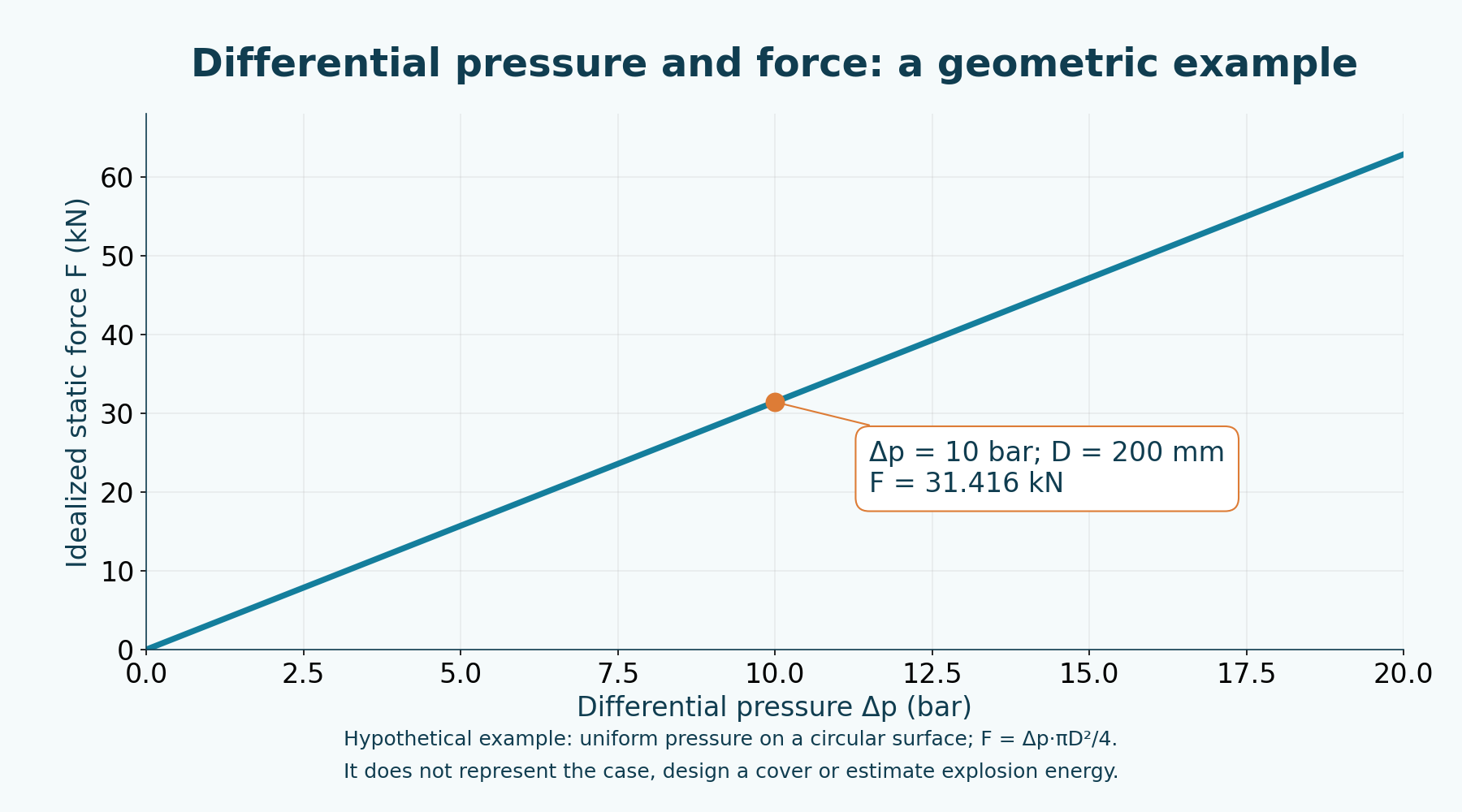
Consider an idealized flat circular surface with diameter D = 0.20 m subjected to a uniform pressure difference of 10 bar. The word difference matters: resultant force depends on pressure on one side relative to the other, not on a number without a reference.
Area is A = πD²/4 = π(0.20)²/4 = 0.03141593 m². Since 1 bar = 100000 Pa, Δp = 1000000 Pa. Resultant force is F = ΔpA = 31415.93 N, approximately 31.416 kN. Area grows with the square of diameter; for the same surface, force grows linearly with pressure difference.
We do not know the diameter, pressure or configuration of the equipment involved in the accident. The numbers were chosen for teaching. The chart keeps D = 200 mm and varies only Δp; it does not describe the event’s development, show energy or authorize opening, testing or modifying real equipment.
| Δp | Area | Resultant static force |
|---|---|---|
| 5 bar | 0.03141593 m² | 15.708 kN |
| 10 bar | 0.03141593 m² | 31.416 kN |
| 15 bar | 0.03141593 m² | 47.124 kN |
NR-13: scope assessment comes before conclusions
Brazil’s NR-13 addresses integrity management for equipment defined in its objective and scope. The official text made available by the Ministry of Labor and Employment, MTE, must be consulted alongside the assembly’s actual characteristics. A turbine does not automatically become a boiler covered by the regulation.
The MTE’s official April 2023 questions-and-answers document clarifies that turbines, pumps, compressors and generators are not pressure vessels for NR-13 purposes; attached vessels may fall under a different classification. This is official interpretive guidance to be read alongside the regulatory text. It reinforces why identifying the assembly and its components is essential.
Section 13.2 contains criteria and exclusions. Not every pressurized component or steam pipe falls under exactly the same classification. Even where equipment is excluded from the scope, item 13.2.3 maintains the need for inspection and maintenance under technical responsibility, observing manufacturer requirements and applicable codes.
The connection between this accident and NR-13 is therefore educational and conditional. Without identifying the equipment, we do not attribute a category, maximum allowable working pressure, inspection interval or noncompliance to Itaiquara. The regulation offers criteria for asking documented questions, not an automatic cause for every industrial incident.
MTE — NR-13, texto oficial vigente consultado →
Integrity is a process, not a stamp
For equipment within scope, integrity management combines documentation, knowledge of operating conditions, examinations, recommendations, repairs and follow-up. An old report must be interpreted in relation to current condition and subsequent interventions. The existence of a document does not remove the need to examine its coverage and observed conditions.
Items 13.3.3 and 13.3.4 link inspection to the responsibility of a legally qualified professional and relevant examinations and tests. Items 13.3.5 and 13.3.6 address instruments and safety systems, including conditions for possible temporary bypass and maintenance. These requirements should not be reduced to an absolute prohibition without reading their conditions.
Item 13.3.7 addresses repairs and alterations under codes and technical requirements. In investigation, this becomes questions of traceability: what was modified, by whom, on what design basis and with what verification? No specific answer concerning the Tapiratiba equipment is presumed here.
| Reference | Topic to check | Relevant evidence |
|---|---|---|
| 13.3.3–13.3.4 | Technical responsibility and inspection basis | Reports, examinations and identification of the legally qualified professional |
| 13.3.5–13.3.6 | Instruments and safety systems | Justifications, procedures and maintenance records |
| 13.3.7 | Repairs and alterations | Design, applicable code and records |
| 13.4.1.2 | Devices on boilers within scope | Device specifications and documentation |
| 13.4.1.5 | Boiler documentation | Technical dossier, safety record and required documents |
| 13.4.3.1–13.4.3.3 | Boiler manual, water and operation | Procedures, controls and relevant qualification |
| 13.4.4.1 | Initial, periodic and extraordinary inspections | History and conditions prompting each inspection |
Protective devices: specified, available and functional
A protective measure may appear in a drawing and be installed yet still require demonstration of function and suitability. For boilers within scope, item 13.4.1.2 specifies safety and indication devices according to the equipment. Professional examination considers specification, settings, installation and records without indiscriminate handling of what remains after an accident.
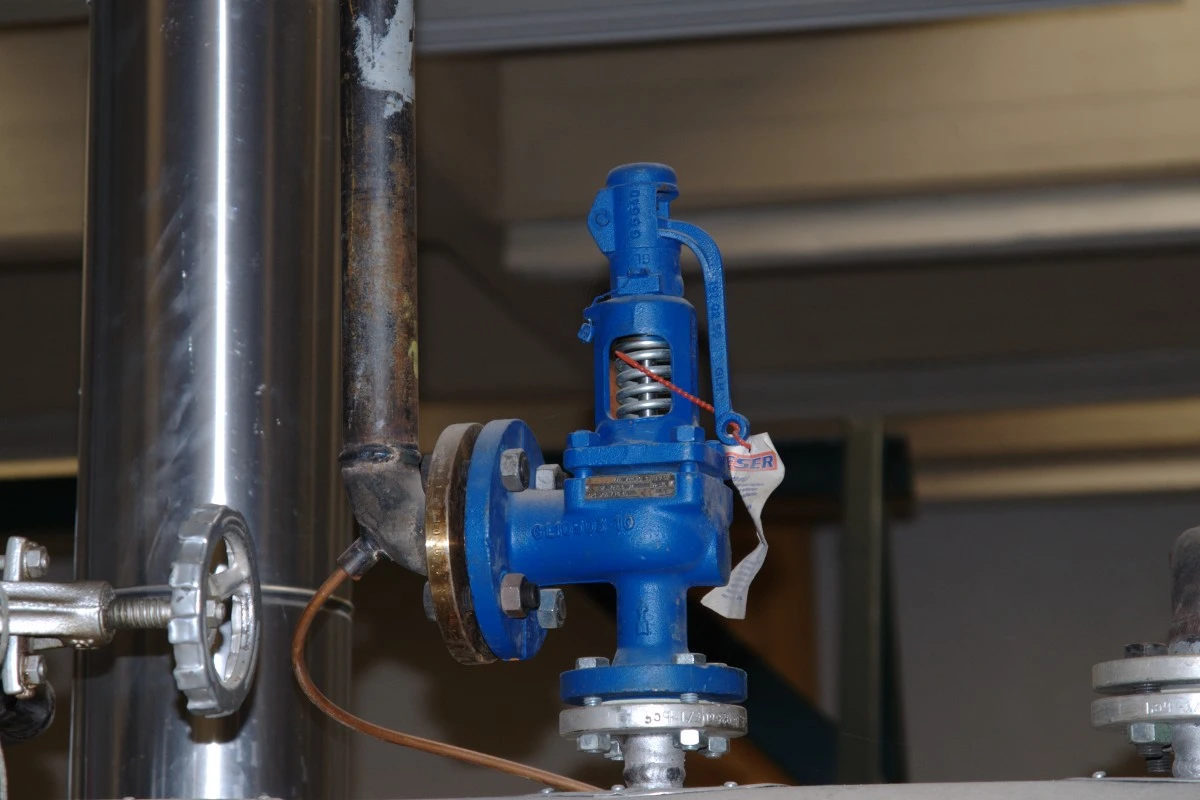
A generic valve photograph illustrates the existence of a component; it does not establish its capacity, setting or performance in the investigated installation. The same caution applies to alarms and interlocks: expected function must be compared with design, logic and available records.
Asking whether a barrier worked does not assert that it failed. Moreover, the presence of one barrier does not replace the others. Protective systems, body integrity, operation and maintenance preparation address different hazards and states. This separation helps avoid conclusions based on a single accessory.

Maintenance: planning a transition of state
During operation, the system fulfills its production function. During intervention, people may access previously protected areas, remove parts or change conditions. Appropriate preparation identifies the task, interfaces and state needed to perform it. Planning must recognize that one team may depend on releases and information from another.
In Brazil, NR-12 contains requirements for interventions and isolation of energy sources within its scope. NR-10 relates to electrical work within its own scope; risk management and relevant procedures complete the analysis. A foreign reference or generic list should not replace this assessment.
NR-12 item 12.11.3 addresses shutdown, isolation and discharge, lockout, signage and measures against intervention-related hazards. The regulation also provides specific conditions in the following subitems. For example, 12.11.3.3 addresses technical impossibility arising from thermal inertia, with alternative measures planned and managed by a legally qualified professional. This requires professional analysis; it is not generic permission to intervene in an energized system.
U.S. OSHA 29 CFR 1910.147 is presented only as a technical comparison concerning hazardous energy control, stored energy and verification. It is not Brazilian law. For this case, the question is which measures were planned and actually verified; their absence is not demonstrated by the initial reports.
Families of hypotheses: what to test, not whom to accuse
A useful hypothesis explains a possibility and identifies evidence that could confirm or refute it. If it is so vague that any result supports it, it contributes little. Investigation should compare alternative explanations and record the limits of each examination.
In a confirmed pressurized system, body condition, deterioration, joints, accessories, instruments and process states may be examined. In a confirmed rotating machine, rotor integrity, bearings, speed and containment may matter. These lists are conditional and do not state that any of those failures occurred in this accident.
Work preparation, communication between teams, changes and emergency response must also be examined. An explanation cannot end with a label such as unsafe act without demonstrating the sequence and conditions that made exposure possible. Examining organizational decisions is part of the analysis without prejudging individual or corporate blame.
HSE — HSG245, Investigating accidents and incidents →
Incident investigation methods →
- Identification: which assembly, function and physical boundary?
- Process state: which records describe the relevant period?
- Integrity and protection: what was specified, and which examinations can assess its condition?
- Intervention: which task was authorized, and which interfaces existed?
- Organization: how did planning, communication and changes influence the situation?
- Reconstruction: which sequence is consistent with all available physical evidence?
Evidence that genuinely changes the analysis
Investigation quality depends on the relationship between questions and evidence, not the quantity of photographs or forms. Documents must be checked against actual configuration; testimony against its date and context; process signals against record reliability. A gap must be described as a gap.
Preservation includes origin, time, versions and traceability of analyzed materials. Alarm and maintenance records may use different clocks; an apparent sequence may change when time bases are reconciled. Investigators should document this reconciliation rather than adjust chronology to a preferred explanation.
Readers should not access a preserved scene, collect fragments or test devices. These activities belong to authorized teams under forensic and safety procedures. The table below organizes questions; it is neither authorization to intervene nor a guide to altering evidence.
Photograph source and attribution →

| Topic | Evidence to compare | Question |
|---|---|---|
| Identification | Nameplate, drawing, manual and process diagram | What exactly makes up the system? |
| Process | Trends, alarms and operating records | What state can be demonstrated? |
| Integrity | Inspections, nondestructive testing, repairs and outstanding issues | What was known about mechanical condition? |
| Protection | Specifications, setpoints, tests and logic | Which functions were specified? |
| Work | Work orders, preliminary risk analyses, permits and release records | How was the task prepared? |
| Organization | Communication, training, contracts and changes | How were decisions made? |
| Reconstruction | Physical evidence and records preserved by authorities | Which sequence matches the evidence? |
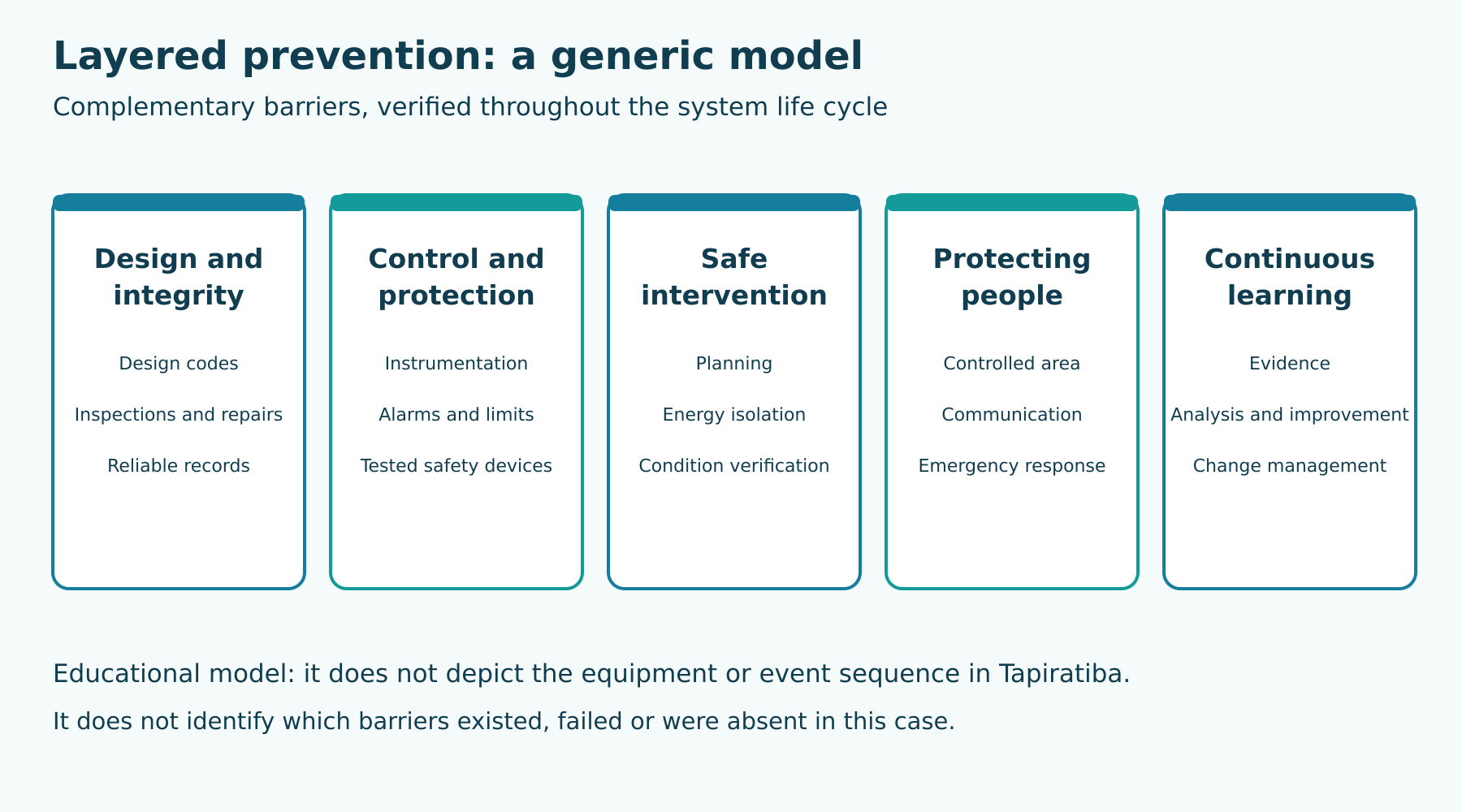
Layered barriers: a lesson in prevention
Design, integrity, instrumentation, protection, energy control, work organization and emergency response form layers with distinct functions. A layer reducing the likelihood of an event does not necessarily protect someone exposed after it has begun. Analysis must recognize these differences.
This section’s diagram is a generic model. It represents neither the Itaiquara installation, the event sequence nor demonstrated failures. Its value is reminding us that measures depend on performance criteria, responsible parties and verification methods. A word in a box does not prove a barrier exists or works.
After investigation, recommendations must become verifiable actions: which risk will be controlled, who is responsible, what is the deadline and how will results be assessed? Changing a procedure or providing training may fit a particular conclusion but does not automatically replace a necessary design or protection change.
Build a question plan — without issuing a technical report
The panel below lets you select topics to include in an educational question plan. Checking a box only means including a question in planning. It does not mean the item was inspected, a safe condition was verified or the investigation is complete.
Each topic provides questions, evidence examples and an interpretation limit. Use it to study how to turn a hypothesis into an information need. Selection remains only on this page during the session; it sends no information to a server and requests no names, victim information or company documents.
The downloadable CSV retains this educational purpose. It may help prepare a study but does not replace professional procedure, access authorization, technical responsibility or forensic examination. A standalone HTML version is also available for local reading and selection.
What would an engineer examine?
Choose questions for an educational plan. Expand each area to read evidence and limits.
Planning selections are not inspections, expert reports, diagnoses or work releases.
Question, evidence and limit
- Question
- Which equipment, function and circuit?
- Evidence
- Nameplate, manual, drawings, process diagram and actual configuration.
- Interpretation limit
- Reports conflict between boiler and turbine; informal names do not prove identification.
Question, evidence and limit
- Question
- Which conditions and states can be demonstrated?
- Evidence
- Dated records of relevant pressure, temperature, speed, level, flow and alarms.
- Interpretation limit
- Event parameters are unavailable in the consulted sources.
Question, evidence and limit
- Question
- What was known about mechanical condition?
- Evidence
- Inspections, NDT, repairs, modifications, recommendations and records where applicable.
- Interpretation limit
- An incident does not prove inadequate maintenance or overdue inspection.
Question, evidence and limit
- Question
- Which safety functions were intended?
- Evidence
- Specifications, setpoints, logic and relevant device test records.
- Interpretation limit
- Do not assert a failed barrier without examination and context.
Question, evidence and limit
- Question
- Which task was authorized and how was it prepared?
- Evidence
- Work orders, risk assessments, permits, procedures, isolation and release records as applicable.
- Interpretation limit
- Maintenance was reported; the sequence and specific measures require evidence.
Question, evidence and limit
- Question
- How did decisions and communication affect the work?
- Evidence
- Planning, communication, training, contractor management and changes.
- Interpretation limit
- Avoid assigning blame from a job title or isolated statement.
Question, evidence and limit
- Question
- How did exposure occur?
- Evidence
- Preserved records, positions, areas, physical barriers and forensic examination.
- Interpretation limit
- Do not enter a preserved scene or reconstruct events without evidence.
Question, evidence and limit
- Question
- Which improvements follow demonstrated findings?
- Evidence
- Report, recommendations, owners, deadlines and result verification.
- Interpretation limit
- Do not invent company measures or declare a cause without a conclusion.
0 / 8 areas included in the plan. This panel has not verified any safe condition.
Selections remain only in this page memory during the session. No data is sent or saved automatically.
Download the educational question plan in CSV →
Download the evidence panel in HTML →
Preventive learning with technical humility
Two lives were lost, and the families’ suffering should not be reduced to a technical illustration. This analysis aims to contribute useful questions and respect what still needs clarification. Equipment identification and demonstration of the mechanism belong to investigation, not an inference drawn from a news headline.
A good conclusion distinguishes evidence, hypothesis and gap; good prevention turns demonstrated findings into verifiable measures. While no public conclusion has been located in the consulted sources, the responsible path is to deepen understanding of integrity, maintenance and energy control without attributing a cause or violation to the company. Safety as strategy, not bureaucracy.
Frequently asked questions
What happened at the Itaiquara plant in October 2026?
October 9 news reports described an industrial incident in Tapiratiba, São Paulo, with two workers killed and three injured. Agência Brasil attributed information about maintenance to SSP. Those initial totals are not an October 14 clinical update. The article presents no forensic conclusion about the cause.
Did the explosion occur in a boiler or a turbine?
News sources differ: Agência Brasil cites a boiler, while UOL and Agência Estado cite a turbine. The equipment must be identified through documentation and technical investigation. We do not use this discrepancy to infer the presence of steam, pressure or a particular failure mechanism.
What does NR-13 require of boilers and systems within its scope?
Depending on scope and relevant provisions, the regulation addresses integrity, documentation, safety, operation and inspections. Classification depends on equipment characteristics. An accident alone does not demonstrate a violation of NR-13 or define inspection intervals and category.
What is the difference between pressure, force and explosion energy?
Pressure is force per unit area; ΔpA calculates an idealized static resultant. Energy involves work and the system’s physical transformation. The 31.416 kN example does not estimate energy, fragment range or destructive power and does not represent the Tapiratiba equipment.
How does a technical investigation of a maintenance accident work?
It identifies the system, preserves evidence, reconstructs states and sequence, and tests hypotheses against records and examinations. It also examines planning, interfaces and organizational decisions. Checking a checklist does not establish compliance, a safe condition or cause. The scene and physical evidence must remain under authorized teams’ control.
Which documents help assess mechanical integrity?
Identification, drawings, manuals, a technical dossier where applicable, inspections, nondestructive testing, repairs, alterations, recommendations and operating records can contribute. They must be compared with actual configuration and condition. The list is educational and does not assert that these documents were missing from the investigated installation.
References
- Agência Brasil — relato inicial, 9/10/2026Agência Brasil
- UOL — relato inicial, 9/10/2026UOL
- Agência Estado / UOL — relato inicial, 9/10/2026Agência Estado / UOL
- Votunews — reportagem g1/EPTV republicada, entrevista da delegada, 10/10/2026Votunews — republicação g1/EPTV
- MTE — NR-13, texto oficial vigente consultadoMTE
- MTE — Perguntas e respostas da NR-13, abril de 2023MTE
- MTE — NR-12, texto oficial vigente consultadoMTE
- OSHA — 29 CFR 1910.147, The control of hazardous energyOSHA
- HSE — HSG245, Investigating accidents and incidentsHSE
- National Board — William L. Reeves, How to Destroy a Boiler, Part 1National Board
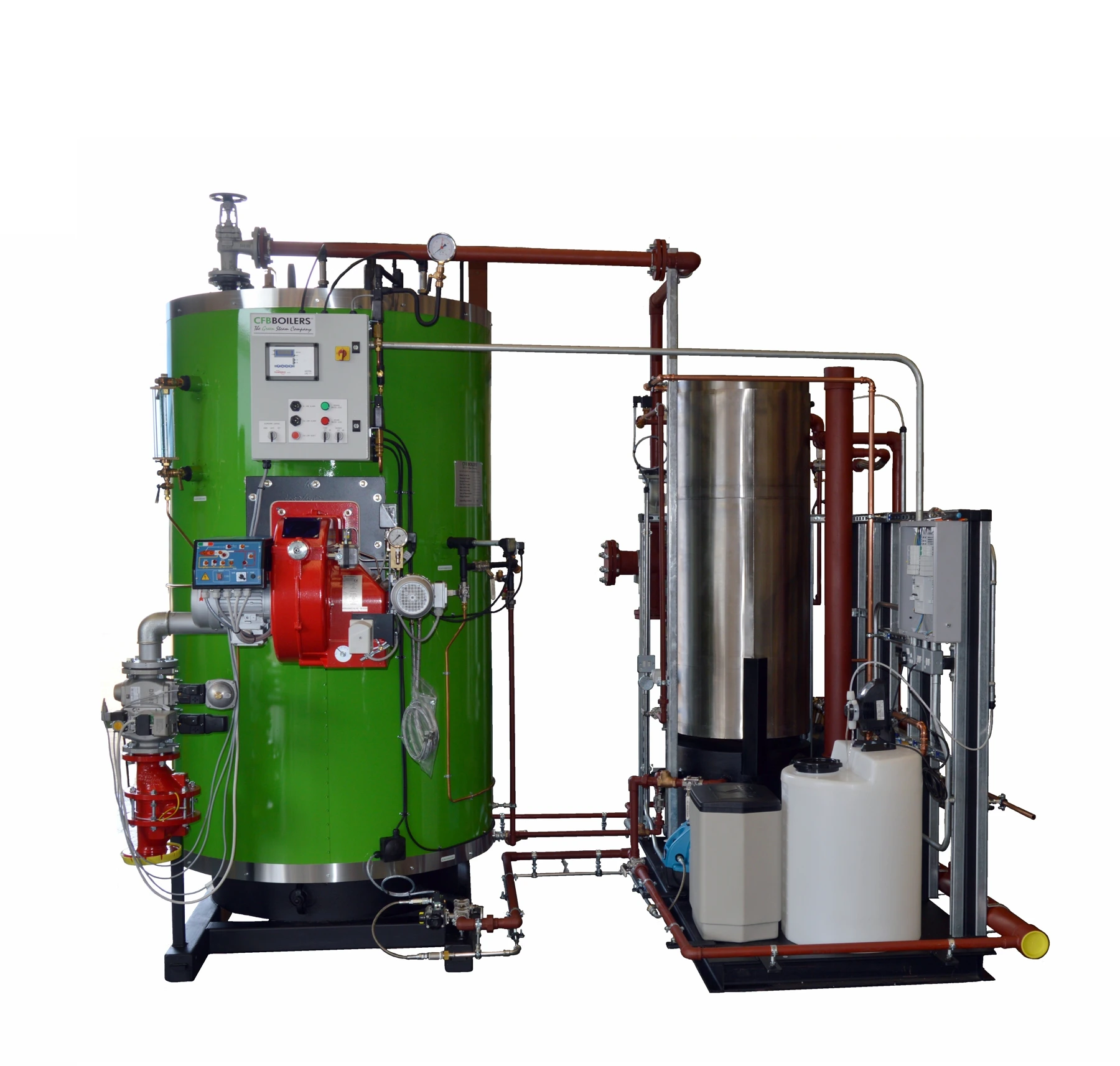
- boiler-photo.webpExample of a skid-mounted steam boiler package; illustrative equipment with no known connection to the Tapiratiba accident. Photo: Steamboilers / Wikimedia Commons, CC BY-SA 4.0. Resized and converted to WebP.
- valve-photo.webpA boiler safety valve shown as a component example; it is not the valve from the equipment involved in the accident. Photo: © 2009 K. Krallis (SV1XV) / Wikimedia Commons, CC BY-SA 3.0. Converted to WebP.
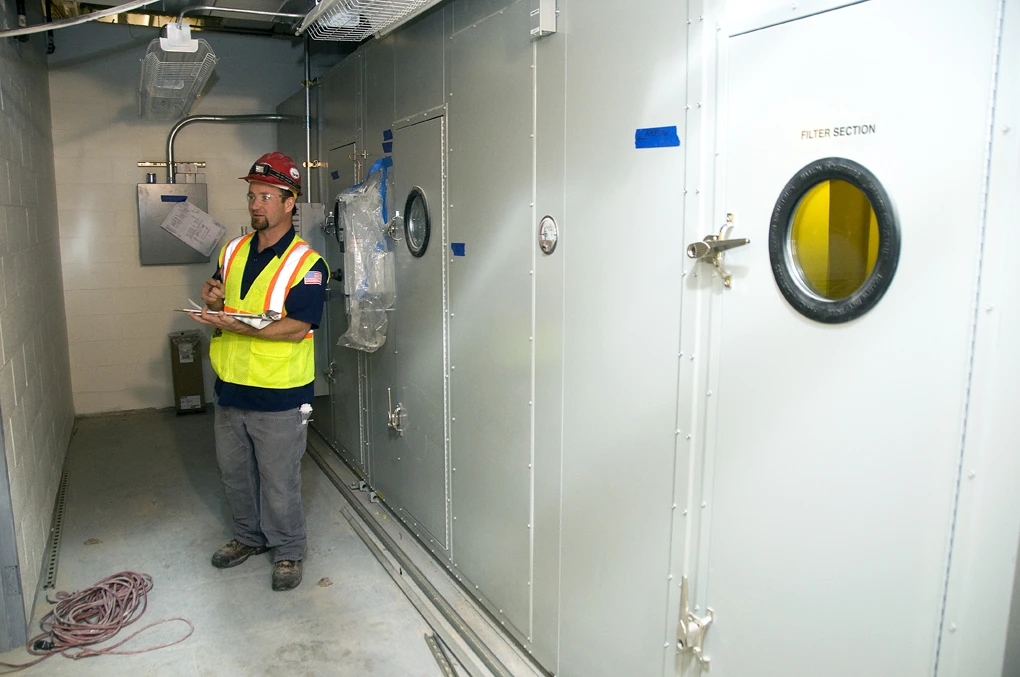
- checklist-photo.webpA worker with a checklist in an HVAC equipment area; an illustrative verification routine with no known connection to the case. Photo: Oregon Department of Transportation / Wikimedia Commons, CC BY 2.0. Converted to WebP.